A&S Resources Limited has secured key funding from EXIM Bank of India for an approximately 1,350-kilometer railway project designed to connect significant mineral assets in the Central African Republic to the deep-water Port of Kribi in Cameroon. This ambitious infrastructure endeavor aims to unlock reserves of over 20 billion tons of iron ore, positioning the region as a major player in global mineral supply chains. The commissioning of this vital railway is planned for the end of 2026, marking a significant milestone for regional development and resource extraction.
Project Details and Scope
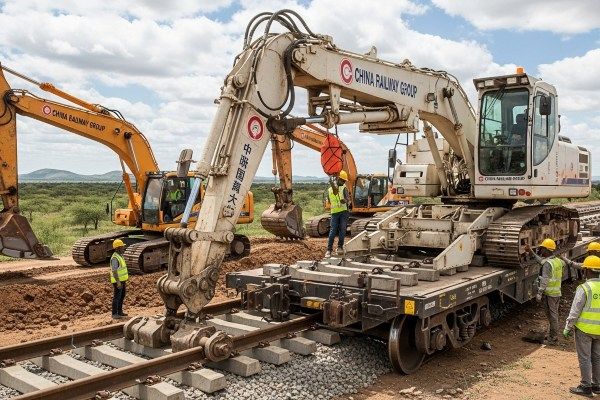
The railway project is engineered with an initial capacity to transport 250,000 tons of minerals per day, with strategic plans for potential expansion to 300,000 tons per day to accommodate future growth in extraction volumes. A&S Resources is developing the railway in a key collaboration with China Railway Sixth Group, a prominent subsidiary of China Railway Group Limited, leveraging international expertise for this large-scale undertaking. This partnership shows the global interest and strategic importance of the project.
Earlier this year, A&S Resources signed several strategic agreements related to the project, laying the groundwork for its full development. These agreements encompass various critical aspects, including the development of mining operations within the Central African Republic, the construction of the railway infrastructure itself, and the establishment of efficient export logistics to facilitate the movement of resources to international markets. Additionally, the agreements include long-term purchase arrangements for the iron ore, providing stability and certainty for future sales. These foundational agreements are key for the integrated execution of the project, from extraction to export.
Financial Backing and Resource Potential
EXIM Bank of India (Export-Import Bank of India) will provide the necessary financing for the railway project, a commitment that notes India's growing strategic interest in African infrastructure and resource development. This substantial financial backing is key for the development of the approximately 1,350-kilometer railway, which is specifically intended to connect the rich mineral assets in the Central African Republic to Cameroon's strategically important Port of Kribi. The project aims to facilitate the efficient extraction and export of substantial iron ore reserves, transforming the economic landscape of the involved nations.
The resource potential within the Central African Republic project is estimated to exceed 20 billion tons of iron ore. This vast quantity of resources represents a significant opportunity for regional development, offering substantial economic benefits, and for strengthening global supply chains by providing a new source of critical raw materials. The estimated in-situ gross value of these resources is approximately USD 2.5 trillion, showing the immense economic significance and long-term value of the project. A&S Resources Limited's portfolio in the region extends beyond iron ore, encompassing critical minerals, rare earth elements, copper, and other strategic resources. These additional holdings further emphasize the broad resource potential that the new railway infrastructure is designed to unlock, making it a multi-faceted development initiative.
Strategic Importance and Future Outlook
The railway, designed as a double-track heavy-haul line, is specifically engineered to support the efficient transport of large volumes of minerals from the Central African Republic to the Port of Kribi. This strong infrastructure choice shows the project's capacity to handle the substantial iron ore reserves targeted for extraction and to ensure reliable, high-volume transportation. Preparatory work for this ambitious undertaking has already commenced, demonstrating tangible progress towards its realization. Topographical and technical studies for the railway are currently underway, which are essential for establishing the precise route, detailed engineering requirements, and full environmental considerations for the extensive rail network. The initiation of these critical technical assessments indicates steady progress towards the project's planned commissioning by the end of 2026, promising a transformative impact on the region's economic future.