The Central African Republic (RCA) ranks 47th out of 54 African countries in the latest African Development Bank (ADB) report on industrialization, according to an article published on September 14, 2026. This position places the RCA among the lowest-performing nations on the continent in terms of its capacity for economic transformation. The country's low ranking is attributed to a widespread lack of local factories capable of processing its abundant raw materials. For instance, despite being a producer of cotton, the RCA lacks facilities to transform it into clothing. Similarly, its extensive wood resources are not adequately processed into furniture, nor is its livestock efficiently converted into industrial dairy products. This deficiency in processing capabilities forces the nation to rely heavily on imports for manufactured goods. Another significant obstacle to industrialization is the RCA's geographical isolation, a landlocked position that necessitates reliance on long and often arduous transport routes, such as the critical Bangui-Douala axis, for trade and access to international markets. This geographical challenge inherently increases the cost and complexity of both importing necessary industrial components and exporting finished goods, should they be produced.
Economic Landscape and Challenges
The Central African Republic (RCA) possesses significant natural resources, including diamonds, gold, uranium, copper, iron, and extensive precious wood forests. These endowments present a substantial foundation for potential industrial development. Despite these natural riches, the country imports nearly all its daily necessities, a stark contrast to its resource wealth. This includes everyday items such as soap, fabrics, canned goods, school notebooks, construction materials, and basic food products, noting a profound dependency on external supply chains. The African Development Bank (ADB) report specifically identifies the exorbitant cost and instability of energy as a major barrier to local production. This energy deficit impacts everything from manufacturing operations to basic infrastructure, making it difficult for industries to establish and sustain themselves competitively.
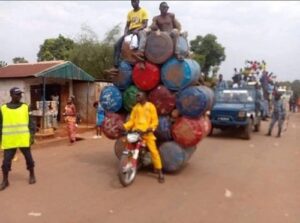
Further compounding these challenges are the severe road difficulties, poor track conditions, and ongoing security challenges prevalent across the country. These issues not only impede the movement of goods and people but also significantly increase both transport times and costs for essential industrial machinery and spare parts. Such logistical hurdles deter investment and make local production economically unviable for many potential entrepreneurs. The article suggests that the RCA's low ranking in the industrialization index is primarily attributable to a fundamental lack of basic infrastructure and a stable political framework necessary for fostering local production, rather than a lack of inherent potential. This indicates that while the natural resources are present, the enabling environment for their transformation is largely absent. Overcoming these systemic issues is key for any meaningful progress in industrialization.
Comparative Rankings and Regional Context
The Democratic Republic of Congo (RDC) holds the 13th position among African nations in the industrialization index, a ranking attributed to its political commitment to processing strategic minerals. This demonstrates how strategic government focus can significantly impact a nation's industrial standing. Neighboring Cameroon is ranked 21st, while Congo-Brazzaville is placed 22nd; both nations benefit considerably from their coastal access, which facilitates trade and logistics, and from established networks of small and medium-sized enterprises actively engaged in the transformation of wood and agricultural products. Their success notes the importance of both geographical advantage and a strong SME sector in driving industrial growth.
Further comparisons reveal the shared challenges within the region. Chad, ranked 44th, and South Sudan, ranked 53rd, face challenges strikingly similar to the Central African Republic. These include pronounced geographical isolation, a heavy reliance on raw extractive industries with limited value addition, and recurring cross-border security crises that destabilize economic activity and deter investment. These shared predicaments show a broader regional issue of under-industrialization. Further down the index, The Comoros are ranked 48th, The Gambia 50th, and Sao Tome-et-Principe occupies the last position at 54th, reflecting the unique difficulties faced by smaller island or coastal states. Despite its low ranking, the Central African Republic's extensive territory and expanding population present a substantial natural market. This characteristic differentiates it from smaller island or coastal states, offering a significant domestic consumer base that, if properly leveraged, could drive internal demand for locally produced goods and foster industrial development.
Pathways to Economic Sovereignty
Achieving economic sovereignty for the Central African Republic (RCA) necessitates a strategic shift away from its current role as a mere supplier of raw materials. This fundamental change in economic orientation is critical for the nation to capture more value from its abundant resources. This path requires substantial and sustained investment in energy infrastructure, which is currently a major bottleneck for local production. Reliable and affordable energy is the bedrock upon which any industrial expansion must be built. Strong support for local entrepreneurs is essential, providing them with the resources, training, and conducive business environment needed to establish and grow processing industries. According to analysis of the country's economic standing, such measures are seen as key steps to enable the processing of indigenous resources within the country, fostering industrial growth and significantly reducing reliance on imports for essential goods. By transforming its own raw materials into finished products, the RCA can not only create jobs and stimulate its economy but also enhance its economic resilience and reduce its vulnerability to external market fluctuations. This strategic redirection is critical for the Central African Republic to move up the industrialization index and secure a more prosperous future for its citizens.