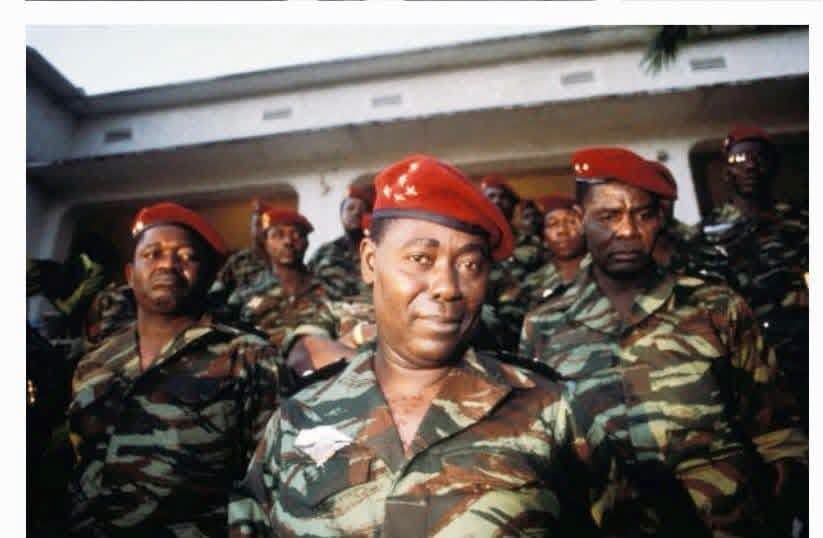
The Comité militaire de redressement national (CMRN), led by army General André Kolingba, seized power in the Central African Republic on September 1, 1981. This key event marked a significant turning point in the nation's political trajectory. Immediately following the coup, General Kolingba suspended the Constitution and halted the activities of all political parties, effectively dismantling the existing democratic framework. The swift actions taken by General Kolingba showed the decisive nature of the military's intervention in the country's governance.
The Takeover and Immediate Aftermath
On September 1, 1981, General André Kolingba executed a bloodless coup d'état, overthrowing then-President David Dacko. The precision and lack of overt violence during the takeover allowed the military to consolidate power rapidly. Following the takeover, a junta known as the Comité militaire de redressement national (CMRN) was established to govern the Central African Republic. This new ruling body immediately assumed control over all state functions, signaling a complete shift from civilian to military administration. The CMRN took immediate control of the country's administration, asserting its authority across all sectors of government and public life. This swift and decisive action by the CMRN ensured that the transition of power was absolute and left no room for immediate opposition.
Context of Dacko's Return
President David Dacko, who was overthrown in the September 1, 1981 coup, had been returned to power by France just two years prior. His restoration followed the fall of Bokassa, a period of considerable upheaval in Central African politics. This intervention by France noted the significant external influence exerted on the Central African Republic's political landscape, particularly in shaping its leadership transitions. Dacko's previous return to power, facilitated by a foreign nation, provided a complex backdrop to the subsequent military takeover. France's involvement in Dacko's previous return notes the external factors shaping the nation's leadership transitions, demonstrating how international actors played a key role in the country's political fortunes leading up to the 1981 coup. The reliance on external support for leadership changes often contributed to underlying instability, setting the stage for subsequent internal power struggles.
A Long Era of Military Governance
The September 1981 coup d'état initiated a prolonged period of military governance in the Central African Republic, which continued into the early 1990s. This era was characterized by the military's firm grip on power, with General Kolingba at the helm, and the suppression of multi-party politics. The absence of a civilian government and the suspension of the constitution meant that the country operated under military decrees for over a decade. This era of military control was ultimately challenged by external pressures, particularly from international bodies and donor countries advocating for democratic reforms. A forced return to multipartyism occurred after François Mitterrand's La Baule speech, delivered in 1990, which linked development aid from France to recipient nations' progress towards democratization. This speech signaled a significant shift in international policy, placing considerable pressure on military regimes like that in the Central African Republic to transition towards more open political systems. The international community's insistence on democratization became a critical factor in compelling the military government to consider reforms.
Enduring Symbolism
The date of September 1, 1981, when General André Kolingba seized power, remains a significant marker in the Central African Republic's history. It has become a symbol of transition by force, illustrating a recurring pattern of political instability in the nation. This particular coup ushered in a military-dominated government that persisted for over a decade, setting a precedent for future power shifts and contributing to a cycle of political uncertainty. The date continues to be associated with the country's struggle to establish enduring democratic institutions, as the cycle of forceful transitions has complicated efforts toward long-term political stability. The legacy of the 1981 coup, therefore, extends far beyond the immediate aftermath, influencing the country's political development and its ongoing challenges in fostering a stable and democratic governance structure. The memory of this event serves as a constant reminder of the fragility of democratic processes in the nation's past.