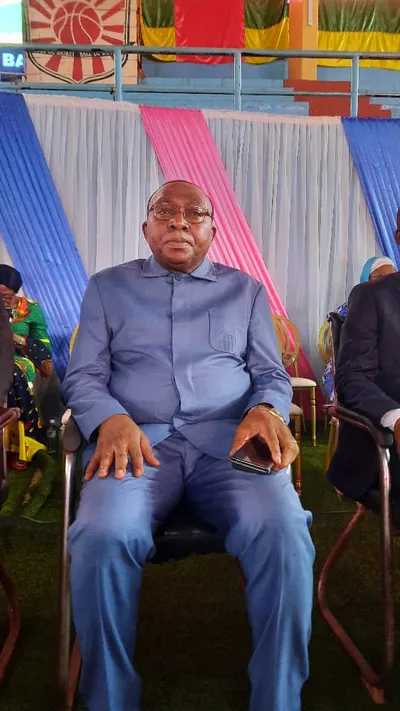
Ferdinand Alexandre N’Guendet, former president of the Central African transition, has broken his silence from exile, publishing a written statement on his birthday, May 23rd. This public declaration marks a significant moment, as Mr. N’Guendet had maintained a low profile since his departure from the country. Mr. N’Guendet fled Bangui three years ago following an attempted arrest he describes as an attack on his life, an event that forced him into exile and away from the political landscape of the République centrafricaine. From his current location, he criticizes the current governance in Bangui, stating that power is concentrated in a small group guided by personal interests. This concentration, he argues, undermines the democratic principles and equitable distribution of resources within the nation. The former president explicitly targets the Fédération de Russie and the République du Rwanda as the main military allies of the Bangui regime, noting their perceived influence on the country's internal affairs. Mr. N’Guendet positions himself as a spokesperson for citizens seeking to regain full sovereignty, articulating a vision for a Central African Republic free from what he views as internal mismanagement and undue external influence.
Criticism of Current Governance
Ferdinand Alexandre N’Guendet expressed regret regarding citizens whom he believes, through complicity or resignation, favor the current system. He accused this system of actively impoverishing the population, suggesting that the current administration's policies and actions are directly contributing to widespread economic hardship among the populace. The former president detailed a series of grievances, including what he described as arbitrary detentions of citizens, chronic interruptions in water and electricity supply, and the spoliation of fundamental civic rights. These issues, according to N’Guendet, illustrate a systemic failure of governance and a disregard for the well-being and basic entitlements of the Central African people. He emphasized that the arbitrary detentions represent a grave violation of individual liberties, while the persistent failures in public utilities like water and electricity show a critical lack of infrastructure and public service provision. The alleged spoliation of fundamental civic rights further points to a shrinking space for democratic expression and participation within the country.
N’Guendet also acknowledged the definitive failure of past compromise initiatives with the current government in Bangui. He asserted that attempts at reconciliation or reaching common ground had proven fruitless, indicating a deep-seated impasse in political dialogue. This suggests that previous efforts to bridge divides or find mutually acceptable solutions have not yielded positive results, leading to a continued state of political stagnation. He further stated his belief that the available channels for political dialogue within the country are now hermetically closed, implying a complete lack of openness for discussion or opposition views. This closure of dialogue channels, in his view, prevents any constructive engagement or resolution of the nation's pressing issues through peaceful political means. These criticisms from exile show his perspective on the state of governance and civil liberties within the République centrafricaine, painting a picture of a nation grappling with authoritarian tendencies and a lack of accountability.
Call for National Reconciliation
Ferdinand Alexandre N’Guendet has called for collective introspection among citizens, aiming to forge what he described as a "sacred union" to address the country's challenges. This call for introspection is intended to encourage Central Africans to critically examine their collective situation and unite for the common good. His appeal is directed primarily at the Forces armées centrafricaines (FACA) and internal security forces, urging them to recognize a broader national responsibility. He stressed that their allegiance should be to the nation as a whole, rather than to any particular faction or political group, emphasizing their key role in safeguarding the country's stability and future.
Mr. N’Guendet pressed military personnel and civil society to set aside narrow sectoral ambitions. He emphasized that these groups should instead focus their efforts on what he termed "the liberation of the people," advocating for a unified approach to national issues. This involves prioritizing the welfare and freedom of all Central Africans above personal or group interests. He believes that by transcending these narrower ambitions, a stronger, more cohesive national front can be formed to tackle the country's complex problems.
The former president also called for total commitment from all stakeholders to two fundamental objectives: restoring democracy within the République centrafricaine and re-establishing the rule of law across the nation. He presented these as essential steps for the country's future stability and governance, arguing that genuine democracy and a strong legal framework are indispensable for peace and prosperity. The restoration of democracy would ensure that the government is accountable to its citizens, while the re-establishment of the rule of law would guarantee justice and protect the rights of all individuals.
Foreign Allies and Sovereignty
Ferdinand Alexandre N’Guendet stated that his proposed reconciliation initiative does not aim to sever existing bilateral treaties. He emphasized that any such process would respect established international agreements, signaling that his vision for national unity and sovereignty does not entail an isolationist foreign policy. This clarification seeks to reassure international partners that a change in governance would not automatically lead to the repudiation of valid international commitments. The former president also demanded absolute neutrality from both the Fédération de Russie and the République du Rwanda regarding the Central African situation. This demand shows his view that external powers should not interfere in the country's internal political dynamics, particularly given their role as main military allies of the current Bangui regime. He believes that their neutrality is critical to allowing Central Africans to resolve their own political challenges without external influence or pressure. He asserted that the resolution of the political situation is exclusively the competence of Central Africans. This position notes his belief in national self-determination and the need for internal solutions to the country's challenges, free from foreign influence, thereby reinforcing the principle of national sovereignty.