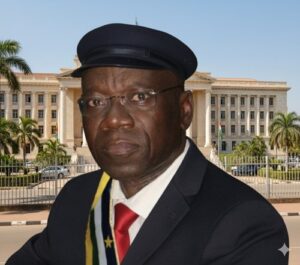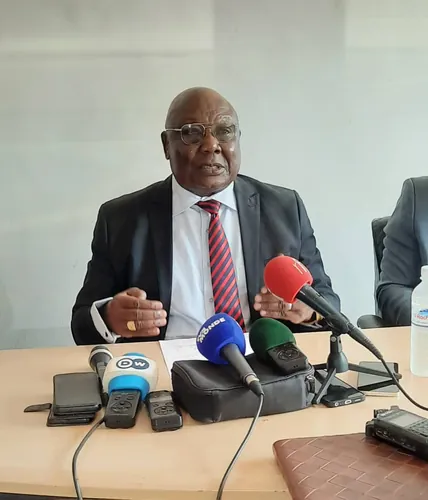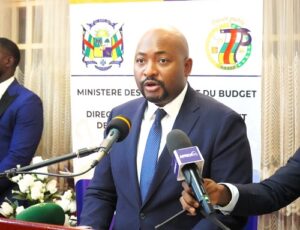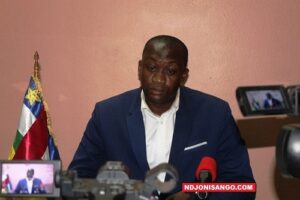
Former Minister Serge Ghislain Djorie invoked his academic title during a debate on the economic situation in the Central African Republic, as reported on August 30, 2026. The discussion centered on a "petroleum asphyxiation" described as paralyzing both Bangui and the provinces. Djorie, a former minister, used the occasion to question the role of intellectuals in national progress. "Maintenant, nous sommes des intellectuels, il est docteur, moi aussi je suis docteur. Qu’est-ce qu’on doit faire ? Quelle est notre contribution pour que les choses avancent dans notre pays ?" Djorie stated, emphasizing his and others' academic qualifications.
Economic Crisis Deepens
The economic challenges facing the Central African Republic have been further noted by international financial institutions. The International Monetary Fund (IMF) noted a fiscal deficit, identifying a shortfall of nearly 10 billion CFA francs. This economic gap contributes to the broader financial pressures impacting the nation as it grapples with resource allocation and stability. The figure shows the significant financial hurdles present in the country's economic landscape, which has been a central point of recent public debate among political figures and intellectuals. The deficit adds to concerns about the government's capacity to fund essential services and development initiatives across Bangui and its provinces.
Debate on 'Patara' Show
Former Minister of Communication and former government spokesperson Serge Ghislain Djorie appeared on the show "Patara" to discuss the national economic situation. During the debate, Paul Crescent Beninga emphasized the importance of technical discussion grounded in data. "Lorsqu’on vient à ce genre de débat, on ne participe pas à ce genre de débat pour faire dans le populisme. C’est un débat qui se fait technique ! J’ai avancé des chiffres, j’attends de mon contradicteur qu’il avance également des chiffres et qu’on en débate," Beninga stated, insisting on a debate based on figures. Djorie, in turn, challenged the role of intellectuals in national progress. He said, "Maintenant, nous sommes des intellectuels, il est docteur, moi aussi je suis docteur. Qu’est-ce qu’on doit faire ? Quelle est notre contribution pour que les choses avancent dans notre pays ?"
Civil Society's Stance
Paul Crescent Beninga, spokesperson for the Civil Society Working Group (GTSC), emphasized the necessity of technical discussion grounded in data during the economic debate. Beninga stated, "When we come to this type of debate, we don't participate in this type of debate to engage in populism. It is a technical debate! I have presented figures, I expect my opponent to also present figures, and that we debate them." His remarks showed a call for factual engagement rather than broad generalizations in discussions concerning the nation's economic challenges. The Civil Society Working Group's stance notes a desire for evidence-based solutions in addressing the Central African Republic's financial landscape.
Broader Implications
The economic debate extends beyond abstract figures, touching upon tangible impacts on daily life in the Central African Republic. Reports have noted "interminable queues in front of petrol stations," reflecting significant disruptions. These queues are linked to the "disastrous consequences of the illegal monopoly granted to the company Neptune Oil." The situation shows how economic policies and corporate practices can directly affect citizens and contribute to broader instability. This practical manifestation of economic challenges brings the discussion from policy circles to everyday experiences for many residents in the nation.