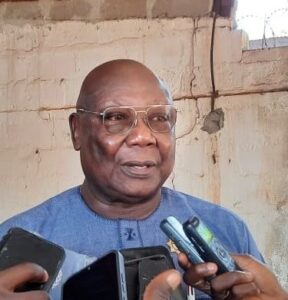
Martin Ziguélé, former Prime Minister of the Central African Republic, has vocally noted the country's severely deteriorated socioeconomic conditions under President Faustin-Archange Touadéra's administration. His recent statements paint a grim picture of a nation grappling with profound economic collapse, constitutional infringements, and a significant erosion of civil liberties. Ziguélé's assessment shows a period of escalating challenges for the Central African populace. In 2016, 52% of Central Africans lived on less than two dollars per day, according to statistics, a figure that has worsened considerably since. The République centrafricaine currently ranks 144th out of 146 countries in the UNDP's Human Development Index for 2025-2026, a stark indicator of the ongoing humanitarian and developmental crisis. Amidst these pressing issues, Ziguélé emphasized that "dialogue is a necessity and an urgency" for the nation's future.
Economic Collapse and Widespread Misery
Martin Ziguélé has stated that 67% of Central Africans currently live on less than two dollars per day, citing statistics from the World Bank. This figure represents a significant and alarming increase from 2016, when 52% of the population lived below this threshold. The worsening poverty rates reflect a deep-seated economic crisis that impacts the daily lives of millions. Ziguélé showed the severity of the country's economic state, asserting, "The situation of our country on all fronts is gravely compromised." He further elaborated on the widespread poverty, noting that "approximately three out of four Central Africans live in misery," a statistic that notes the widespread nature of destitution across the nation. This widespread misery is not merely an abstract figure but a lived reality for a vast majority of the population, affecting access to basic necessities and opportunities.
According to Ziguélé, all agricultural sectors in the Central African Republic have collapsed. This collapse is particularly devastating in a country where a significant portion of the population relies on agriculture for their livelihoods and food security. The former Prime Minister contends that there is "not even any economic activity in the true sense of the term," suggesting a fundamental breakdown in the nation's productive capacity. This absence of genuine economic engagement contributes directly to the dire living conditions experienced by a majority of the population, leaving many without stable income sources or pathways to economic advancement. Ziguélé emphasized the government's failure to foster development, stating that the country is "not even on the path to development." His assessment paints a picture of a nation struggling with fundamental economic paralysis, impacting agricultural output and broader commercial activities, and leaving its citizens in a precarious state. The lack of economic dynamism and the collapse of key sectors contribute to a cycle of poverty that is increasingly difficult to break.
Constitutional and Political Grievances
Martin Ziguélé has also leveled sharp criticism against constitutional and political developments under President Faustin-Archange Touadéra. He specifically stated that the constitution adopted during Touadéra's presidency was drafted with the explicit purpose of allowing the president to remain in power indefinitely. According to Ziguélé, this constitutional change fundamentally undermines democratic principles and concentrates excessive power within the executive branch, effectively dismantling checks and balances essential for good governance. Such a move, he argues, erodes the democratic foundations of the state and sets a dangerous precedent for future political transitions.
The former Prime Minister further claimed that civil liberties have been severely curtailed, asserting that "no one can express themselves, no one can protest." This indicates a systematic suppression of dissent and a significant restriction on public discourse within the country. Such measures, Ziguélé suggested, contribute to a climate where opposition voices are silenced, critical opinions are stifled, and accountability is diminished, thereby limiting the ability of citizens to participate meaningfully in their country's political life. The inability to express grievances or protest government actions creates an environment of fear and limits the avenues for peaceful political change.
Ziguélé also noted significant changes to legislative oversight, noting that the National Assembly's right to control external borrowing and the management of natural resources has been removed. This move, according to Ziguélé, severely weakens parliamentary checks and balances, potentially allowing for unchecked executive authority over critical financial and resource decisions. The removal of these key oversight powers raises serious concerns about transparency, accountability, and the potential for mismanagement or corruption, as the legislative body is no longer able to scrutinize decisions that have profound implications for the nation's economy and future.
Additionally, a contentious distinction was introduced into the fundamental law, differentiating between "Centrafricains d’origine" and other categories of citizens. Martin Ziguélé specifically referenced this phrase, noting it as a divisive legal innovation that could lead to significant social and political fragmentation. This constitutional amendment has raised concerns about potential discrimination, the creation of different tiers of citizenship within the Central African Republic, and the erosion of national unity. The implications of such a distinction could be broad, affecting rights, opportunities, and social cohesion.
Call for Inclusive Dialogue
Martin Ziguélé asserted that the most significant support for the current administration comes from mercenaries of the Wagner Group. He stated, "the greatest support for this regime is the Wagner Group mercenaries," a claim that shows the reliance of the government on external, non-state military actors for its stability and security. This reliance on mercenaries raises questions about national sovereignty and the nature of the regime's power base.
Faced with the country's dire conditions, including widespread poverty, economic paralysis, and the erosion of democratic institutions, Ziguélé has issued a fervent call for an inclusive political dialogue. He emphasized that "dialogue is not an option, it is a necessity," noting its indispensable role in addressing the multi-faceted crisis gripping the nation. The former Prime Minister further stressed the urgency of such discussions, adding, "It is an urgency," indicating that the current situation demands immediate and concerted efforts towards reconciliation and problem-solving. This call comes amid his assessment that "The situation of our country on all fronts is gravely compromised," and that "approximately three out of four Central Africans live in misery." He believes such dialogue is key to address the nation's challenges comprehensively, involving all stakeholders to find sustainable solutions for peace, stability, and development in the Central African Republic. Without such inclusive engagement, Ziguélé implies, the country risks further decline and instability.