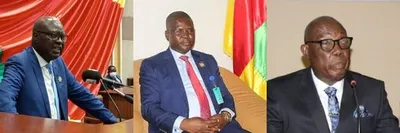
Simplice Mathieu Sarandji recently removed Évariste Ngamana from his influential position in the National Assembly, a decisive move that has initiated a new phase of political maneuvering and power consolidation within the Central African Republic. This action by Mr. Sarandji, a prominent political figure, shows the shifting dynamics within the country's leadership. In a notable turn of phrase, Mr. Sarandji has ironically referred to Mr. Ngamana as the "marabout de Carnot," according to reports, noting the contentious nature of their political relationship. Amidst these developments, the political pact between President Faustin-Archange Touadéra, Simplice Mathieu Sarandji, and Félix Moloua reportedly remains intact, demonstrating an ongoing and deliberate consolidation of power within the government's highest echelons. This alliance appears to be the bedrock of the current administration's stability.
Ngamana's Political Demise
The removal of Évariste Ngamana from his key role in the National Assembly has significantly altered his political standing. Mr. Ngamana remains a simple deputy, suggesting a substantial reduction in his political influence and authority within the legislative body. This change in status marks a considerable demotion for a figure who previously held more sway. President Faustin-Archange Touadéra has publicly accused his former deputy, Mr. Ngamana, of engaging in nocturnal rituals and fetishism, allegations that have sent ripples through the political landscape. Mr. Touadéra also claimed that Mr. Ngamana made attempts at his physical elimination, painting a picture of deep-seated animosity and distrust. These grave accusations surfaced as Mr. Ngamana's role within the National Assembly diminished, marking a notable and sharp shift in his political standing. The President's statements have brought the internal political dynamics of the Central African Republic into sharper focus, particularly regarding the complex and often fraught relationships between key figures in the government. Mr. Ngamana's current status as a simple deputy stands in stark contrast to his previous position of greater authority, signifying a clear loss of influence.
Moloua's Reappointment and Sarandji's Strategy
The recent reappointment of Félix Moloua as Prime Minister of the Central African Republic is a key decision that analysts suggest reflects the ongoing consolidation of power within the government. This continuity in leadership is viewed as a strategic choice by the ruling party. The reappointment is seen by some observers as validating Simplice Mathieu Sarandji's political strategy within the ruling circles, reinforcing his considerable influence over governmental appointments. Mr. Sarandji, often referred to by his distinctive nickname "Vieux Crocodile," is widely recognized as a key figure in the country's political landscape, known for his astute and often decisive maneuvers. His strategic actions and influence are frequently linked to significant government appointments and shifts in power dynamics. The continuity of Mr. Moloua in the prime ministerial role shows a period of stability in the executive branch, following recent internal political adjustments that saw other figures sidelined. This move is interpreted as a reinforcement of the key alliance between President Faustin-Archange Touadéra and Mr. Sarandji, thereby maintaining a consistent and unified leadership structure at the helm of the nation.
Unfulfilled Ambitions and Regime Stasis
The recent political reshuffle and subsequent appointments have left several political figures with unfulfilled ambitions, despite considerable personal investment. It is reported that several individuals invested substantial sums in anticipation of securing government appointments or facilitating broader changes within the administration. Sani Yalo, for instance, allegedly spent more than 200 million CFA francs in an effort to secure a coveted position within the government, a significant financial outlay that ultimately did not yield the desired outcome. Similarly, Arnaud Djoubaye Abazène, who currently serves as the Minister of Justice, is said to have invested 100 million CFA francs, reportedly hoping to facilitate a change in government leadership or structure. These substantial investments highlight the high stakes involved in Central African Republic politics.
However, these ambitions appear to remain largely unfulfilled, as the current power structure has largely been maintained. Obed Namsio, who holds the influential position of Director of the Presidency's cabinet, had reportedly aspired to become Prime Minister, a prominent role that was ultimately retained by Félix Moloua, dashing Mr. Namsio's hopes. Jean-Jacques Démafouth's anticipated return to political favor and influence has reportedly been postponed, indicating a reluctance from the current administration to bring him back into the fold. These developments collectively suggest that the current government in Bangui is opting for a strategy of strategic immobility in its political appointments and power dynamics, preferring to maintain the existing balance rather than introduce new variables or satisfy external ambitions. This approach signals a deliberate choice to preserve the established order, reinforcing the pact between President Touadéra, Simplice Mathieu Sarandji, and Félix Moloua.