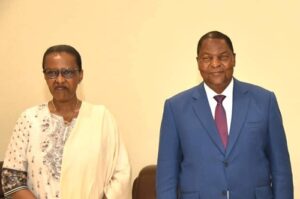
A recent article criticizes the United Nations Multidimensional Integrated Stabilization Mission in the Central African Republic (MINUSCA), alleging the mission presents the expansion of state authority and the electoral process as unqualified successes. The publication contends that MINUSCA's portrayal overlooks critical issues within the Central African Republic (RCA) and presents the extension of state authority and the electoral process as absolute victories. It further notes the activities of bilateral Russian partners, asserting their violent methods contribute to a prevailing atmosphere of fear in the country. This situation, according to the article, undermines genuine progress and stability, creating a climate of permanent fear among the populace.
MINUSCA's Electoral Validation
The article alleges that MINUSCA's internal experts identified significant flaws within the National Electoral Authority during recent elections in the Central African Republic (RCA). These internal assessments, which recognized substantial shortcomings in the electoral body's operations, reportedly painted a concerning picture of the democratic process. Despite these internal assessments and the identification of significant flaws by its own experts, MINUSCA's leadership proceeded to validate what the article describes as a biased electoral process. This validation, according to the publication, was undertaken to appease the ruling power and to guarantee the comfort of MINUSCA's personnel. The article states that MINUSCA's leadership moved forward with validating the flawed process to please the ruling power and ensure the comfort of its personnel, effectively endorsing an election riddled with issues. The article contends that this approach overlooked fundamental issues within the electoral system, contributing to a perception of complicity with the current regime and its political agenda.
Regime Entrenchment and Repression
The article asserts that the Central African Republic (RCA) is experiencing the entrenchment of a governance system characterized by the pursuit of a third presidential term, an unprecedented development in the nation's recent political history. This pursuit of a third term represents a novel event in the country's political landscape, signaling a departure from established norms. According to the publication, political figures who express dissent are subjected to arbitrary arrests. The article further claims that the judicial system in the RCA operates subserviently to the executive branch, with the judicial system being entirely subservient to the executive's directives. This alleged subjugation of the judiciary, coupled with the reported arbitrary detentions, contributes to an environment where the ruling power can consolidate its authority, as detailed in the report. The systematic repression of opposition voices and the manipulation of legal processes are noted as key elements in the current regime's strategy to maintain power and suppress any challenge to its authority.
MINUSCA's Internal Alignment
The article claims that MINUSCA has altered its internal governance structure. This change reportedly involved positioning a Rwandan national at its leadership. According to the publication, this internal realignment has resulted in MINUSCA's diplomatic efforts becoming more closely aligned with the interests of the Central African Republic's current regime. The article specifically states that MINUSCA has changed its internal governance to place a Rwandan at its head, leading to its diplomacy becoming aligned with the regime's interests. This shift, the article suggests, reflects a deeper integration of the mission's operations with the political objectives of the host government, influencing its approach to regional stability and governance issues. This alignment raises questions about the mission's impartiality and its commitment to its mandate of stabilization and protection of civilians.
Deteriorating Conditions and Superficial Fixes
The article notes that the Central African Republic's basic infrastructure remains severely lacking, with roads impassable and the education system collapsing. The publication alleges that rehabilitation attempts by the United Nations Multidimensional Integrated Stabilization Mission in the Central African Republic (MINUSCA) are merely superficial fixes. These attempts by the UN force are described as insufficient to address the deep-seated structural problems plaguing the country. The article emphasizes that despite MINUSCA's efforts, basic infrastructure continues to deteriorate, with critical roadways remaining impassable and the education system facing a severe collapse, showing the limited impact of these superficial interventions.