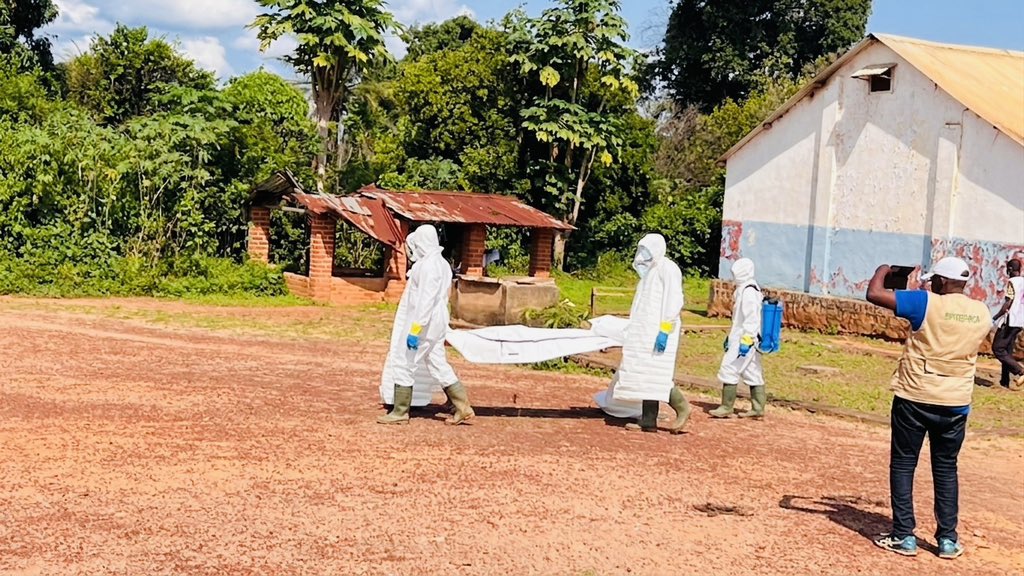
The Ministry of Public Health and its partners equipped the Bangassou regional university hospital with a mobile laboratory on September 7. This initiative aims to enhance Ebola surveillance capabilities in the city of Bangassou, located in the République démocratique du Congo. The deployment is expected to significantly improve the speed and accuracy of disease detection, thereby strengthening the region's response to potential outbreaks. The new facility represents a key step in bolstering public health infrastructure and ensuring timely interventions against infectious diseases in the area.
Strengthening Regional Defenses
The mobile laboratory aims to strengthen the health structure's capacity for surveillance against the spread of the Ebola epidemic. The virus continues to affect the Democratic Republic of Congo, located across the river from Bangassou. This strategic deployment is intended to create a more resilient health defense system, particularly given the ongoing public health challenges posed by Ebola in the broader region. The facility will enable quicker identification of potential cases, which is critical for preventing wider transmission and ensuring a rapid, effective response to any emerging threats. By bolstering local diagnostic capabilities, the initiative enhances the region's overall preparedness for infectious disease outbreaks.
Ministerial Statement on Preparedness
Dr. Pierre Somsé, the Minister of Health, addressed the recent developments, speaking with correspondent Jean Balipio. The Minister's remarks showed the government's commitment to enhancing public health infrastructure and surveillance capabilities in the region. This initiative is part of a broader strategy to proactively manage and mitigate the risks associated with infectious disease outbreaks, particularly Ebola, which remains a concern for public health authorities. The deployment of the mobile laboratory is seen as a key component in this strategy, providing essential diagnostic support to the Bangassou regional university hospital. Minister Somsé noted the importance of timely and accurate detection to prevent the spread of diseases and protect the population.
Context of Ebola Threat
Ebola remains a persistent public health concern, particularly in the République démocratique du Congo, which shares a border with Bangassou. The region has faced ongoing challenges in containing outbreaks of the virus, necessitating strong surveillance and rapid response mechanisms. Previous outbreaks have noted the critical need for timely diagnosis and isolation to prevent wider transmission and protect communities. The proximity of Bangassou to areas with active Ebola cases shows the importance of strengthened health infrastructure to safeguard against potential cross-border spread. International partners continue to support efforts to enhance preparedness and response capabilities in the region.
Future Surveillance Efforts
The deployment of the mobile laboratory marks a significant step in bolstering public health infrastructure in Bangassou and the wider region. Future surveillance efforts will focus on maximizing the diagnostic capabilities of this new facility, ensuring rapid detection of potential Ebola cases. Collaborations between the Ministry of Public Health and its partners, including OMS-RCA, Fondation Hirondelle, Union Européenne, and Direction du développement et de la coopération DDC - Confédération Suisse, are expected to continue. These partnerships are key for sustaining the improved surveillance system and enhancing overall preparedness against infectious disease threats originating from the République démocratique du Congo. The initiative aims to create a more resilient health defense for the local population.