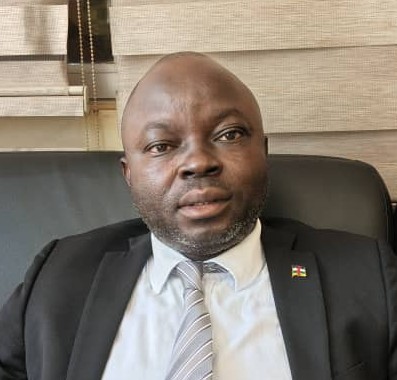
Following the resignation of Blaise Didacien Kossimatchi from the Mouvement Cœurs Unis (MCU), a significant political event, Serge Simon Bozanga, a prominent political analyst, published a critique on social media. In his detailed assessment, Bozanga asserted that the presidential political structure is "cracking and imploding," painting a grim picture of the current political climate. Bozanga stated that the Central African people are "holding their breath" amidst what he described as a "deleterious climate" weighing heavily on the nation. He specifically claimed, using the original French, "la structure politique présidentielle craque et implose au point que rien ne va plus désormais." This strong statement shows his belief in the severe deterioration of the governing apparatus. Bozanga further added that "dans tout ce magma le peuple centrafricain retient son souffle," indicating widespread anticipation and anxiety among the populace regarding the unfolding events. He characterized the departure of Kossimatchi as "le point de départ d’une série inévitable, affirmant que les démissions commencent à tomber," suggesting that this resignation is merely the first in a cascade of impending departures from the ruling party.
Internal Party Strife and Electoral Woes
Serge Simon Bozanga described internal elections within the Mouvement Cœurs Unis (MCU) as deeply flawed, particularly noting those conducted for the capital's municipality. He explicitly labeled these internal selections as "magouillées," a term implying they were rigged and manipulated. Bozanga alleged that these internal selections were marred by widespread favoritism and undisclosed financial arrangements, casting a shadow of corruption over the party's democratic processes. These allegations point to a significant lack of transparency and fairness within the party's internal mechanisms. Bozanga further stated that the ruling party is nearing an "implosion," a situation he believes is leading to significant discouragement among its supporters and members alike. Amidst these growing concerns and allegations of internal mismanagement, secret crisis meetings are reportedly being held within the executive offices of the communal administration. These covert gatherings suggest urgent efforts are underway to address the escalating internal dissent and the profound challenges facing the party, as articulated by Bozanga. The analyst's observations indicate a party struggling to maintain cohesion and public trust.
Allegations of State-Level Crisis
Expanding his critique beyond internal party matters, Serge Simon Bozanga alleged that serious accusations of a coup d'état are circulating at the highest levels of the state. He reported that extensive searches are being conducted in connection with these allegations, an activity that has caused considerable concern among high dignitaries within the government and political circles. Bozanga further described arrests as arbitrary, stating they are aimed at sequestering alleged accomplices, implying a lack of due process and a politically motivated crackdown. According to Bozanga, the national executive government is at a virtual standstill, experiencing what he termed financial and military asphyxiation. He specifically linked this dire situation to the closure of international force bases, asserting that these actions have severely impacted the government's operational capacity and overall stability, leaving it vulnerable and ineffective. This assessment suggests a government struggling not only with internal party issues but also with fundamental challenges to its authority and ability to govern effectively.
Broader Implications and Future Outlook
Serge Simon Bozanga indicated that Blaise Didacien Kossimatchi's departure from the Mouvement Cœurs Unis (MCU) represents the beginning of an inevitable series of resignations, rather than an isolated incident. Bozanga suggested that more resignations are expected to follow Kossimatchi's exit, contributing significantly to the perceived instability within the ruling party and the broader political landscape. This assessment points to a potential for ongoing and profound shifts in the political landscape, stemming directly from internal pressures, deep-seated discontent, and a perceived breakdown of governance. The analyst's view suggests that the current situation is not an isolated event but rather a precursor to further, potentially destabilizing, changes within the party structure and the national administration. His critique paints a picture of a political system under immense strain, with the ruling party facing an existential crisis that could reshape the country's future.