On April 27, 2026, an extraordinary council of ministers in the République centrafricaine (RCA) validated the issuance of several mining permits to foreign firms. This significant decision by the council specifically validated the attribution of three small-scale mining exploitation permits to Wenjin One within the Baboua sub-prefecture. Additionally, Kona Resources was granted one gold research permit in the Nana basin. The validations occurred amidst broader scrutiny concerning mining concessions awarded to international entities in the country, raising questions about transparency and adherence to national regulations.
Permits and Previous Activity
Wenjin One had previously secured five research permits in January 2024, granted under decree number 24.005. This prior acquisition laid the groundwork for its expanded presence in the Central African Republic's mining sector. The firm's recent acquisition of three small-scale mining exploitation permits in the Baboua sub-prefecture builds upon this earlier activity, signaling a transition from exploration to active extraction. Meanwhile, Kona Resources, which recently obtained a gold research permit in the Nana basin, is also actively conducting research on gold within the Niem-Yélewa commune. The company's operations in Niem-Yélewa show its ongoing engagement in the Central African Republic's mining sector, indicating a sustained interest in the country's mineral resources. Both companies are now poised to advance their respective projects, with Wenjin One moving into exploitation and Kona Resources focusing on further gold research.
Legal Framework and Enforcement Gaps
Kona Resources plans to search for gold in the Nana basin, a venture that falls under the purview of the nation's mining legislation. The Central African Republic's mining law of 2024 guarantees the State 10% of the capital of each exploitation company and 10% of gross production. These provisions are designed to ensure that the nation benefits substantially from its natural resources. However, implementation of regulatory measures faces significant challenges. The mining police, intended to enforce these regulations and monitor mining activities, are reportedly still awaiting operationalization. This lack of an active enforcement body raises concerns about the State's ability to effectively oversee foreign mining operations and ensure compliance with the law. There are no existing texts governing the use of cyanide in mining operations, a critical environmental and health concern given its toxicity. Critics state that the 10% share for the State, as stipulated in the mining code, remains a promise that is not enforced, leading to potential revenue losses for the government. The absence of a strong regulatory framework and enforcement mechanism creates an environment where adherence to mining laws may be difficult to guarantee.
Local Community Concerns
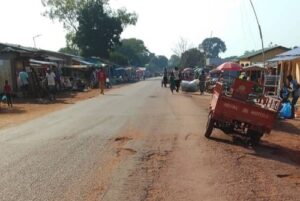
Wenjin One is set to begin exploitation activities in the Baboua sub-prefecture, following the validation of three small-scale mining exploitation permits. Local residents in Baboua have expressed profound concerns regarding these operations. According to reports, the people of Baboua state they do not know what minerals are being extracted from beneath their feet, noting a critical information gap between mining companies and affected communities. This lack of transparency surrounding the nature and scope of the mining activities has led to unease among the local population as foreign firms commence operations in their area. The community's sentiment reflects a broader issue of communication and engagement regarding resource extraction projects in the region, where local populations often feel excluded from decision-making processes and unaware of the potential impacts on their land and livelihoods. The commencement of exploitation by Wenjin One in Baboua brings these community grievances to the forefront, demanding greater accountability and transparency from both the companies and the government.