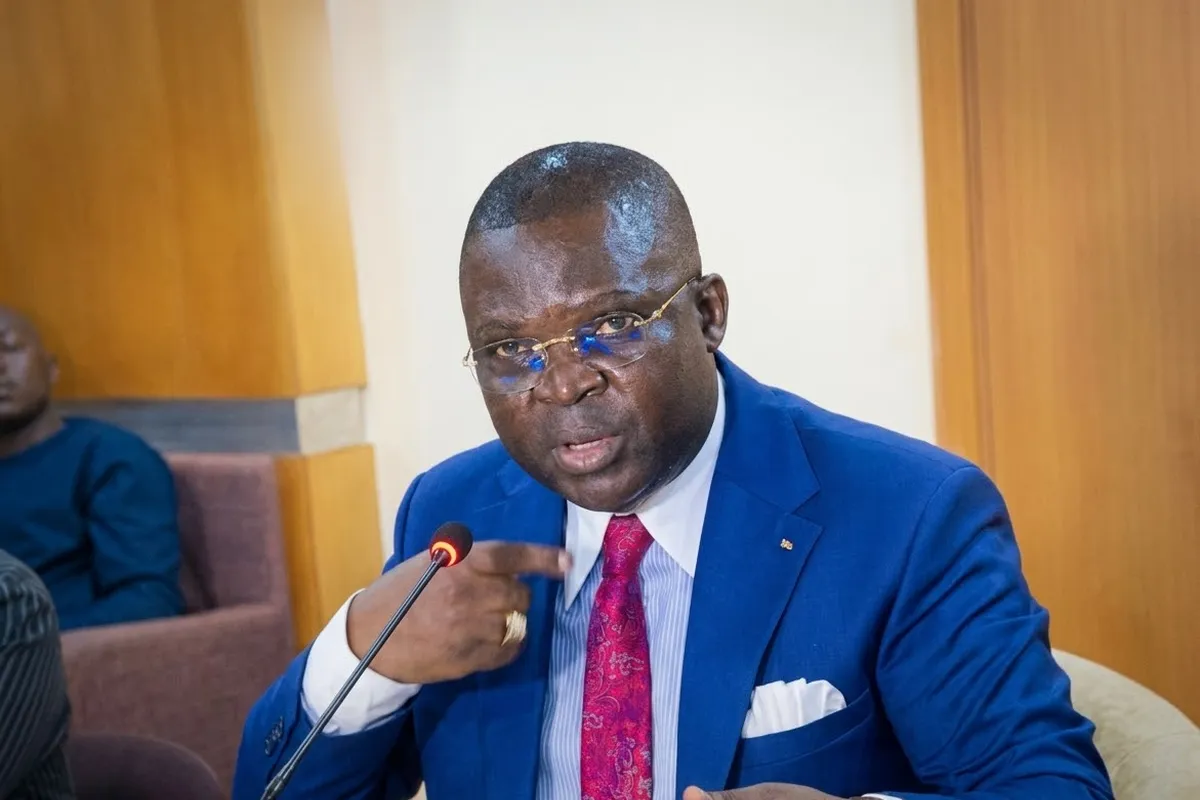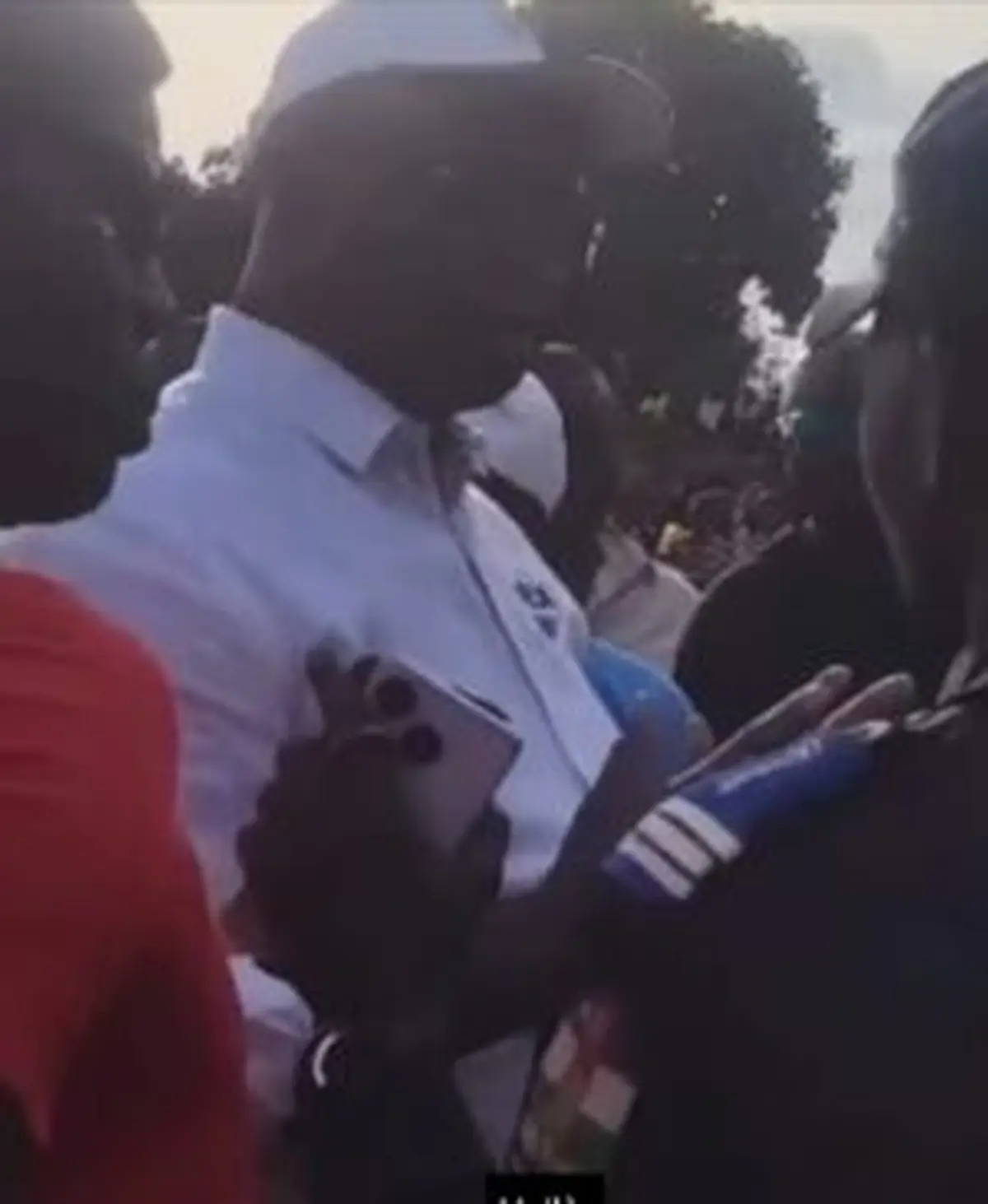
A cadre of the ruling MCU (Mouvement Cœurs Unis) party, Jean-Jacques, has publicly criticized the handling of opposition leader Anicet-Georges Dologuélé’s nationality case, calling for national unity and an end to what he termed "petty actions." Jean-Jacques, who identified himself as a member and cadre of the MCU, expressed his "stupefaction" regarding the situation. "I am not a supporter of Mr. Dologuélé, in fact of URCA and company, but it happens that he is a son of the country," Jean-Jacques stated, questioning why a native-born Central African of Central African parents, even as an opposition leader, would be denied a passport. He noted that "there are Lebanese, Lebanese-Syrians, people with white skin who are on the Economic and Social Council, who are even deputies in the Central African Republic." Jean-Jacques urged President Faustin-Archange Touadéra to "stop the petty actions" and "gather all the sons of the Central African Republic."
Unjust Treatment Alleged
Jean-Jacques, a cadre of the ruling Mouvement Cœurs Unis (MCU) party, publicly expressed his "stupefaction" regarding the nationality and passport controversy surrounding opposition leader Anicet-Georges Dologuélé. He stated, "I am a member of the MCU, I am even a cadre of the MCU, I do not understand and I express my stupefaction, I come out of my reserve to express my stupefaction in fact regarding what is happening." Jean-Jacques clarified that he is not a political supporter of Mr. Dologuélé or his party, URCA. "I am not a supporter of Mr. Dologuélé, in fact of URCA and company, but it happens that he is a son of the country," Jean-Jacques said, adding, "Dologuélé is not my cup of tea, I fought him within URCA, but he remains for me a son of the Central African Republic."
Jean-Jacques questioned the handling of Mr. Dologuélé’s case, comparing it to the status of foreign individuals in the Central African Republic. "I do not understand that a son of the country, born of Central African father and mother, even if he is in the opposition and even the first in the opposition, is refused his passport," he stated. He further noted, "And I recall in passing that there are Lebanese, Lebanese-Syrians, people with white skin who are on the Economic and Social Council, who are even deputies in the Central African Republic." Jean-Jacques criticized attempts to justify the situation, saying, "I do not understand this kind of pseudo-legal casuistry, Mr. Ngamana, government spokesperson, tries to explain the inexplicable in a kind of legal casuistry, but a two-bit one, government spokesperson to try to justify the unjustifiable." He asserted that Mr. Dologuélé was "born in the Central African Republic, of Central African parents, he has held high positions."
Call for National Unity
Jean-Jacques, a cadre of the ruling Mouvement Cœurs Unis (MCU) party, directly addressed President Faustin-Archange Touadéra, urging him to foster unity amidst the controversy surrounding opposition leader Anicet-Georges Dologuélé’s nationality. "Even if there are interpersonal conflicts between my elder, Mr. Faustin-Archange Touadéra, and his challenger, there you go, to try to justify the unjustifiable, it must stop," Jean-Jacques stated. He emphasized the President's role, asserting, "At some point, you have to unite, you are the president of the Seventh Republic, you must stop the pettiness and try to gather all the sons of the Central African Republic within, and that is greatness." He personally appealed to the President, saying, "It's me, your little brother Jean-Jacques, who is talking to you, at some point you have to unite, you have to stop the small [actions]."
Jean-Jacques further showed the urgency for national cohesion by referencing regional political and security developments. He cited the situations in Niger, Chad, and Am Dafock as reasons for Central African unity, implying external pressures necessitated internal solidarity. "At some point we must stop, we must unite, we must be united and you are the president of the gathering of Central Africans, you must gather everyone to be in battle order," Jean-Jacques declared. He conveyed his personal distress over the current political climate, explaining his decision to speak out despite his party affiliation. "And if today I come out of my reserve while being inside the MCU, it's because I am shocked, in fact, I am shocked," he added.
Internal Party Perspective
Jean-Jacques, a cadre within the ruling MCU (Mouvement Cœurs Unis) party, expressed his "stupefaction" regarding the handling of opposition leader Anicet-Georges Dologuélé’s nationality case. "I am a member of the MCU, I am even a cadre of the MCU, I do not understand and I express my stupefaction, I come out of my reserve to express my stupefaction in fact regarding what is happening," he stated, adding that he was "choqué" (shocked) by the situation. Jean-Jacques clarified his political stance towards Dologuélé, asserting, "I am not a supporter of Mr. Dologuélé, in fact of URCA and company, but it happens that he is a son of the country." He further remarked, "Dologuélé is not my cup of tea, I fought him within URCA, but he remains for me a son of the Central African Republic."
Jean-Jacques believes Mr. Dologuélé is being treated unjustly despite being a native-born Central African. "I do not understand that a son of the country, born of Central African father and mother, even if he is in the opposition and even the first in the opposition, we refuse him his passport," he said. He drew a comparison, noting, "And I recall in passing that there are Lebanese, Lebanese-Syrians, people with white skin who are on the Economic and Social Council, who are even deputies in the Central African Republic."
He also criticized the legal arguments presented by government spokesperson Évariste Ngamana concerning Dologuélé's nationality. "I do not understand this kind of pseudo-legal casuistry, Mr. Ngamana, government spokesperson, tries to explain the inexplicable in a kind of legal casuistry but a two-bit one, government spokesperson to try to justify the unjustifiable," Jean-Jacques stated. He emphasized that Mr. Dologuélé was "born in the Central African Republic, of Central African parents, he has held high functions."