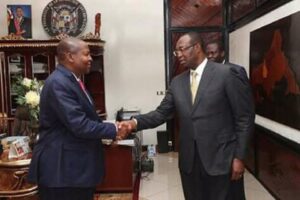
Central African opposition leader Anicet-Georges Dologuélé has accused the government of Faustin-Archange Touadéra of refusing to issue him a new passport, effectively denying him a Central African passport. This development, which reports indicated was published on May 9, 2026, comes amid broader accusations that Touadéra is employing legal tactics to discredit Dologuélé. Mr. Dologuélé's claims suggest a deliberate attempt to impede his ability to travel internationally and to undermine his political standing within the Central African Republic. The situation has drawn significant attention, raising concerns about the state of democracy and political freedoms in the nation. The refusal to issue a new passport to a prominent opposition figure, especially one who has held high office, signals a deepening political crisis.
Passport Denial and Nationality Claims
President Faustin-Archange Touadéra is reportedly questioning Anicet-Georges Dologuélé’s nationality, a move that has led to Mr. Dologuélé being declared stateless in his own country. This development is part of what critics describe as legal maneuvers aimed at discrediting the opposition leader. The article notes that the government is invoking the Code de la nationalité of 1961 in connection with these claims. The questioning of Mr. Dologuélé's nationality has effectively rendered him stateless, a condition that severely restricts his fundamental rights, including freedom of movement and political participation. This declaration of statelessness is a significant escalation in the ongoing political tensions between the government and the opposition.
Under the 1961 Code de la nationalité, any formal déchéance de nationalité, or deprivation of nationality, requires a specific decree from the Council of Ministers. However, reports indicate that such a decree, which would legally formalize the deprivation of Mr. Dologuélé's nationality, has not been signed by the Council of Ministers. The absence of this official decree suggests that while the legal framework is being cited, the formal process for stripping nationality has not been completed. This situation leaves Mr. Dologuélé in a precarious legal position regarding his citizenship status, affecting his ability to obtain official travel documents and participate fully in political life. The government's actions, therefore, appear to be an administrative denial of his rights without fully completing the legal steps required for a formal deprivation of nationality. This creates a de facto statelessness that is not formally recognized by a complete legal process, complicating Mr. Dologuélé's recourse. The invocation of the 1961 Code de la nationalité without the requisite decree from the Council of Ministers notes a potential procedural irregularity in the government's approach. This legal ambiguity further exacerbates the challenges faced by Mr. Dologuélé, as he navigates a situation where his nationality is questioned without the full legal backing that such a serious measure would typically require. The implications of this undeclared statelessness extend beyond travel, potentially impacting his ability to vote, run for office, and access public services within his own country.
Political Context and Allegations
The article claims President Touadéra is violating the Central African Republic's Constitution, its laws, and international treaties. Anicet-Georges Dologuélé contested President Touadéra, who sought a third term last year. This contestation occurred during a presidential election where Mr. Dologuélé was a significant opposition candidate. Last year, Dologuélé renounced his French citizenship, a step he stated was in line with the Central African Republic's constitution, which prohibits dual nationality for certain political offices. This act of renouncing his French citizenship shows his commitment to adhering to the national legal framework and his dedication to his political career within the Central African Republic. His decision to shed his French nationality was a public demonstration of his intent to fully comply with the country's constitutional requirements for holding high office, making the current questioning of his Central African nationality particularly ironic and politically charged. The allegations of constitutional violations against President Touadéra are serious, suggesting a disregard for the rule of law and democratic principles. These claims are further amplified by the timing of these actions, following a contested presidential election where Mr. Dologuélé was a prominent challenger.
The article alleges that Simplice Mathieu Sarandji holds French nationality, while Hassan Bouba is identified as a Chadian national who possesses a Central African diplomatic passport. These allegations, juxtaposed with the treatment of Mr. Dologuélé, raise questions about the consistent application of nationality laws and constitutional provisions within the government. The implication is that while Mr. Dologuélé, who renounced his foreign citizenship, is being targeted over his nationality, others within the government structure may hold foreign nationalities without facing similar scrutiny or consequences. Faustin-Archange Touadéra is referred to in the article using the terms "soi-disant Professeur" and "Empereur-président." These appellations, often used by critics, suggest a perception of arrogance and an authoritarian style of leadership, reflecting a broader discontent with his governance. The use of such terms shows the deep political divisions and the intensity of the opposition's criticism against the current administration. The allegations concerning Simplice Mathieu Sarandji and Hassan Bouba, if substantiated, would highlight a stark contrast in how nationality laws are applied, potentially indicating political selectivity and unfair targeting. Such perceived double standards could further erode public trust in the government's institutions and legal processes.
Opposition Leader's Response
Anicet-Georges Dologuélé, a former prime minister and prominent opposition figure in the Central African Republic, has openly criticized the confiscation of his diplomatic passport. Mr. Dologuélé reported that he was subsequently prevented from boarding a flight to an African Union meeting scheduled for Wednesday in Addis Ababa. This incident prevented him from fulfilling his duties as a member of the board of directors for the African Union Peace Fund, a position he has held since 2018. His inability to travel for such an important international engagement notes the immediate and tangible impact of the government's actions on his public and professional life. The confiscation of his diplomatic passport, typically reserved for high-ranking officials and diplomats, further emphasizes the deliberate nature of the government's attempt to restrict his international movements and influence.
Before his current political standing, Anicet-Georges Dologuélé was a candidate in a presidential election and was elected as a deputy representing Bocaranga. During that presidential election, reports from the country’s electoral body indicated that Mr. Dologuélé secured 13.1% of the votes, making him a significant political force and a credible challenger to the incumbent. His background as a former prime minister and a successfully elected deputy provides him with considerable political legitimacy and a strong base of support. The actions taken against him are therefore seen not merely as an attack on an individual, but as an attempt to neutralize a powerful voice of opposition within the Central African Republic's political landscape. Mr. Dologuélé's extensive experience in both national governance and international diplomacy, as evidenced by his role on the African Union Peace Fund board, makes these restrictions particularly impactful on his ability to advocate for his country and participate in regional affairs. The denial of a passport and the questioning of his nationality are perceived as concerted efforts to sideline a key political opponent, thereby stifling dissent and consolidating power. This ongoing dispute shows the fragility of democratic institutions in the Central African Republic and raises serious questions about the protection of political rights and freedoms for opposition figures.