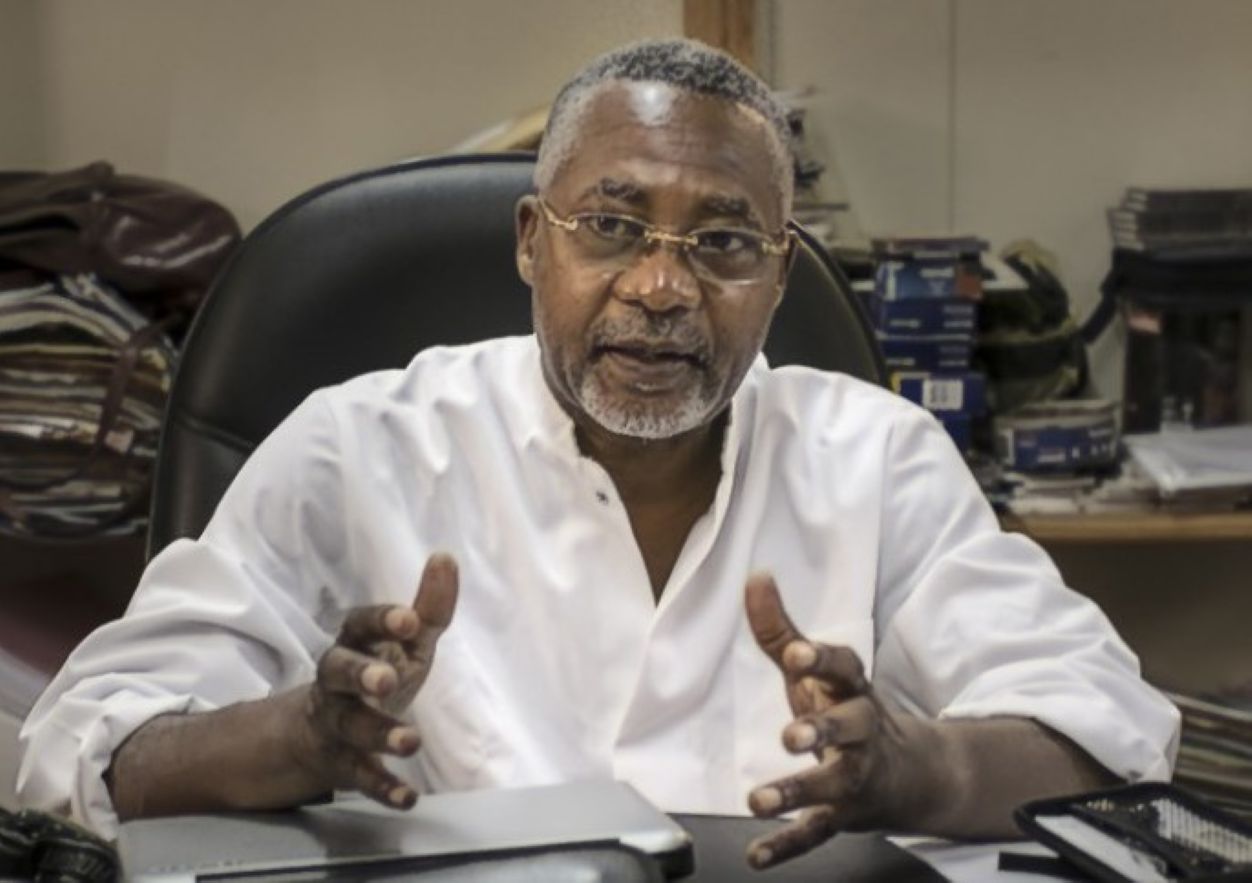
Martin Ziguélé, former Prime Minister of the Central African Republic, recently discussed the persistent financial dependence of Francophone African states on France during an appearance on the DW program 'L’Arbre à Palabre'. He detailed mechanisms that restrict the financial autonomy of African governments, asserting that a Francophone African state seeking international financial support must consider France's position. Ziguélé's insights shed light on the complex interplay between historical ties, diplomatic influence, and economic realities that continue to shape the financial landscape of the region. He showed that this dependence often limits the ability of these nations to chart their own economic course.
During the program, Martin Ziguélé stated, "Plus de 60 ans après les indépendances, les États africains disposent officiellement de leurs propres institutions, budgets et administrations. Ils peuvent également solliciter directement les grandes institutions financières internationales. Pour Martin Ziguélé, la réalité est plus complexe lorsqu’un pays rencontre une crise budgétaire, un déficit extérieur ou un besoin urgent de financement." This statement notes the official recognition of sovereignty versus the practical challenges faced by these nations when financial crises emerge. He further elaborated that despite the outward appearance of independent financial structures, the underlying mechanisms often steer these countries back towards historical patrons.
He emphasized that the historical model of relations between France and its former colonies continues to influence the economic choices of several governments. This enduring influence, according to Ziguélé, often dictates the parameters within which Francophone African states can operate financially on the global stage. "Pour l’ancien Premier ministre, un État francophone qui souhaite obtenir un soutien financier international doit donc tenir compte de la position de Paris," Ziguélé noted, noting that "une indépendance politique réelle doit également reposer sur une capacité financière nationale suffisante." This perspective suggests that true political autonomy is inextricably linked to strong financial independence, a condition many Francophone African states are still striving to achieve. The former Prime Minister's analysis suggests that without this fundamental financial strength, the exercise of political sovereignty remains constrained.
Mechanisms of Influence
Access to programs from the International Monetary Fund (IMF) or the World Bank is influenced by diplomatic power dynamics and state relations, extending beyond purely economic indicators. This means that while a country's economic health is key, its diplomatic standing and relationships with influential member states play a significant role in securing financial assistance. France, in particular, possesses a notable capacity for influence within these international financial institutions due to its diplomatic relations and its significant weight. This influence is not merely theoretical; it translates into tangible advantages in negotiations and policy formulation within these global bodies. France is counted among the main shareholders of both the IMF and the World Bank, a position that grants it considerable leverage in decisions concerning financial aid and structural adjustment programs.
Despite the negotiation of IMF programs based on economic, financial, and budgetary criteria, the role of diplomatic considerations remains relevant. These criteria, while foundational, are often interpreted and applied through a lens that can be shaped by diplomatic interests. This financial dependence becomes especially apparent when a country's public finances are fragile and require external financing. In such scenarios, the need for international support often compels nations to align with the preferences of powerful member states, potentially at the expense of purely national interests. While many developed countries also utilize international financial markets or multilateral institutions for their financial needs, the specific dynamics involving France and its former colonies in Francophone Africa present a distinct dimension to these interactions, rooted in historical ties and ongoing diplomatic relationships. The historical context adds a layer of complexity not typically seen in other developed-developing nation financial relationships.
Consequences for Autonomy
This dependence can reduce governments' decision-making freedom, according to analyses of Francophone Africa's financial relations with France. The former Prime Minister, Martin Ziguélé, has noted that real political independence requires sufficient national financial capacity. Ziguélé emphasized that without this financial strength, the ability of states to act independently is constrained. This limitation extends to various aspects of governance, from economic policy formulation to social development programs. When a nation is heavily reliant on external funding, its policy choices can become subject to the conditions and expectations of its creditors, thereby undermining its sovereign decision-making.
The essential question, he noted, revolves around a state's capacity to choose its partners, negotiate its financing, and define its economic policies without excessive pressure linked to its financial fragility. This fragility often compels countries to seek external support, potentially compromising their autonomy in policy formulation. The dynamic suggests that while political independence may be official, financial realities can dictate the extent of a nation's sovereign choices. The reliance on external financing, particularly from historical partners, can perpetuate a cycle where economic decisions are influenced by the need to maintain access to these financial lifelines. This situation can lead to a perpetuation of economic structures that primarily benefit external actors rather than fostering genuine local development and self-sufficiency. The impact is felt across sectors, from infrastructure projects to public health initiatives, where funding conditions can shape priorities.
Pathways to True Independence
Strengthening national resources, developing production, improving budgetary governance, and building stronger African financial institutions are essential levers to broaden governments' decision-making margin. These measures are seen as critical steps for Francophone African states to achieve greater financial autonomy. By enhancing internal capacities, these nations could reduce their reliance on external financing and diplomatic leverage, which often comes with conditions. Such internal development would also enable them to negotiate international financial agreements from a more strong position, ensuring that the terms of engagement are more equitable and aligned with national development goals.
The focus on national resources and production aims to create sustainable economic growth, thereby increasing state revenues and reducing fiscal deficits. This approach seeks to diversify economies beyond primary commodities and foster local industries that can generate wealth and employment. Improving budgetary governance is intended to ensure efficient and transparent management of public funds, fostering confidence among both domestic populations and international partners. This includes combating corruption, enhancing accountability, and optimizing public expenditure to deliver maximum impact. The development of African financial institutions could offer alternative sources of funding and reduce dependence on non-African entities, creating a more diversified and resilient financial ecosystem within the continent. This would involve strengthening regional development banks, promoting intra-African investment, and developing local capital markets. Ultimately, these integrated strategies aim to empower Francophone African states to assert their economic sovereignty and fully realize their post-independence aspirations.