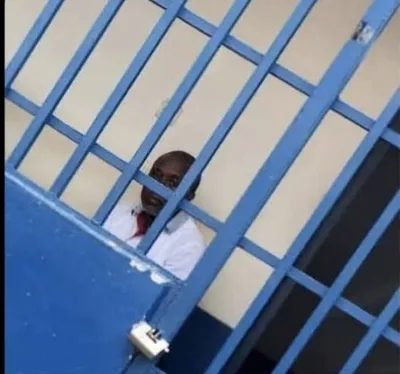
Daniel Nzéwé was released from a cell at the Office Central pour la Répression du Banditisme (OCRB) on the night of Sunday to Monday. The release of Nzéwé, a repeat offender, has raised questions regarding alleged political protection. His departure from the OCRB facility in Bangui occurred without official explanation, despite his prior detention. The incident follows a pattern of legal challenges involving Nzéwé, sparking further scrutiny into the enforcement of justice in the République Centrafricaine. The circumstances surrounding his release from the Office Central pour la Répression du Banditisme (OCRB) facility have intensified public debate regarding the rule of law.
Allegations of High-Level Interference
The article alleges Daniel Nzéwé receives direct support at the Presidential level, which reportedly neutralizes attempts to prosecute him. This claim suggests a systemic issue where high-level influence may be impeding the judicial process. Nzéwé was previously transferred from the Service de Recherches et d'Investigations (SRI) to the tribunal for a trial. This transfer was specifically for a trial concerning the falsification of the signature of the Director of Cabinet, Obed Namsio. During the legal proceedings, Daniel Nzéwé admitted to imitating the official signature. He stated that his reason for doing so was that the Director of Cabinet was too slow in processing files. This admission, made during the trial, provided a direct acknowledgment of his actions regarding the signature. The article claims that Daniel Nzéwé benefits from direct support at the Presidential level, which neutralizes attempts to prosecute him, thereby raising concerns about judicial independence.
Pattern of Impunity and Past Cases
Daniel Nzéwé allegedly extorted ten million CFA francs from entrepreneur Thierry Ouambéti, also known as Sultan de Dékoa. Nzéwé reportedly claimed to act on instructions from the Minister of Finance, Hervé Ndoba, during this alleged extortion. Separately, Daniel Nzéwé and accomplices were implicated in a trial where they allegedly defrauded Canadian, Franco-Israeli, and Belgian investors of over 1.5 billion CFA francs. This substantial sum notes the scale of the alleged financial misconduct. Earlier legal procedures involving Nzéwé, including the disappearance of 14.9 million CFA francs entrusted by Abel Goumba, the Bocom transaction of 65 million CFA francs, and other public fund diversions, reportedly ceased abruptly due to state intervention. These past procedures, which were halted due to state intervention, further fuel the allegations of political protection. The article specifically mentions that past procedures involving Nzéwé, such as the disappearance of 14.9 million CFA francs entrusted by Abel Goumba, the Bocom transaction of 65 million CFA francs, and public fund diversions, stopped abruptly due to state intervention, indicating a recurring pattern.
Defiance and Taunting Post-Release
Upon his release, Daniel Nzéwé reportedly posted a passage from Psalm 91 on his Facebook page. The biblical text, often interpreted as a prayer for divine protection and deliverance from danger, appeared on his social media account following his departure from the Office Central pour la Répression du Banditisme (OCRB) facility in Bangui. This public display came after Nzéwé's release, which occurred without official explanation despite his status as a repeat offender. The social media post quickly drew attention, with observers noting its defiant tone in the context of ongoing allegations regarding Nzéwé's legal challenges and alleged political protection. The act of posting Psalm 91 immediately after his release from the Office Central pour la Répression du Banditisme (OCRB) cell on the night of Sunday to Monday was widely interpreted as a provocative gesture.
Implications for Justice System
Daniel Nzéwé was released without concrete prosecution, despite a complaint filed for fraud, according to the article. During a previous trial, elements of the presidential guard intervened on orders from President Faustin-Archange Touadera to extract Daniel Nzéwé. This direct intervention by the presidential guard, reportedly on explicit orders, shows the high-level involvement in his legal affairs. The article states that the repeated use of false stamps, creation of false ministerial authorizations, and usurpation of government titles have not led to any lasting criminal sanctions. These interventions and the lack of sustained legal consequences raise questions about the integrity and independence of the justice system in the République Centrafricaine. The perceived impunity surrounding Daniel Nzéwé's actions, despite multiple serious allegations, continues to erode public trust in judicial processes and accountability within the country.