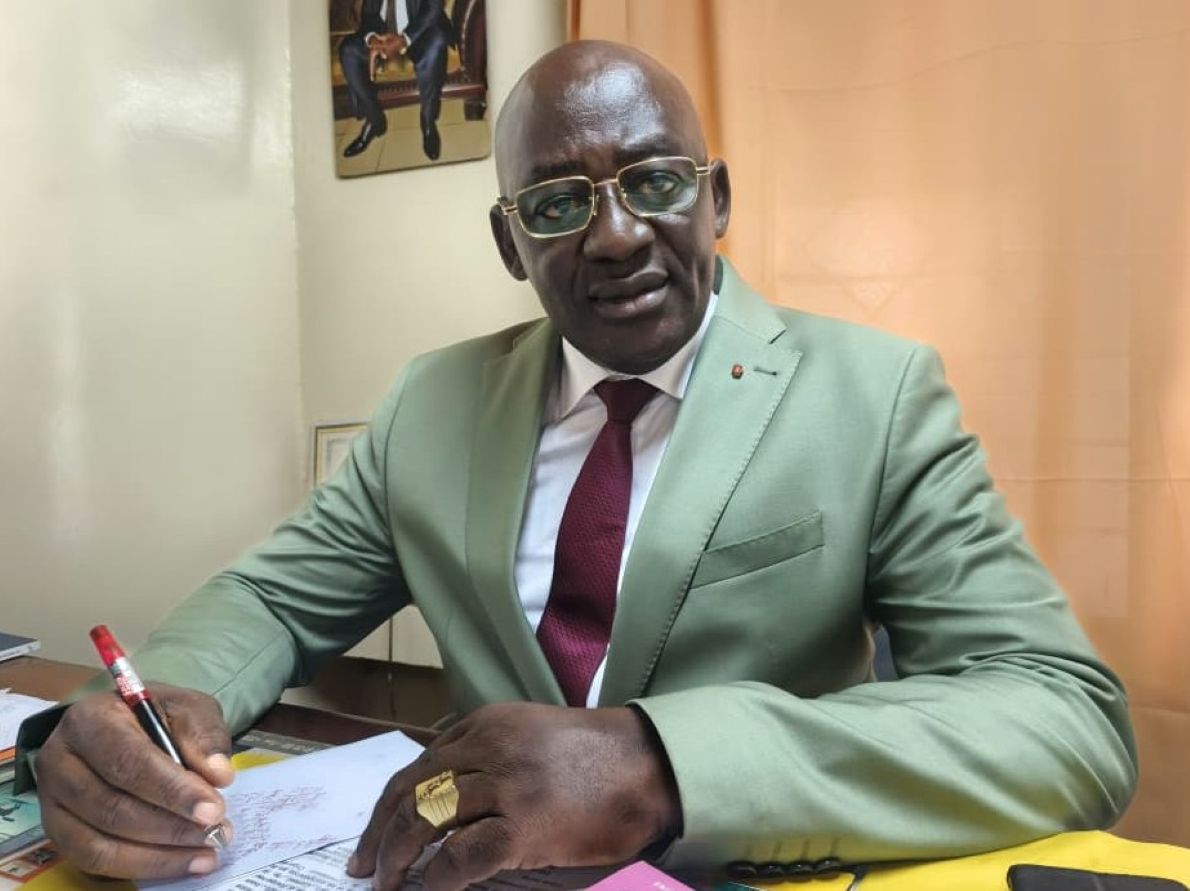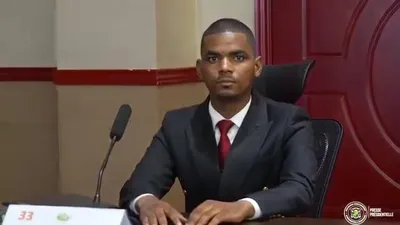
An analyst has interpreted recent remarks by Central African Republic (CAR) Minister of Economy, Plan, and International Cooperation, Marc Mandaba, as an indirect admission of empty state coffers. On Monday, May 8, 2026, Minister Mandaba gave an interview on Africa 24 TV during the 61st Annual Meeting of the African Development Bank in Congo. Fari Tahéruka Shabazz analyzed the televised interview, stating that Mandaba declared the country's capital is "under their feet" and that the nation is in a "world of natural resources, not a financial world." This particular phrasing, according to Shabazz, offered a telling glimpse into the nation's financial reality.
Shabazz interpreted the minister's focus on natural resources as an explicit admission that state coffers are empty in the short term, according to an article dated June 15, 2026. Shabazz stated, "On the substance of the speech given by Minister Marc Mandaba during this interview, there are many interesting nuggets to chew on. He supported audacious positions but above all he indirectly informed us about the real state of Central African public finances." Shabazz added that this analysis aims to enlighten citizens, "especially those to whom we repeat that the coffers of the Central African State are absolutely empty and that by September to October 2026, Touadéra will be totally unable to ensure the payment of civil servants' salaries, pensions, and scholarships." The analyst's assessment shows a critical period for the CAR's financial stability, projecting significant challenges in the coming months.
Minister's Evasive Statements Highlight Fiscal Concerns
Fari Tahéruka Shabazz noted Minister Marc Mandaba's "impeccable presentation, remarkable elocution, and excellent articulation of ideas" during the interview, even as he navigated sensitive economic topics. Despite his polished delivery, Minister Mandaba avoided direct questions regarding fiscal revenue and the digitalization of receipts, instead redirecting the discussion towards mining activities. He explicitly stated that matters concerning fiscal revenue fell under the purview of the Minister of Finance and Budgets. Shabazz interpreted this avoidance of fiscal questions as evidence that the financial régies are not generating satisfactory flows and that the state lacks the capacity to collect sufficient taxes to replenish its depleted coffers. This strategic redirection, in Shabazz's view, served as an indirect confirmation of the government's struggles with internal revenue generation and tax collection mechanisms.
The minister focused on attracting capital primarily from African investors for development projects, rather than seeking investment from foreign entities. This approach, Shabazz asserted, was not merely a strategic choice but a reflection of deeper underlying issues. Additionally, Minister Mandaba disclosed that President Faustin Archange Touadéra officially submitted a request to the African Trade Insurance Agency (ATI) for sovereign guarantees. This request, according to Mandaba, is part of the country's strategy for securing financial backing, indicating a reliance on external assurances to attract investment. Shabazz viewed this move as an attempt to circumvent the country's current financial limitations and attract much-needed capital.
Financial Distress Indicators Point to Deepening Crisis
Fari Tahéruka Shabazz claimed the Central African Republic government lacks immediate budgetary maneuverability, asserting that it is mortgaging its future on unextracted mining reserves. Shabazz stated these reserves are allegedly controlled by Russian Wagner mercenaries, raising questions about the true beneficiaries and control over the nation's natural wealth. Minister Marc Mandaba, during his interview, cited the cost of liquidity in the Central African Monetary Union (CEMAC) zone as approximately 5%. He further elaborated that the state issues sovereign bonds or securities at rates around 8%, 10%, or 11%, according to Mandaba. Shabazz argued that a state resorting to short-term borrowing at such high rates for current expenses signifies total financial asphyxiation, indicating a desperate need for funds to cover operational costs rather than long-term investments. This reliance on high-interest, short-term debt, Shabazz contended, is a clear indicator of severe financial distress and an inability to manage current expenditures through conventional means.
Shabazz interpreted the minister's focus on attracting capital primarily from African investors as a sign of the country's complete international isolation. This approach, Shabazz contended, indicates the closure of traditional international aid channels, forcing the CAR to seek alternative, potentially less favorable, financial partnerships. Shabazz stated that the International Monetary Fund (IMF) and other international financial institutions have prohibited the Central African Republic (RCA) from issuing sovereign guarantees. This prohibition, Shabazz added, is due to the poor condition of the state treasury, effectively limiting the country's ability to secure loans or investments by guaranteeing repayment. The analyst noted this restriction as a significant barrier to the country's economic recovery and a testament to the international community's lack of confidence in the CAR's financial management.
Dire Predictions for Late 2026
Fari Tahéruka Shabazz, an analyst, predicts a severe financial crisis for the Central African Republic (CAR) by late 2026. According to Shabazz, the government will be unable to meet its financial obligations to public sector employees and beneficiaries. By September or October 2026, Shabazz forecasts that President Faustin Archange Touadéra's administration will be "totally unable to ensure the payment of civil servants' salaries, pensions, and scholarships." This projection stems from Shabazz's interpretation of recent statements made by Minister of Economy, Plan, and International Cooperation, Marc Mandaba, which suggested the country's state coffers were empty. The analyst's assessment notes concerns over the CAR's immediate budgetary capacity and its reliance on future mining revenues, which Shabazz claims are managed by Russian Wagner mercenaries. The inability to pay salaries, pensions, and scholarships would represent a significant escalation of the country's financial distress, potentially leading to widespread social and economic instability. Such a scenario would have profound implications for public services, citizen welfare, and the overall governance of the Central African Republic.