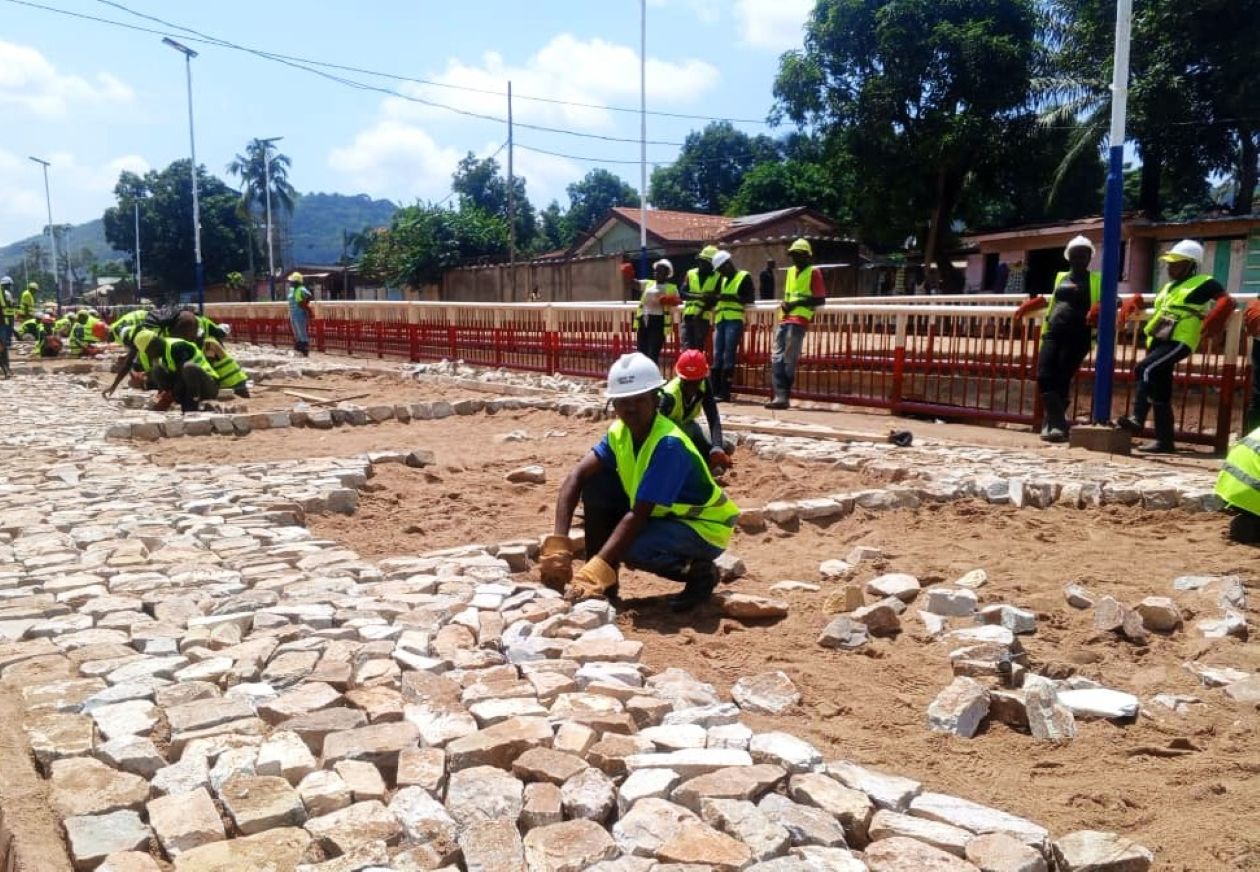
In Bangui's 2nd arrondissement, a pilot project utilizing cut stones for street paving is advancing quickly. This construction initiative specifically targets the alleys adjacent to the École nationale d’administration et de magistrature (ENAM). The paving work with cut stones in the 2nd arrondissement of Bangui is progressing rapidly, aiming to transform the thoroughfares in this central African capital. This project is a pilot initiative experimenting with cut stone paving to address multiple floods in the area, marking a significant development for local infrastructure. The project receives funding from the World Bank and its execution is managed by the Agence de Gestion des Travaux d'Intérêt Public (AGETIP-CAF).
Project Progress and Materials
Two sections of the project are undergoing rehabilitation, each spanning over 900 meters. The two affected sections are each being rehabilitated over 900 meters, contributing to a substantial improvement in the area's connectivity. Construction workers have been engaged in various tasks related to the paving initiative for more than 4 months. Workers have been engaged in various tasks for over 4 months, demonstrating sustained effort on the ground. The project is utilizing local resources, according to reports from the site. These materials include good quality stones sourced within the region, alongside different grades of sand, specifically fine, medium, and coarse varieties. The reliance on locally available materials aims to support the sustainability of the infrastructure development, fostering economic benefits within the community. The use of these readily available resources also helps to reduce transportation costs and environmental impact, reinforcing the project's commitment to local sourcing.
Resident Experiences and Benefits
The project incorporates beautification efforts and the installation of 70 solar streetlights, enhancing both aesthetics and public safety in the area. The inclusion of 70 solar streetlights is a key feature, promising improved visibility and security for residents after dusk. A young resident, Evariste, noted the improved accessibility, stating that he can now move around easily. Evariste notes that he can now move around easily, a testament to the immediate positive impact of the new infrastructure. This represents a significant change from previous conditions. Formerly, residents faced considerable difficulties during rainfall, being unable to leave their homes and often getting dirty when attempting to use the pathways. Previously, residents could not go out when it rained and got dirty using the path, showing the severity of the prior conditions. The new paving aims to alleviate these long-standing issues for the community, providing a more reliable and clean environment for daily life. The enhanced mobility and cleanliness are already making a tangible difference in the lives of those living nearby.
Concerns Over Quality and Durability
The ongoing project has demonstrated its effectiveness in terms of resistance, according to assessments from the site. This project has demonstrated its effectiveness in terms of resistance, suggesting a strong initial performance. However, some residents have voiced reservations regarding the long-term viability of the stone paving. One inhabitant expressed concern about the quality and durability of the new streets, fearing potential deterioration with the regular passage of vehicles, particularly those transporting heavy loads. This apprehension points to a desire for reassurance regarding the infrastructure's resilience under daily use conditions, especially given the potential for increased traffic. The resident emphasized the importance of ensuring that the materials and construction methods can withstand the rigors of heavy vehicle traffic over time. Local authorities, in response to such concerns, indicate that it is currently too early to definitively assess the overall quality and longevity of the newly paved sections. The local authorities state it is too early to definitively assess the quality, urging patience as the project matures. Further observation over time will be necessary to fully evaluate the project's performance and address any emerging issues.
Official and Local Authority Views
The pilot initiative aims to experiment with cut stone paving as a solution to address recurring floods in the area. This project receives funding from the World Bank. Its execution is managed by the Agence de Gestion des Travaux d'Intérêt Public (AGETIP-CAF). Authorities have stated that it is currently premature to definitively assess the overall quality and longevity of the newly paved sections. Further observation over time will be necessary to fully evaluate the project's performance. The authorities emphasize that the initial phase is an experimental one, designed to gather data on the effectiveness and durability of cut stone paving in the local environment. This measured approach allows for adjustments and improvements to be made before potentially scaling up the initiative to other parts of the city.