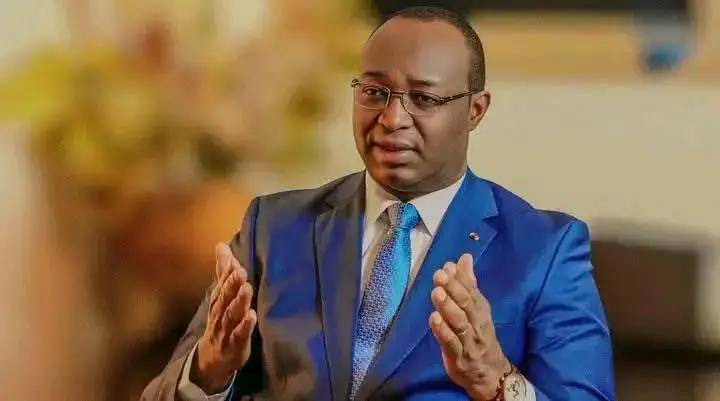
Elysée Nguimalé, coordinator of the Observatory for Democratic Governance in Central Africa (OGDC), criticized the Central African Republic government's handling of incidents in Boali during a debate on Radio Ndeke Luka. Nguimalé stated the government condemned the first murder and initiated an investigation but failed to do the same for those who vandalized a mosque.
"When I heard the government's statement, afterwards I said the government did nothing," Nguimalé asserted. "We have a law that prohibits murder, but there is a subject, an armed group that killed a compatriot in Boali. And the population went to take revenge, vandalizing the mosque. What is the government's position? I heard the government spokesperson condemn and open an investigation against the one who committed the first murder, but there is no investigation against those who vandalized the mosque and the place of worship! Double standards." Nguimalé further argued, "We are a state that does not have a construction of peace and security at several levels."
Government's Unequal Response
Elysée Nguimalé, coordinator of the Observatory for Democratic Governance in Central Africa (OGDC), stated that the Central African Republic government's official reaction to the events in Boali was limited to addressing the initial murder. Nguimalé asserted that the government failed to extend the same condemnation or initiate investigations into the subsequent acts of mosque vandalism.
According to Nguimalé, the repeated instances of violence in the country demonstrate that the state's sovereign mission is no longer assured. He argued that this selective response notes a fundamental issue within the government's approach to peace and security across various levels. The OGDC coordinator's comments suggest a perceived inconsistency in how authorities address different forms of violence and crime, particularly when religious sites are targeted.
Decade of Insecurity and State Failure
Elysée Nguimalé, coordinator of the Observatory for Democratic Governance in Central Africa (OGDC), stated that the Central African Republic's government has never established the foundational elements required for enduring peace and security. Nguimalé contested official narratives that portray the country as having achieved stability, arguing that such claims do not reflect the reality on the ground.
He further asserted that the current precarious security situation has persisted for a decade. According to Nguimalé, this extended period of instability indicates a failure to address fundamental issues necessary for national cohesion and safety. His remarks suggest that despite various efforts, the underlying conditions for a stable state have not been adequately built or maintained, leading to prolonged challenges in peace and security.
Philosophical Basis for Security
Elysée Nguimalé invoked the philosophy of Thomas Hobbes, explaining that security is established when the state effectively prevents individuals from engaging in criminal activities. Nguimalé, the coordinator of the Observatory for Democratic Governance in Central Africa (OGDC), argued that the government's perceived failure to uphold this principle indicates a significant regression. He concluded that citizens in the Central African Republic have effectively transitioned from living within a modern state structure to a "state of nature," implying a lack of sovereign protection and order.
Call for Accountability
Elysée Nguimalé reproached the Central African Republic government for its failure to announce prosecutions against those responsible for vandalizing a mosque in Boali. Nguimalé, coordinator of the Observatory for Democratic Governance in Central Africa (OGDC), asserted that institutions tasked with preventing violence and enforcing the law are not fulfilling their mission. He indicated that this systemic failure points to a deeper issue regarding the state's functionality. Nguimalé further stated that the Central African state is either dying or already dead, attributing this decline to the absence of foundational peace construction efforts. He emphasized that without these fundamental elements, the state cannot effectively guarantee peace and security for its citizens.