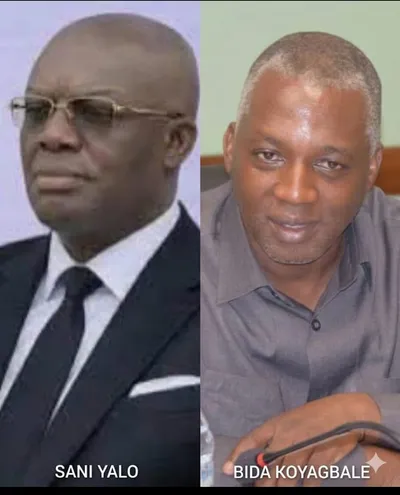
An alleged coup plot involving Karim Mekassoua and seeking support from Congolese President Denis Sassou Nguesso has emerged in the Central African Republic, following the leak of an audio recording on Facebook and WhatsApp. The recording detailed discussions of the alleged plot, explicitly outlining intentions to destabilize the current government. This digital dissemination drew official attention, prompting a swift response from authorities. In response, the justice system has summoned Bida Koyagbalé and Sani Yalo for questioning, with proceedings scheduled to commence on May 25. This development comes as the country grapples with heightened political tensions, with the article dated May 27, 2026. The summons for Koyagbalé and Yalo signals a formal and serious investigation into the individuals mentioned in connection with the alleged scheme. The gravity of the allegations has put the nation's political stability under intense scrutiny.
Accused Figures Under Scrutiny
Bida Koyagbalé, who currently serves as minister advisor for major works at the presidency, and Sani Yalo, president of the board of directors of the Central African Road Haulage Office (BARC), have been directly implicated in the alleged coup plot. Initial reports indicated that both individuals declined to appear for questioning when first summoned by the judicial authorities, a move that created further apprehension. Their refusal necessitated the direct intervention of President Faustin-Archange Touadéra to ensure their cooperation with the judicial process, showing the high-level attention this case has drew.
The accusations extend to claims regarding Sani Yalo's political aspirations, which are being scrutinized as potential motives. Information suggests that Mr. Yalo harbored ambitions to either replace current Prime Minister Félix Moloua or to assume the prominent position of Vice-President. These alleged motivations are reportedly part of the broader context of the inquiry into the coup plot, providing a potential framework for understanding the alleged actions. The legal proceedings are now underway, focusing intently on the roles and alleged intentions of those named in connection with the audio recording that sparked the investigation. The unfolding judicial process is expected to clarify the extent of their involvement and the precise nature of the alleged plot against the government, as well as any underlying political ambitions that may have fueled it.
Background of Sani Yalo
Sani Yalo has been characterized in investigative reports as a "born mafioso" and is widely considered the primary financier of the ruling party, a role that has granted him significant influence. His past is marked by serious allegations, including involvement in the embezzlement of several billion FCFA through Zongo Oil during the Patassé administration, an incident that drew considerable public attention. In 2002, Mr. Yalo was arrested in Cameroon and subsequently extradited to the Central African Republic to face charges related to his financial dealings. The Bangui tribunal convicted him in August 2006, sentencing him to eight years in prison for fraud, forgery, and corruption, a testament to his controversial history.
Beyond financial crimes, Mr. Yalo also faces accusations of funding and simultaneously utilizing Séléka rebels and Anti-Balaka militias to acquire "blood diamonds," a practice that has fueled conflict in the region. Despite these past allegations and convictions, Sani Yalo was appointed head of the Central African Road Haulage Office (BARC) in August 2016, a decision that raised eyebrows among observers. More recently, he is alleged to have injected nearly 200 million FCFA for the ruling party's festivities, further noting his reported financial contributions and his continued proximity to power despite his checkered past. His substantial financial influence and controversial history make him a central figure in the current investigation.
Background of Bida Koyagbalé
Bida Koyagbalé is described in reports as possessing a dubious morality and is alleged to have squandered his father's fortune, indicating a history of questionable financial management. He is also known for proposing specific financial initiatives, including "Tourougou Banque" aimed at military personnel, designed to provide specialized banking services, and "Yaka-Banque" designed for farmers, intending to support agricultural development. These proposals suggest an interest in economic and social programs, albeit under his leadership. Koyagbalé reportedly carries a significant debt with Ecobank Centrafrique. This debt stems from loans he allegedly secured using his paternal assets as collateral, indicating potential financial vulnerabilities. These details emerge as Koyagbalé faces intense scrutiny in connection with the ongoing investigation into the alleged coup plot, with his personal history and financial dealings becoming relevant to the inquiry.
The Leaked Recording and Its Implications
The leaked audio recording, which rapidly circulated widely on social media platforms such as Facebook and WhatsApp, details alleged discussions surrounding a plot to overthrow the government of the Central African Republic. The recording specifically mentions Karim Mekassoua as a key figure in the alleged conspiracy and suggests attempts to solicit key support from Congolese President Denis Sassou Nguesso, indicating a potential regional dimension to the plot. This digital dissemination brought the alleged conspiracy to the immediate attention of authorities, prompting a formal and urgent response from the justice system. The explicit content of the recording directly led to the issuance of summonses for Bida Koyagbalé and Sani Yalo, thereby initiating a full judicial investigation into the claims. The legal proceedings, which formally commenced on May 25, aim to ascertain the veracity of the plot outlined in the recording and the precise extent of involvement of the individuals named. The incident has significantly intensified political tensions within the country, with President Faustin-Archange Touadéra's administration responding decisively to what it perceives as a serious alleged threat to national security and stability. The ongoing investigation is expected to provide clarity on the nature and scope of the alleged plot, and its findings will undoubtedly have significant repercussions for the political landscape of the Central African Republic.