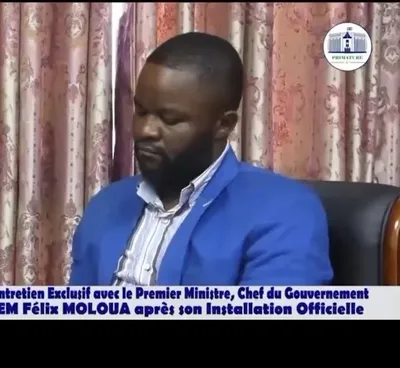
Central African Republic Prime Minister Félix Moloua recently unveiled "flagship measures" for his new mandate, despite his ranking 10th on the CNC barometer with a score of 10/20. These initiatives come as the country faces significant economic challenges, with civil servants' salaries remaining un-revalued for nearly 30 years. The predominantly agricultural nation, where 90% of the population are cultivators, grapples with widespread poverty and a lack of basic services. The Prime Minister's announcement of these "flagship measures" has drawn criticism for appearing to sidestep the deep-seated issues that plague the nation, with many perceiving them as superficial in the face of escalating crises.
Public Needs Ignored
The Central African populace endures significant financial strain due to high taxation, which includes substantial levies on hydrocarbons and digital transactions such as those conducted via Orange Money. This suffocating taxation further exacerbates the economic pressures faced by ordinary citizens. Amidst these economic pressures, the public's expectations for basic services remain unmet. Citizens anticipate access to essential provisions like water, electricity, and functional public infrastructure, including decent hospitals and schools. They also seek the establishment of decentralized universities to broaden educational opportunities beyond the capital, addressing regional disparities in access to higher education. Cultivators, who form 90% of the population, are awaiting subsidies or other forms of support to revitalize key cash crops, specifically coffee and cotton, which are key for the country's agricultural sector and overall economic stability. The lack of government support for this vital sector notes a disconnect between policy and the needs of the majority of the population.
Focus on Trivial Discipline
Prime Minister Félix Moloua has established specific disciplinary conditions for his administration, according to reports. Among these, Moloua requires ministers "to accept being at the office at 8:00 AM." This directive emphasizes punctuality and presence within the government's top ranks, seemingly prioritizing administrative adherence over substantive policy changes. Additionally, Moloua has mandated that civil servants gather every Monday. At these weekly assemblies, they are expected to raise the flag and sing the national anthem. These measures appear to focus on instilling a sense of order and national pride within the public service, yet critics argue they divert attention from more pressing governance issues. The initiatives arrive as the Central African Republic navigates various economic and social challenges, with previous sections of this report detailing public dissatisfaction regarding unmet basic needs and high taxation. This focus on symbolic gestures rather than tangible improvements for the populace has fueled public skepticism regarding the effectiveness of the new mandate.
Unaddressed Systemic Issues
Amidst these operational adjustments, deeper systemic issues remain unaddressed. Russian Wagner mercenaries face accusations of plundering the country's resources and committing crimes with impunity. This situation contributes to a perception that fundamental challenges are being overlooked by the government, raising serious concerns about sovereignty and the rule of law. Further criticism points to the operational capacity of the Primature, which is described as being reduced to a simple registration office. This suggests a broader issue within the administrative structure, where the office responsible for central governmental coordination may lack the necessary authority or functionality to address complex national problems effectively. The allegations against the Wagner mercenaries, coupled with the perceived administrative weakness of the Primature, paint a picture of a government struggling to assert control and protect its citizens' interests.
Leadership and Governance Concerns
Félix Moloua has served as the head of the Primature for nearly five years, a period marked by ongoing challenges in governance. During his tenure, concerns have emerged regarding the stability of his leadership. One notable incident involved an alleged dispute with the Minister of Youth, which reportedly necessitated Moloua seeking external intervention to retain his position. This occurrence, according to sources, showed a perceived vulnerability in the Prime Minister's standing and raised questions about his internal political support. The long duration of Moloua's leadership of the Primature contrasts with the persistent criticisms regarding the government's focus on superficial measures rather than addressing fundamental national issues. Critics contend that such incidents highlight a broader pattern of instability and a reliance on external factors to maintain internal political equilibrium, rather than through strong domestic policy or strong governance. The prolonged period of his leadership, despite a low ranking on the CNC barometer, suggests a disconnect between public perception of performance and political longevity.