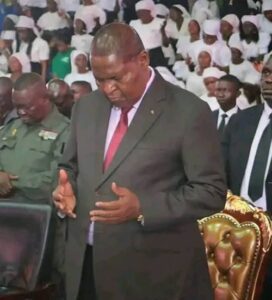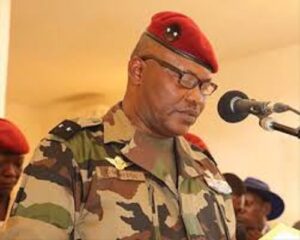
General Zéphirin Mamadou, Chief of Staff of the Forces Armées Centrafricaines (FACA), has recently appointed his son, Jordy Étienne Mamadou, to a senior logistics role within the military. This appointment of his son, Jordy Étienne Mamadou, who is 27 years old, has sparked significant controversy. Jordy Étienne Mamadou was specifically named Assistant in charge of mobility, equipment, and infrastructure for the FACA, a position of considerable responsibility and influence. He subsequently became a commissioner commander and head of military logistics, further consolidating his control over critical military operations. These rapid and high-level appointments have drawn intense scrutiny amidst broader corruption allegations concerning the alleged privatization of military logistics in Centrafrique, raising serious questions about nepotism and financial impropriety within the national defense structure.
Son's Rapid Rise and Control
General Zéphirin Mamadou's son, Jordy Étienne Mamadou, was born in 1999, making him 27 years old currently. His ascent within the military hierarchy has been remarkably swift, as he became a commander in the national army at the young age of 23. His current role as Assistant in charge of mobility, equipment, and infrastructure for the Forces Armées Centrafricaines (FACA) grants him significant oversight and direct control over essential military resources. This powerful position reportedly controls the army's entire vehicle fleet, managing its acquisition, maintenance, and deployment. It oversees and manages the nation's critical fuel stocks, a vital component for any military operation. The scope of his responsibilities also extends to negotiating and awarding lucrative contracts for arms, ammunition, and sophisticated transmission equipment, which are key for the FACA's operational capabilities. Beyond matériel, the role also encompasses significant influence over infrastructure budgets, dictating how funds are allocated for military construction and maintenance projects across the country. The concentration of such extensive financial and logistical power in the hands of a single individual, especially the son of the Chief of Staff, has fueled concerns about potential conflicts of interest and the integrity of military procurement processes.
Allegations of Falsified Age and Child Soldier Violation
General Zéphirin Mamadou's son, Jordy Étienne Mamadou, was integrated into the national army in 2015. At that time, Jordy Mamadou was 16 years old, a fact that has become a central point of contention in the ongoing allegations. This integration reportedly violated United Nations conventions concerning child soldiers, which strictly prohibit the recruitment or use of persons under the age of 18 by armed forces or armed groups. His father, General Zéphirin Mamadou, allegedly falsified his administrative documents to artificially age him, according to various reports, thereby circumventing international and potentially national regulations. Following this irregular entry, Jordy Étienne Mamadou was subsequently promoted rapidly through officer training, a progression widely attributed to his father's considerable influence within the military establishment. These claims suggest deep-seated irregularities in his military career from its very inception, raising profound questions about the fairness, transparency, and legality of recruitment and advancement processes within the Forces Armées Centrafricaines (FACA). The allegations not only point to a potential breach of international law but also show a systemic issue within the military where personal connections may supersede merit and established protocols.
Broader Family Network and Military Impact
The article asserts that the Central African national army has ceased to function as a legitimate instrument of defense for the nation. Instead, it has allegedly transformed into an administrative militia, primarily serving two distinct purposes: ensuring the survival of the current regime and facilitating the enrichment of a specific clan. This alleged pattern of illicit financial gain within the military hierarchy includes a continuation of "business of overcharging," a practice previously operated by General Zéphirin Mamadou's mother, Prisca Mamadou. This suggests a multi-generational involvement in financially questionable activities linked to military resources. Further expanding the family's widespread influence, General Zéphirin Mamadou has reportedly positioned numerous other relatives, including brothers, sisters, and cousins, into key administrative roles within the military. These family members, despite their positions, are conspicuously not deployed to front-line combat positions, where the risks are highest and the operational demands most stringent. Instead, the article claims they exclusively occupy budgetary, administrative, and office-based roles within the Forces Armées Centrafricaines (FACA). This strategic placement ensures their proximity to financial flows and decision-making processes, allowing the family to exert significant control over the military's non-combat operations and resources, while avoiding the dangers inherent in active service.
Presidential Complicity and Military Transformation
President Faustin-Archange Touadéra is accused of tolerating the alleged privatization of military logistics and the strategic placement of General Zéphirin Mamadou's relatives in key roles, according to the article. This tolerance on the part of the nation's highest office is attributed to what is described as a "pact of mutual corruption," suggesting a reciprocal arrangement where President Touadéra ensures the submission of troops through General Mamadou's command. This alleged complicity, the report claims, allows the current military structure, rife with these alleged corrupt practices, to persist without intervention from the highest levels of government. The President's alleged inaction is presented as a critical factor enabling these structural changes and the associated corruption within the military hierarchy.
Ongoing developments within the Forces Armées Centrafricaines (FACA) are described as a profound transformation of the national army. Instead of operating solely as a defense institution dedicated to protecting the nation and its citizens, the FACA is allegedly functioning as an administrative militia. This transformation reportedly serves two primary, self-serving purposes: ensuring the survival of the existing regime by maintaining a loyal, albeit potentially compromised, military force, and facilitating the enrichment of a specific, influential clan, namely that of General Zéphirin Mamadou. The article asserts that President Touadéra's alleged inaction is not merely an oversight but a critical factor enabling these fundamental structural changes and the associated widespread corruption within the military hierarchy. This situation paints a concerning picture of governance and military integrity in Centrafrique, where national defense resources may be diverted for personal and political gain, rather than serving the public interest.