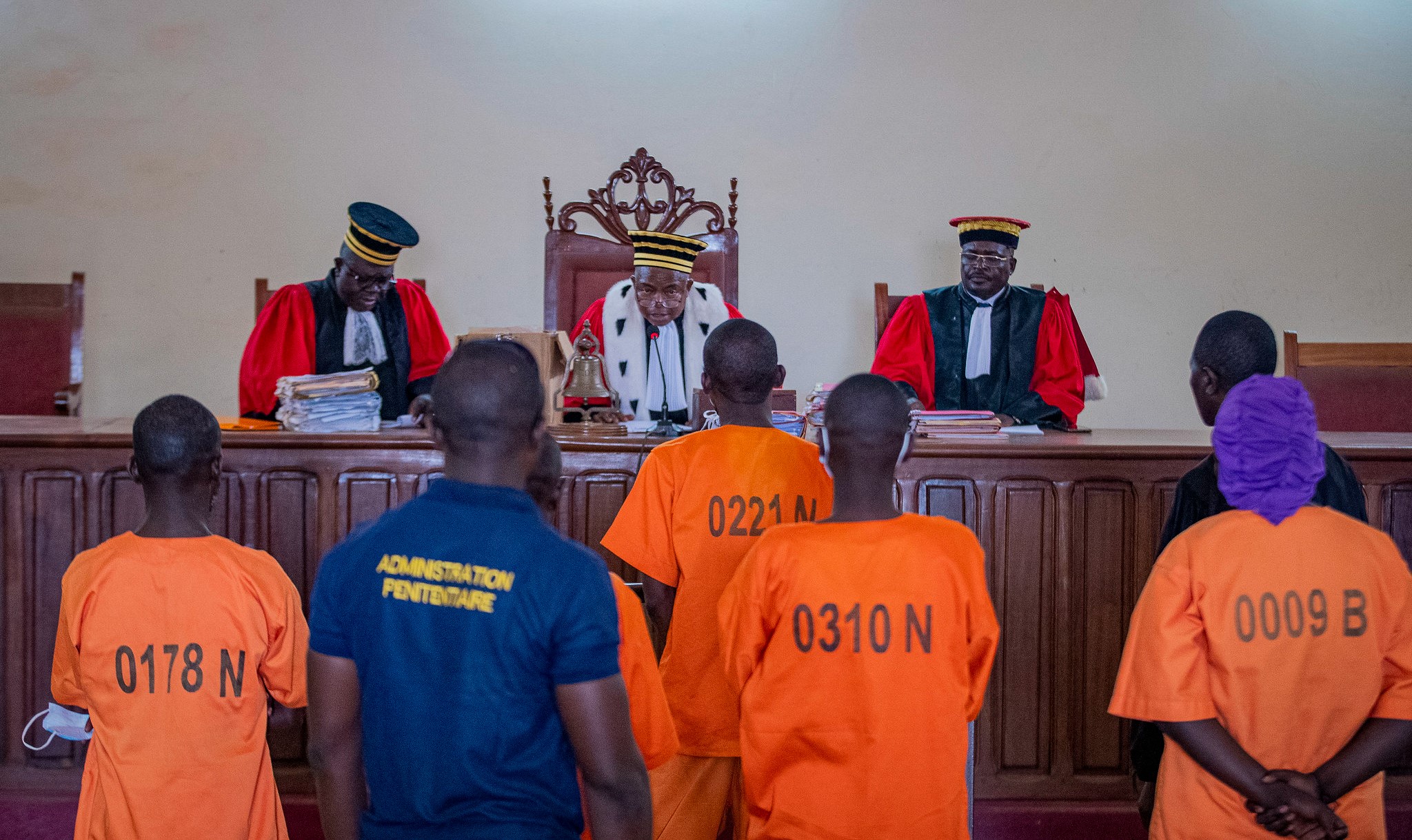
Jean Kolaga was sentenced to 10 years of forced labor on August 25 in Bangui after a court found him responsible for delivering fatal blows. The court's decision concludes proceedings related to the death of Christ-Roi Jordan Bandengbe. This significant legal outcome was delivered in the Central African capital, marking a key moment in the judicial process that followed the tragic incident. The August 25 ruling by the court specifically determined that Kolaga's actions led to the fatal blows that caused the victim's death, leading to the severe sentence.
Details of the Sentence
Jean Kolaga's sentence extends beyond forced labor, as the court also mandated a substantial financial penalty. The convicted individual must pay 5 million CFA francs to the civil party. This sum is specifically designated as damages and interest, a standard and key component in legal judgments where a victim or their family seeks compensation for harm suffered. This financial order accompanies the primary punishment of a decade of forced labor, showing the court's full ruling in the case stemming from the death of Christ-Roi Jordan Bandengbe. The combined penalties reflect the judiciary's assessment of both punitive and compensatory measures appropriate for the gravity of the offense. This aspect of the judgment ensures that beyond the deprivation of liberty, there is also a material reparation to the affected party, as determined by the Bangui court. The imposition of both forced labor and a monetary fine notes the dual objectives of the Central African justice system: to punish serious crimes and to provide restitution to those who have suffered loss.
The court's decision to impose 10 years of forced labor signifies the severity with which the judicial system in Bangui views the crime of delivering fatal blows. Such sentences are intended to serve as a deterrent and to uphold the rule of law within the Central African Republic. The specific nature of "forced labor" as a penalty reflects a particular approach to incarceration and rehabilitation within the region's legal framework. This form of punishment often involves compulsory work assignments during the period of incarceration, contributing to the state or specific projects. The detailed judgment against Jean Kolaga, encompassing both his physical liberty and financial assets, was the culmination of a thorough legal process.
Ongoing Court Session
The first criminal session of Bangui for the year is currently underway. This judicial period handles various criminal cases within the Central African capital, with proceedings like Jean Kolaga's sentencing forming a significant part of its agenda. The ongoing session provides a vital platform for the Central African justice system to address serious offenses and deliver judgments efficiently and transparently. Such sessions are critical for the administration of justice and for maintaining public order and confidence in the legal system across the region. The court in Bangui continues to process a wide array of cases, reflecting its unwavering commitment to legal proceedings and the consistent application of justice. Judicial authorities are meticulously managing a caseload that includes a diverse range of criminal charges, with each case moving through the legal process as scheduled for this specific session. The court's operations during this period are a regular and essential function of the legal calendar in Bangui, ensuring that justice is served for all citizens. The conclusion of cases such as Jean Kolaga's during this session demonstrates the active role of the judiciary in upholding legal principles.