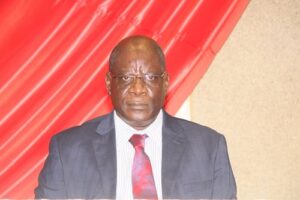
Prime Minister Félix Moloua definitively excluded Richard Filakota from the new government team, following Moloua's attribution of the nation's economic stagnation to the former minister's initiatives. Filakota, who was tasked with piloting the National Development Plan (PND), had previously criticized government management. He stated, "qualifiant par exemple la gestion du RCPCA de structurelle et chaotique malgré les milliards de dollars annoncés à l’époque." Filakota also attempted to deflect blame for state delays, accusing the head of government of sabotage through social media relays, saying, "Sûr de ses soutiens, le ministre déchu avait alors tenté de rejeter la responsabilité des lenteurs de l’État sur le chef du gouvernement, l’accusant à demi-mot de sabotage par le biais de relais sur les réseaux sociaux." This definitive exclusion marks the culmination of escalating tensions and public disagreements between the two high-ranking officials.
Allegations of Mismanagement and Corruption
Richard Filakota assumed the role of Minister of Economy, Planning, and Cooperation on January 4, 2024. During his tenure, suspicions of massive embezzlement emerged, specifically linked to initiatives such as the Londo project, which received significant funding from the World Bank. These allegations have contributed to the recent scrutiny surrounding his leadership and the performance of his ministry. The Londo project, a key development initiative, became a focal point for these concerns, raising questions about the allocation and oversight of international funds.
Further claims indicate the dispersion of state assets within the minister's immediate circle. Investigations reportedly found vehicles and motorcycles, purchased with public funds, in the entourage of the former minister. These discoveries have raised significant questions regarding the proper use and accountability of government resources under his department. Such findings show the seriousness of the allegations of misappropriation and a lack of transparency in managing public property. The presence of these assets among individuals closely associated with Filakota has fueled public and political concern.
Filakota himself had previously voiced strong criticisms regarding past government management. He publicly described the management of the RCPCA as "qualifiant par exemple la gestion du RCPCA de structurelle et chaotique malgré les milliards de dollars annoncés à l’époque" (qualifying, for example, the management of the RCPCA as structural and chaotic despite the billions of dollars announced at the time). This statement showed his assessment of systemic issues within previous administrations, presenting himself as a critic of established practices.
Despite facing mounting pressure and allegations, the former minister attempted to deflect blame concerning state delays. He accused the head of government of sabotage, reportedly through social media relays. According to sources, Filakota, "Sûr de ses soutiens, le ministre déchu avait alors tenté de rejeter la responsabilité des lenteurs de l’État sur le chef du gouvernement, l’accusant à demi-mot de sabotage par le biais de relais sur les réseaux sociaux" (Confident of his support, the ousted minister then tried to shift responsibility for state delays onto the head of government, subtly accusing him of sabotage through social media relays). This public accusation further strained his relationship with the Prime Minister and the broader government, setting the stage for his eventual dismissal.
Escalating Conflict and Dismissal
The Prime Minister's office dispatched a control committee to recover state assets, an action that followed a period of escalating tensions and the emergence of embezzlement suspicions. This move signaled a direct response from the highest levels of government to the allegations against Filakota's ministry. A heated verbal exchange subsequently occurred between Richard Filakota and Prime Minister Félix Moloua during a Council of Ministers meeting. During this contentious meeting, Filakota attempted to shift responsibility for state delays onto the Prime Minister, asserting, "Sûr de ses soutiens, le ministre déchu avait alors tenté de rejeter la responsabilité des lenteurs de l’État sur le chef du gouvernement, l’accusant à demi-mot de sabotage par le biais de relais sur les réseaux sociaux." This direct confrontation in a high-level government forum noted the irreparable breakdown in their working relationship.
Prime Minister Moloua, without directly naming his former subordinate, criticized prior economic management. He stated, "Avec une habileté diplomatique certaine, sans jamais prononcer le nom de son ancien subordonné, Félix Moloua a longuement insisté sur les défaillances managériales, l’incapacité de pilotage et la mauvaise foi des gestionnaires précédents de la chaîne de l’économie." Moloua attributed the nation's economic stagnation to initiatives overseen by the former minister, a move interpreted as a direct response to Filakota's earlier criticisms. The Prime Minister remarked, "Le Premier ministre a ainsi retourné l’argumentation de son adversaire, attribuant l’enlisement économique de la nation aux initiatives de l’ancien ministre, savourant son autorité retrouvée devant une assistance qui a parfaitement compris la cible de ce réquisitoire." Filakota had previously described the management of the RCPCA as "qualifiant par exemple la gestion du RCPCA de structurelle et chaotique malgré les milliards de dollars annoncés à l’époque." Following these developments and the definitive exclusion of Richard Filakota from the new government team, Monsieur Baghazard replaced him as Minister of Economy, Planning, and Cooperation, signaling a new direction for the nation's economic policy.
Prime Minister's Public Criticism
Prime Minister Félix Moloua analyzed the implementation failures of the National Development Plan (PND) during an official meeting focused on economic reforms. This meeting provided a platform for the Prime Minister to publicly address the economic challenges facing the nation and implicitly, the performance of his former minister. Moloua, without directly naming his former subordinate, criticized prior economic management. He stated, "Avec une habileté diplomatique certaine, sans jamais prononcer le nom de son ancien subordonné, Félix Moloua a longuement insisté sur les défaillances managériales, l’incapacité de pilotage et la mauvaise foi des gestionnaires précédents de la chaîne de l’économie."
The Prime Minister specifically noted managerial failures, a lack of leadership, and the bad faith of unnamed previous managers within the economic sector. These criticisms were widely understood to be directed at Richard Filakota, given his recent ousting and the public nature of their disagreements. Moloua then attributed the nation's economic stagnation to initiatives overseen by the former minister, stating, "Le Premier ministre a ainsi retourné l’argumentation de son adversaire, attribuant l’enlisement économique de la nation aux initiatives de l’ancien ministre, savourant son autorité retrouvée devant une assistance qui a parfaitement compris la cible de ce réquisitoire." This statement was made before an audience that reportedly understood the target of his criticism, solidifying the Prime Minister's stance on the reasons behind the nation's economic struggles and the accountability of his former minister. The public nature of these criticisms further showed the severity of the issues identified and the government's resolve to address them.