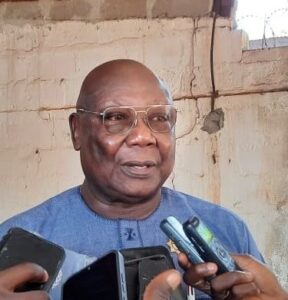
Maître Nicolas Tiangaye, former Prime Minister and president of the CRPS, denounced Faustin-Archange Touadéra's ten years in power as an "absolute failure" during an appearance on Radio Fréquence RJDH 100.5 FM's "Actualité et nous" on June 6, 2026. Tiangaye specifically criticized the administration's inability to pave Independence Avenue in Bangui from PK 0 to PK 12. He stated, "After 10 years of power, you haven’t been able to asphalt Independence Avenue from PK 0 to PK 12. I believe they've done approximately 200 meters per month. It's a shame." He contrasted this with Côte d’Ivoire, where "since Ouattara took power there, 8,000 km of asphalted road" have been built. Tiangaye added that those seeking power today do so "not to improve the lot of the population but to profit from it."
Symbol of Stagnation
The alleged slow pace of infrastructure development under President Faustin-Archange Touadéra's administration was a key point of criticism. According to Maître Nicolas Tiangaye, progress on paving Bangui's Independence Avenue has been particularly sluggish. Tiangaye estimated that approximately 200 meters of the road were asphalted per month, noting this as a clear indicator of the government's shortcomings.
Beyond road infrastructure, critics also point to broader failures of the Touadéra regime, including the persistent lack of reliable electricity across the country. These issues are frequently cited as evidence of the administration's inability to deliver essential services and improve living conditions for the population.
Critique of Governance
Maître Nicolas Tiangaye dismissed the argument that a difficult past legacy could still justify the administration's performance, stating that such an excuse loses its validity after ten years in power. He asserted that the current government has had ample time to address fundamental issues and improve governance. Tiangaye further accused those holding power of prioritizing personal enrichment over the welfare of the citizenry. He contended that their motivations were not aimed at enhancing the population's well-being but rather at securing benefits for themselves. These criticisms show a perceived systemic failure in leadership and a disregard for the public interest during President Faustin-Archange Touadéra's tenure.
International Comparisons
Maître Nicolas Tiangaye drew a stark contrast between the infrastructure development in the Central African Republic and Côte d'Ivoire. He noted that since President Ouattara took power in Côte d'Ivoire, his government had overseen the construction of 8,000 kilometers of asphalted roads. Tiangaye presented this figure to emphasize what he described as President Faustin-Archange Touadéra's administration's slow progress in the Central African Republic. The former Prime Minister's comparison showed his criticism of the current government's performance in delivering essential infrastructure projects, particularly in road construction.
Broader Implications
The criticisms leveled against President Faustin-Archange Touadéra's administration by Maître Nicolas Tiangaye suggest broader concerns regarding governance and development in the Central African Republic. The former Prime Minister's remarks on Radio Fréquence RJDH 100.5 FM, emphasizing infrastructure failures like the slow progress on Independence Avenue in Bangui, reflect a sentiment of disillusionment with the current political leadership. Tiangaye's comparison with Côte d'Ivoire's infrastructure achievements under President Ouattara further notes perceived deficiencies in the country's development trajectory. These statements show a growing public debate about the effectiveness of the government in addressing fundamental challenges facing the population.