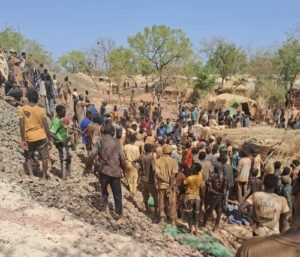
In the Central African Republic, the Wagner Group is accused of exploiting local workers at the Barrah Grithie mining area, located approximately fifty kilometers from Sam Ouandjia towards South Sudan. The Wagner Group's white mercenaries have established control over the mining deposits situated in the Barrah Grithie region. Reports indicate that local workers are compelled to manually dig and extract gravel without essential protective equipment in the area. This forced labor is a key component of their operations in the mineral-rich region.
Forced Labor Conditions
The workforce at the Barrah Grithie mining area comprises young Central Africans from surrounding villages. These individuals are reportedly subjected to harsh working conditions. Local supplétifs, referred to as 'black Russians' from the Peule community, supervise these miners and are responsible for collecting the extracted gravel. The workers themselves are reportedly unaware of the quantity of gold harvested or its actual value, noting a fundamental lack of transparency in the operations. This lack of information prevents workers from understanding the true economic benefit derived from their arduous labor.
Miners receive a daily wage that sometimes ranges between one thousand and one thousand five hundred CFA francs. Young people frequently work for two to three consecutive months under these conditions, enduring prolonged periods of arduous labor. Upon receiving payment, the sum is often described as meager and insufficient to cover their vital needs, leaving them in a cycle of poverty despite their efforts. This compensation structure further shows the exploitative nature of the work environment, as the meager earnings fail to provide a sustainable livelihood for the individuals involved.
Wagner's Wider Operations
The Wagner Group's white mercenaries have established control over the mining deposits situated in the Barrah Grithie region. The Russian group is reportedly deployed across various profitable sectors within the Central African Republic. These operations include the industrial exploitation of the Ndassima mine, involvement in retail trade, and activities within the forestry industry. This broad engagement across multiple economic sectors demonstrates the extensive reach of the group's financial interests within the country. The current methods of exploitation employed by the Wagner Group in these sectors are described by some as exceeding historical levels of exploitation previously conducted by France, indicating a significant intensification of resource extraction. This comparison suggests a profound and potentially unprecedented level of resource control and extraction by the Wagner Group within the nation's economy.
Economic Devastation
Russian leaders are reportedly confiscating precious metals, including gold, after they are washed and isolated from mining operations in the Central African Republic. The confiscated metals are then sold abroad, with the profits exclusively benefiting their organization. This systematic removal of resources, coupled with the minimal compensation for local labor, severely impacts the national economy. The presence of these armed forces, identified as the Wagner Group, is alleged to have contributed to the widespread impoverishment of Central Africans. Local populations are reportedly being dispossessed of the wealth derived from their subsoil resources due to these operations, leading to a significant loss of potential national revenue and local livelihood. This alleged economic drain exacerbates existing challenges within the Central African Republic, further hindering the country's development and prosperity. The exclusive profit motive for the Wagner Group's organization means that the wealth generated from these resources does not contribute to the local economy or the well-being of the Central African population.