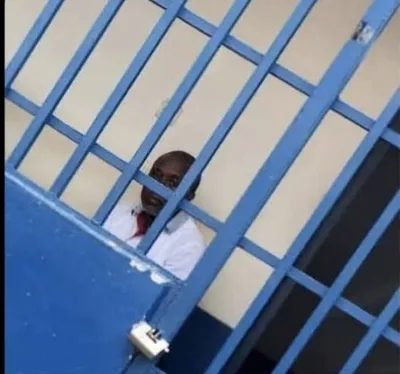
Russian Wagner group mercenaries, accompanied by elements of the Central African gendarmerie, conducted a search operation at the Camp de Roux prison in the Central African Republic on Wednesday, August 26, 2026. The operation involved violent searches within the facility, marking a significant escalation in the scope of mercenary activities within the nation's correctional system. During the operation, the Russian mercenaries were observed to be equipped with batons, including electric batons, which they reportedly used during the events at the prison. These tools showed the aggressive nature of the intervention. Following the searches and reported violence, the Russian mercenaries departed the Camp de Roux prison. The gendarmerie elements who accompanied them also left the premises at that time, concluding the operation at the facility.
Prison Search Details
Inmates at Camp de Roux prison were subjected to cell-by-cell searches for several hours during the operation. This intensive search process involved a thorough examination of individual cells, extending over a prolonged period. During this period of extensive searching, Wagner operatives specifically extracted two inmates, identified as Zawas and Bazouka, from their cells. These two individuals were then reportedly subjected to repeated beatings with batons by the Wagner personnel. Despite the prolonged and aggressive nature of the searches, no weaponry was reported found during the entire operation. According to the Central African National Coalition (CNC), the searches continued for hours without recovering the objects sought by these "criminals of Touadéra," a term used by the CNC to describe the mercenaries and their perceived allies. The CNC further stated that no information gathered by its sources allowed for establishing that Zawas or Bazouka were found in possession of a phone or any other prohibited item, casting doubt on the justification for their treatment. The absence of any recovered contraband or weaponry, despite the use of force and prolonged searches, raised immediate questions about the true objectives and legitimacy of the operation.
Broader Pattern of Intervention
The Camp de Roux prison is not the only facility concerned by this type of operation, according to reports that indicate a broader pattern of intervention by Wagner personnel in Central African correctional facilities. Similar interventions have also been reported at the Ngaragba prison in the Central African Republic, suggesting a systematic approach rather than an isolated incident. At Ngaragba, inmates have already been taken by Wagner personnel to unknown destinations, raising serious concerns about due process and the welfare of those detained. These past actions at Ngaragba highlight a precedent for the extraction of prisoners without clear legal justification or transparency.
The presence of MINUSCA peacekeepers around certain penitentiary establishments has sometimes led to refusals to allow prisoners to leave with heavily armed Wagner men, indicating a degree of resistance to these unauthorized extractions. The new operation at Camp de Roux, however, shows a different method, marking an evolution in the Wagner group's tactics. Mercenaries no longer just intervene to extract inmates; instead, they now penetrate the prison, search cells, directly control prisoners, and use their batons against some of them, as evidenced by the treatment of Zawas and Bazouka. This shift represents a deeper and more direct assertion of control within the prison environment.
The case of Armel Sayo and Nourd Gregaza, in which Wagner personnel were directly involved in their handling, is recalled as part of this broader pattern of intervention within Central African correctional facilities. This particular incident further illustrates the direct and often forceful involvement of Wagner operatives in the management and treatment of prisoners. These actions demonstrate an evolving approach by the Wagner group in its engagement with the country's penal system, moving from external influence to direct, internal control and physical intervention. The consistent reports of such incidents across multiple facilities show a growing trend of mercenary involvement in sensitive state functions.
Questions of Authority and Sovereignty
The intervention directly raises fundamental questions regarding the authority of Russian Wagner mercenaries within Central African penitentiary establishments. This is particularly pertinent given that prison management is officially the responsibility of Central African institutions and the penitentiary administration, not foreign private military contractors. These recent interventions are situated within a broader context characterized by an increase in Russian mercenary operations across Central African territory. This multiplication of Russian mercenary operations on Central African territory has been widely observed. Prior reports have documented controls in streets, arrests, operations in various localities, and violence directed against civilians, indicating a widespread presence and influence of these foreign actors across multiple sectors of public life.
Prisons have now emerged as an additional domain where their presence and intervention are reported, extending their reach into the core functions of the state's justice system. The operation of August 26 at Camp de Roux thus revives a central question: in a state asserting its independence and sovereignty, what precise authority do Russian mercenaries hold over detainees and within Central African penitentiary facilities? This question challenges the very notion of national control over essential state institutions and the rule of law. The repeated and escalating involvement of Wagner personnel in such sensitive areas suggests a significant erosion of the Central African government's sovereign control over its own correctional system and its citizens' rights within it. The lack of transparency and official explanation for these interventions further compounds the concerns about accountability and adherence to international norms regarding the treatment of prisoners.