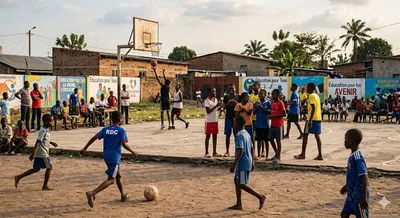
In Kinshasa, the Ndembo League is actively employing sport as a tool for social development, focusing on children between the ages of 7 and 13. The league’s initiative aims to foster greater social inclusion and improve school attendance rates among its young participants. This program notes how organized sports can serve as a structured pathway for youth engagement and educational encouragement within the community. The Ndembo League's emphasis on sport as a catalyst for positive change demonstrates a localized approach to addressing critical social needs, leveraging the universal appeal of games to achieve tangible community benefits. By providing a safe and engaging environment, the league not only promotes physical activity but also instills a sense of belonging and purpose among its young participants.
Grassroots Impact and Inclusion
Football and basketball programs across Central Africa foster leadership qualities within team environments. These sports provide structured settings where young participants learn to collaborate, communicate, and take initiative. Engaging in team sports helps individuals develop a sense of responsibility and accountability, which are essential for leadership both on and off the field or court. The collective nature of these games encourages players to support one another, resolve conflicts, and work towards common goals. This interaction builds character and prepares participants for broader societal roles. Beyond individual development, these programs often serve as community hubs, drawing families and local residents together to support their youth. Such communal involvement strengthens social ties and creates a supportive network for the children involved, extending the positive impact of sports beyond the immediate participants. The structured environment provided by these leagues offers a vital alternative to less constructive activities, guiding young people towards positive development paths.
Developing African Talent
The TECNO x CAF Future Star of Africa initiative supports the development of young football talents across the continent. This program shows a concerted effort to identify and nurture promising athletes, providing them with the resources and exposure necessary to advance their careers. Such initiatives are key for building a sustainable pipeline of talent from Africa to global stages. Basketball also provides significant pathways for emerging athletes. The Basketball Africa League (BAL) is currently in its fifth season, offering a professional platform for players. The BAL's continued growth signifies a maturing professional sports landscape on the continent, creating more opportunities for local and international players.
The BAL Elevate program directly links prospects from the NBA Academy Africa to BAL teams, facilitating their transition into professional play. This direct pathway provides a clear progression for young athletes aiming for a career in basketball. Located in Saly, Senegal, the NBA Academy Africa provides academic support, life skills programs, and leadership development to its students. This holistic approach ensures that young athletes are not only developed physically but also intellectually and personally, preparing them for success both on and off the court. The academy's full curriculum is designed to equip students with the tools they need to navigate the demands of professional sports and life beyond. Further talent identification efforts include the Basketball Without Borders Africa camp, which took place in Rwanda in August 2025. This camp gathered 60 of the top male and female under-18 players from various countries across Africa, noting promising young athletes. Events like Basketball Without Borders Africa are key for scouting talent and offering high-level training and exposure to a select group of young, gifted players. The camp provides an intensive training environment, exposing participants to coaching techniques and competitive play that accelerate their development.
Global Pathways and Aspirations
When players from the DR Congo celebrate a World Cup qualification or a Cameroonian teenager signs an NBA contract, it transforms what young people in the region believe is possible for them. These achievements highlight global pathways for aspiring athletes. Such success stories serve as powerful motivators, demonstrating that dedication and talent can lead to international recognition and opportunity. The NBA opened its 2025-26 season with 135 international players representing 43 countries, showcasing the league's global reach. This statistic vividly illustrates the diverse origins of top-tier basketball talent and the opportunities available to players from around the world. Of these, more than 55 NBA players in the 2025-26 season were either born in Africa or had at least one African parent, demonstrating the continent's significant contribution to professional basketball. This substantial representation shows the impact of development programs and the innate talent pool present across Africa, solidifying the continent's position as a key source of global basketball prowess.
Yohane Kabongo Tshaba is an example of a prospect from Central Africa currently enrolled at the NBA Academy Africa. His participation reflects the development opportunities available to young talent through structured programs designed to nurture potential. Further solidifying this trend, Ulrich Chomche was selected 57th in the NBA Draft 2024 by the Toronto Raptors, marking a direct progression from African development programs to the professional league. Chomche's journey exemplifies the tangible outcomes of dedicated talent development initiatives on the continent, proving that with the right support, African athletes can reach the pinnacle of professional sports. His selection sends a clear message to aspiring young athletes in Central Africa and beyond that the path to global leagues is increasingly accessible.
Economic and Social Levers
For Cameroon and the DR Congo, football represents an important economic lever, contributing to local economies through various channels. The sport generates revenue from ticket sales, merchandise, and broadcasting rights. Additionally, football events attract tourism and create employment opportunities in related sectors like hospitality and transportation. The visibility gained from successful national teams or individual players can also enhance a country's international profile, potentially drawing further investment. These economic benefits extend beyond the professional leagues, impacting grassroots initiatives and community development projects that rely on sports-related funding. The establishment of strong sports infrastructure, from training facilities to stadiums, further stimulates local economies by creating construction jobs and ongoing maintenance roles. The aspirational value of professional sports can inspire entrepreneurship among youth, leading to ventures in sports-related industries such as apparel, media, and event management. The cultural significance of football, deeply embedded in the national identity of these countries, amplifies its economic and social impact, making it a powerful force for development.