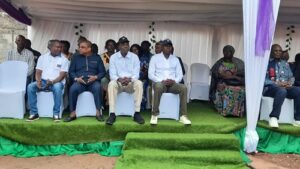
On July 26, officials and militants of the Bloc Républicain pour la Défense de la Constitution (BRDC) convened a joint general assembly at the Parti Patrie headquarters in Centrafrique. The assembly was held to denounce what the BRDC described as a widespread wave of kidnappings and disappearances across the Central African Republic in recent years. The gathering noted concerns about a culture of violence and impunity within the country.
Specific Cases of Abduction
Many Central African compatriots have been mysteriously abducted and have disappeared without anyone seeking justice for them. Among these cases, former minister Armel Sayo was arrested and subsequently disappeared for several weeks. He was briefly presented to justice before disappearing again, according to reports. In another instance, Issa Manou was abducted at the MCU headquarters, and his current whereabouts remain unknown. These incidents contribute to the BRDC's overall denunciation of a culture of violence and impunity within the Central African Republic.
Accusations of Impunity and Selective Justice
Maître Crépin Mboli-Goumba, president of PATRIE and coordinator of the BRDC, accused the regime of fostering a culture of violence and impunity. Mboli-Goumba stated that "la Centrafrique est devenue un pays des morts" (the Central African Republic has become a country of the dead), adding that "Beaucoup de nos compatriotes ont été enlevés et ont disparu mystérieusement, sans que personne ne réclame justice pour eux" (Many of our compatriots have been abducted and have disappeared mysteriously, without anyone seeking justice for them). He remarked that "Les Centrafricains sont habitués aux morts, aux mauvaises nouvelles. On parle de la mort comme on parlerait du jeu" (Central Africans are accustomed to deaths, to bad news. We speak of death as one would speak of a game), emphasizing that "Ce qui est arrivé à Armel Sayo peut arriver à chacun de nous ici" (What happened to Armel Sayo can happen to any of us here).
The BRDC also criticized what it termed the regime's selective justice. Mboli-Goumba noted the disparity, stating, "Armel Sayo, on ne sait pas où il est, mais Ali Daras, chef de l’UPC, bénéficie d’un tapis rouge" (Armel Sayo, we don't know where he is, but Ali Daras, head of the UPC, receives preferential treatment). Mboli-Goumba asserted that the nation "ne doit pas devenir un cimetière silencieux pour ses citoyens" (must not become a silent cemetery for its citizens).
Call to Action and Memory
The BRDC coordinator called on militants to resist succumbing to fear or forgetfulness, showing the importance of defending the memory of Issa Manou and all other disappeared individuals. Manou, a police officer, was killed while on duty at the Office Central de Répression du Banditisme (OCRB). The coordinator emphasized that maintaining the memory of those who have disappeared is essential to challenge the prevailing culture. The call served as a rallying point for the BRDC's broader denunciation of abductions and the perceived lack of accountability within the Central African Republic, urging continued vigilance and advocacy against systemic impunity.
Broader Implications for CAR
The ongoing wave of disappearances and arbitrary detentions, as noted by the Bloc Républicain pour la Défense de la Constitution (BRDC), presents significant challenges for the Central African Republic (CAR). The BRDC's strong condemnation suggests a growing opposition to what it perceives as a culture of impunity and violence. Such widespread concern over security and justice could impact political stability and public trust in governing institutions. The emphasis on the cases of individuals like Armel Sayo and Issa Manou shows the personal toll of these incidents, potentially galvanizing further public dissent. The BRDC's call to action aims to prevent the nation from becoming, as Maître Crépin Mboli-Goumba stated, "a silent cemetery for its citizens."