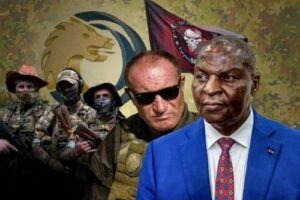
The Kremlin is reportedly pressuring Wagner networks in Centrafrique to integrate into the official Africa Corps structure, aiming to consolidate Russian influence in the region. This move follows significant investments by Wagner networks in protecting the regime of Faustin-Archange Touadéra. These networks have secured long-term concessions for valuable resources including gold, diamonds, and uranium within Centrafrique. The integration effort seeks to formalize Russia's paramilitary and economic presence, shifting control from the private Wagner group to a state-sanctioned entity. Russia's influence in the Central African Republic is widely characterized as deeply mercantile, involving a quid pro quo arrangement where military protection is exchanged for access to natural resources, specific financial flows, or political leverage. This model has allowed Wagner to secure significant concessions over time.
Moscow's Integration Demands
Moscow's demand for the transition of Wagner networks in Centrafrique to Africa Corps, under the direct control of the Russian Ministry of Defense, is non-negotiable, according to sources familiar with the discussions. The Kremlin's conditions for this integration include a requirement for a monthly payment exceeding 15 million dollars in cash. This sum is intended to maintain a contingent of 1,500 men operating within Centrafrique.
The financial demand poses a significant burden for the Central African Republic (CAR), as its national budget relies heavily on international aid. Moscow further insists on receiving these payments through direct financial transfers in US dollars to fund its operations. This stipulation aims to formalize and centralize Russia's paramilitary presence, shifting control from the private Wagner group to a state-sanctioned entity, Africa Corps. The integration seeks to consolidate Russian influence and secure its long-term strategic interests in the region. The Kremlin's insistence on direct financial transfers in US dollars shows its intent to establish a clear, state-controlled funding mechanism for its military operations in the region, moving away from the opaque financial arrangements often associated with private military companies.
Wagner's Entrenched Interests
Former Wagner networks are reportedly resisting the transition to Africa Corps, aiming to protect their substantial investments and interests within the Central African Republic. Dmitri Sytyi and other key figures within these Wagner networks are actively defending their established economic interests against the proposed integration plan. These actors, having cultivated deep ties and secured lucrative deals under the previous operational structure, view the shift to Africa Corps as a direct threat to their accumulated influence and financial gains. Their resistance notes the complex interplay of economic incentives and geopolitical strategy driving Russia's presence in the CAR.
Wagner's support for the Central African government has been cited as a contributing factor to constitutional changes that now permit unlimited presidential mandates and facilitated the re-election of Faustin-Archange Touadéra. The group's presence has been instrumental in shaping the political landscape, providing key security and military training in exchange for economic privileges. This strategic support has allowed Wagner to embed itself deeply within the CAR's political and economic fabric, making any forced divestment challenging for both the Kremlin and the entrenched Wagner networks. The long-term concessions for gold, diamonds, and uranium represent significant assets that these networks are unwilling to relinquish without a fight.
A key difference between the operational models of Wagner and Africa Corps lies in their command structures. Wagner's previous command structure allowed for significant decision-making authority to be exercised locally in Bangui, enabling swift responses and direct management of assets. This localized autonomy fostered a sense of independence and allowed Wagner operatives to quickly adapt to the fluid security and political environment in the CAR. In contrast, Africa Corps operates under a centralized command structure, with decisions made remotely from Moscow. This shift in operational control from Bangui to Moscow presents a significant point of contention for those accustomed to Wagner's more autonomous approach in the CAR. The centralized command structure of Africa Corps is designed to ensure direct state control and accountability, a stark departure from the more flexible and often opaque operations of the private Wagner group.
CAR's Diplomatic Maneuvers
President Faustin-Archange Touadéra has been notably absent from key Russian security initiatives in Africa, choosing instead to pursue mediation efforts with the United Arab Emirates. This strategic pivot by Bangui suggests a desire to diversify its security and economic partnerships, rather than relying solely on Moscow. Bangui reportedly prefers an exchange model focused on natural resource exploitation in return for security protection, rather than direct cash payments. This preference aligns with the existing arrangements Wagner had in place, where access to valuable resources served as compensation for security services.
President Touadéra's advisors have suggested an intermediate solution, proposing the continuation of security cooperation with private entities such as Wagner, alongside the integration of Russian military advisors within the presidency or the Ministry of Defense. This proposal indicates an attempt by the CAR government to maintain the operational flexibility and established relationships with Wagner networks while also accommodating Moscow's demand for greater state oversight. Touadéra is also actively exploring partnerships with the United Arab Emirates, further signaling a proactive diplomatic strategy to secure the CAR's interests amidst the evolving geopolitical landscape. The population's assessment of the situation includes documented abuses and accusations of resource plundering, alongside a relative stability that primarily benefits elites and external actors. This complex internal perception adds another layer of challenge to the ongoing negotiations and the future of foreign security presence in the country.
Africa Corps Challenges
Africa Corps has encountered operational difficulties in other African nations, particularly in Mali. These challenges included a withdrawal from Kidal in April 2026. This incident notes the complexities and potential limitations faced by the Russian state-backed security entity as it seeks to expand its presence and consolidate influence across the continent. The experience in Mali shows the logistical and operational hurdles that Africa Corps must navigate in its deployments, which could inform its approach in Centrafrique. Such precedents may influence ongoing negotiations and the Kremlin's strategy for integrating former Wagner networks. The withdrawal from Kidal suggests that even with state backing, Africa Corps is not immune to operational setbacks and strategic withdrawals, potentially impacting its perceived effectiveness and reliability among its African partners. This history of challenges elsewhere could embolden the CAR to negotiate more favorable terms or explore alternative security arrangements.