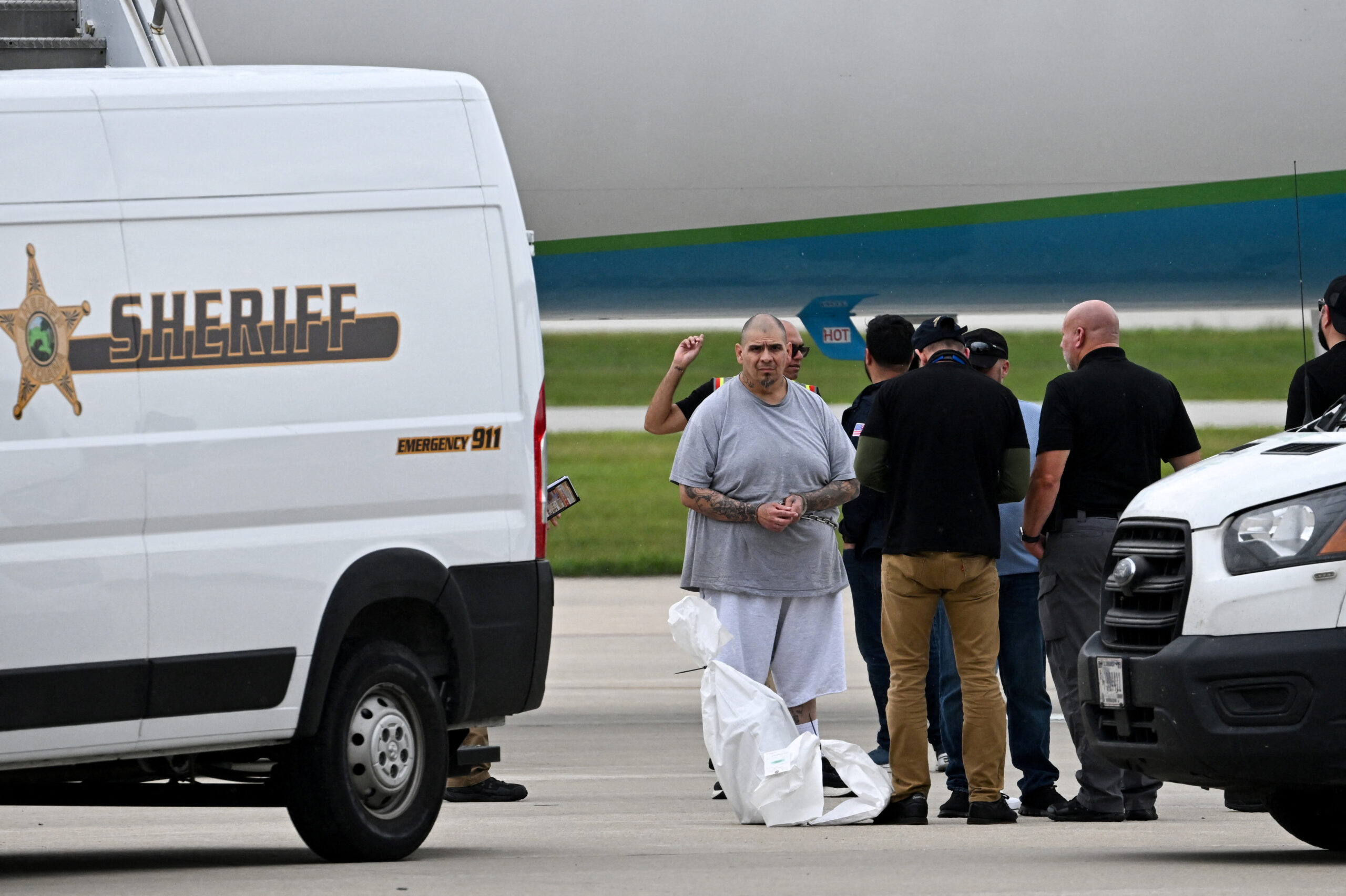
A United States deportation flight destined for the Central African Republic (CAR) on Friday reportedly included nationals from several countries, including Iran, Afghanistan, Turkey, and Georgia. The flight's specific itinerary and the reasons for its diverse passenger manifest were not immediately clear, raising significant questions among human rights advocates and legal experts. This development shows the complex nature of U.S. Immigration enforcement and raises questions regarding the Central African Republic's capacity to receive deportees from such varied origins, especially given the country's precarious security situation. The presence of individuals from countries like Iran and Afghanistan on a flight bound for CAR marks an unusual aspect of this operation, prompting concerns about the safety and well-being of those being deported.
Flight Details and Passengers
The flight departed Alexandria, Louisiana, on Thursday evening, initiating the journey to the Central African Republic. The operation involved a stopover in Ghana, which occurred on Friday, before continuing its uncertain trajectory. The itinerary of the flight and the specific reasons for its diverse passenger manifest were not immediately clear following its departure from the U.S. The presence of individuals from various nations, including Iran, Afghanistan, Turkey, and Georgia, on a single deportation flight bound for the Central African Republic marks an unusual aspect of this operation, noting the broad scope of individuals targeted for removal. This development notes the complex nature of U.S. Immigration enforcement, which often involves intricate logistics and international coordination. Human rights organizations have expressed particular concern over the destination, given the State Department's travel advisories.
Legal Status and 'Third-Country' Removals
The flight to the Central African Republic was meticulously tracked by ICE Flight Monitor, a system linked to the human rights organization Human Rights First, which monitors and reports on U.S. Deportation operations. Among the passengers, several Iranian nationals were identified, including at least two women, raising specific concerns about their potential fate in a country with which they may have no prior connection. This deportation is part of a growing trend in U.S. Immigration enforcement policies, often referred to as "third-country" removals, where individuals are deported not to their country of origin but to a third nation, sometimes under agreements that are not publicly disclosed. This practice has drawn scrutiny from legal and human rights groups, who argue it can complicate access to legal protections and oversight.
Safety Concerns Over CAR Destination
As of press time, neither United States nor Ghanaian authorities had issued an official statement confirming the flight’s final destination or clarifying the status of the passengers, leaving many questions unanswered. Legal representatives stated that "many of those on board had been granted 'withholding of removal,' a legal protection that prevents deportation to their home countries, but which offers fewer safeguards than full asylum status." This legal status prevents individuals from being sent to their countries of origin due to well-founded fears of persecution or torture, even if they do not meet the full criteria for asylum. The lack of official communication regarding the flight's specific arrangements and the fate of those aboard adds to the apprehension surrounding such deportations, especially when directed to volatile regions.
The U.S. State Department currently advises against all travel to the Central African Republic. The advisory cites significant security risks, including ongoing armed conflict and widespread violence across the country. It specifically warns of civil unrest, crime, and kidnapping, noting that "violent crime, such as armed robbery, aggravated assault, and homicide, is common." The presence of these conditions raises profound questions about the safety and well-being of individuals deported to the nation, particularly those who may have no cultural ties, language skills, or support networks in CAR. Human rights advocates continue to monitor the situation closely, urging transparency and accountability from authorities involved in these complex and often controversial deportation operations.