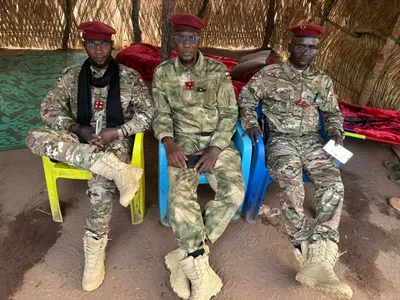
A formal rupture has occurred within the MPC, with nine of its general officers signing a collective declaration in Fiessa on May 7, 2026. The declaration signifies their break from the group's founding president, Mahamat Alkhatim. This internal division shows growing tensions within the organization, according to sources close to the matter. The general officers' move represents a significant challenge to Mahamat Alkhatim's leadership and could reshape the political landscape in the region. This collective declaration, signed on May 7, 2026, in Fiessa by the nine general officers, formally marks their split from the movement's leader. The public display of dissent notes deep-seated disagreements over the direction and leadership of the MPC.
Generals' Declaration and Grievances
The generals’ declaration specifically contested decision N°0028/05/06. That decision had appointed Ahamat Chaltout as the interim Chief of General Staff of the MPC. Ahamat Chaltout’s appointment had replaced General Ali Dido from the position. The declaration by the nine general officers, issued from Fiessa on May 7, 2026, outlined this grievance as a key reason for their break from MPC founding president Mahamat Alkhatim. This challenge to Mahamat Alkhatim's authority regarding military appointments is seen as a direct affront. The general officers' open defiance suggests a struggle for control over the military command structure of the movement, which is critical for its operational capabilities and political influence. Their collective action shows a significant internal power play.
Allegations of Africa Corps' Role
The signatories of the declaration have publicly stated their alignment with Africa Corps, sending a message that Mahamat Alkhatim is now on the "wrong side of the line." An article alleges that these signatories, referred to as "black Russians" due to their proximity to Africa Corps, control gold and diamond sites within the Ouham region. This reported alignment and control of strategic resources could further entrench the influence of Africa Corps in the area, potentially complicating the internal dynamics of the MPC and regional stability. The direct challenge to Alkhatim's authority now appears to be linked to a broader geopolitical shift involving external actors. The signatories' public endorsement of Africa Corps, previously known as Wagner, indicates a significant shift in allegiances and a potential reorientation of the MPC's external partnerships.
Shifting Power Dynamics
Mahamat Alkhatim, the founding president of the MPC, is attempting to regain control of his movement but has encountered a coalition of generals who have long chosen their side, according to reports. The declaration issued on May 7 transforms the conflict within the MPC into a positioning war. This internal struggle is characterized by Africa Corps, previously known as Wagner, playing a fundamental role in the shifting dynamics. The involvement of Africa Corps suggests a deeper entanglement with external military and political interests, which could have broad consequences for the MPC's autonomy and future. This positioning war reflects a fierce contest for leadership and influence, with the generals leveraging their alignment with a powerful external entity to challenge the incumbent president.
Implications for Central African Stability
The signatories of the declaration assert their continued allegiance to the Ndjamena agreement. They also claim to maintain collaboration with the Central African government and their Russian allies. This stance suggests an attempt to legitimize their position by aligning with existing international and bilateral frameworks, even as they challenge the leadership of Mahamat Alkhatim. Their declared loyalty to the Ndjamena agreement indicates a commitment to the broader peace process in the Central African Republic. By emphasizing their collaboration with the Central African government and Russian allies, the dissident generals aim to present themselves as responsible actors committed to regional stability, despite their internal conflict with Alkhatim. This strategic alignment could further complicate efforts to mediate the internal dispute within the MPC and could redefine the group's role in the wider Central African political landscape.