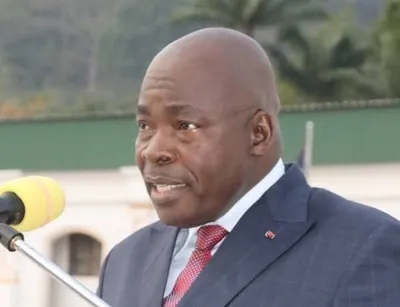
President Faustin-Archange Touadéra of the Central African Republic has officially reappointed Félix Moloua as Prime Minister, according to an article published on June 17, 2026. Moloua, who was the outgoing Prime Minister, was chosen by President Touadéra to continue leading the government, a decision that shows a preference for continuity in the nation's leadership. This significant announcement follows a period of intense political maneuvering and speculation within the capital, Bangui, regarding the composition of the new government. The President's decision to retain Moloua in this key role comes amidst various political developments and internal pressures that have shaped the country's administrative landscape.
Namsio's Prime Ministerial Ambitions
The reappointment was made against a backdrop of reported prime ministerial ambitions from Obed Namsio, who served as the Director of Cabinet at the Presidency of the Republic. According to sources cited in the article, Namsio reportedly harbored strong ambitions to assume the esteemed role of Prime Minister for the seventh republic. These aspirations were not merely internal thoughts but were actively pursued within political circles. Reports indicate that Namsio allegedly asserted himself as the preferred choice of the international community for the primature, suggesting a level of external endorsement for his candidacy.
Further details from the report suggest that Namsio allegedly leveraged this supposed international backing as a form of blackmail against President Faustin-Archange Touadéra. This tactic, if true, would represent a direct challenge to the President's authority and decision-making process concerning the appointment of the head of government. His aspirations for the top ministerial post were widely known and discussed within political circles in Bangui, creating a discernible tension leading up to the presidential announcement. Namsio's actions, therefore, significantly contributed to the internal political dynamics surrounding the presidential decision on the premiership, adding a layer of complexity to the selection process. The President's eventual choice of Moloua, despite these reported pressures, notes a firm stance against perceived external or internal manipulation.
Allegations of Political Infidelity
The article delves into Obed Namsio's political past, noting his previous service as Minister of Mines during the administration of former President François Bozizé. This historical context is presented as key to understanding the current political climate. According to the article, Namsio subsequently abandoned Bozizé's political faction following the former president's removal from power, illustrating a pattern of shifting allegiances. This perceived disloyalty is not presented in isolation. The report further suggests a parallel in the actions of President Faustin-Archange Touadéra himself. Touadéra, the article alleges, also turned his back on François Bozizé after Bozizé's fall from power. This purported pattern of disloyalty, or political infidelity, is presented as a significant factor in the current political landscape, influencing the President's perspective on trust and loyalty within his administration. The article implicitly suggests that Namsio's past actions might have played a role in President Touadéra's decision not to appoint him as Prime Minister, perhaps viewing such a history as an indication of 'ingratitude' or unreliability.
Presidential Decision and Context
The presidential decree officially reappointed Félix Moloua as Prime Minister of the Central African Republic, confirming his continued leadership of the government. This key decision by President Faustin-Archange Touadéra follows a period of intense internal political maneuvering and widespread speculation regarding the premiership. Moloua's reappointment comes amidst reports of other prominent political figures vying for the position, most notably Obed Namsio. Namsio, who previously served as Director of Cabinet at the Presidency, reportedly held significant ambitions for the prime ministership and allegedly suggested he had international backing for the role, attempting to bolster his claim to the office.
President Touadéra's choice to retain Moloua indicates a clear preference for continuity and stability in the government's leadership, aiming to maintain a steady course for the nation. The move also signals the President's firm stance against perceived political pressures, particularly those stemming from Namsio's alleged attempts to leverage international support to influence the appointment. This development solidifies the current administrative structure, with Moloua continuing in his capacity as head of government and overseeing the day-to-day operations of the Central African Republic's executive branch. The decision ultimately reinforces President Touadéra's authority in shaping his administration, opting for a trusted figure over one associated with perceived political opportunism.