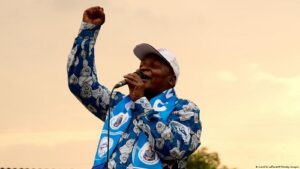
On April 9, 2026, the Council of Peace and Security of the African Union (UA) issued a statement congratulating Faustin Archange Touadéra on his re-election as President of the Central African Republic (RCA). The statement followed the announcement of presidential election results within one week of the vote, declaring Touadéra the winner. The African Union's commendation came despite criticisms regarding the transparency and legitimacy of the broader electoral process, with many observers questioning the validity of the polls given significant delays and irregularities.
AU's Congratulatory Statement
The statement from the Council of Peace and Security of the African Union (UA) lauded the elections of December 28, 2025, as "historic." The UA statement specifically noted progress in the country, describing the presidential, legislative, regional, and municipal elections as historic and conducted in a calm and serene atmosphere. The Council further asserted that these elections marked a key step forward for the Central African Republic, showing a commitment to democratic governance. This praise from the African Union came despite a backdrop of ongoing concerns about the electoral integrity.
In its communiqué, the African Union also extended its gratitude to the UA Commission for its substantial technical support and observation missions, which were cited as key contributions to the overall electoral process. The UA noted that the presence and activities of these missions were instrumental in ensuring the smooth conduct of the elections. Additionally, the UA dispatched Rwandan observers to validate the process, further emphasizing the international community's engagement in monitoring the polls. The statement from the Council of Peace and Security of the African Union (UA) therefore presented a largely positive assessment of the electoral exercise.
Delayed Election Results Fuel Concerns
Despite the African Union's commendation, significant issues have emerged regarding the timely release of election results. Four months after the December 28, 2025 elections, official results for the regional and municipal ballots have not yet been proclaimed. This prolonged delay has raised serious questions about the transparency and efficiency of the electoral body. The National Electoral Authority (ANE) has also not released results for the legislative elections, adding to the uncertainty surrounding the democratic process.
This situation leaves the country without a legitimate assembly or functional municipal councils, creating a governance vacuum that critics argue undermines the very democratic principles the elections were intended to uphold. The absence of these key governmental bodies impacts local administration and national legislative functions, hindering effective governance and representation across the Central African Republic. The stark contrast between the swift announcement of presidential results and the protracted delay for other ballots has fueled suspicion among various political actors and civil society groups.
Accusations of 'Electoral Hold-Up'
Critics have characterized the African Union's communiqué as validating a "parody" and an "electoral hold-up." This assessment suggests a perception that the AU's praise of the elections overlooks significant procedural issues, including the unreleased results for legislative, regional, and municipal elections, and the broader questions surrounding the fairness of the entire process. The article describes the UA's communiqué as validating this "parody" and an "electoral hold-up," implying a deliberate manipulation of the electoral outcome.
The article claims the African Union's stance is further influenced by Faustin Archange Touadéra's perceived alignment with Moscow and Beijing. This suggests that geopolitical considerations might play a role in the AU's assessment of the electoral process in the Central African Republic (RCA), rather than a purely objective evaluation of democratic standards. The article explicitly states that the UA's stance is influenced by Touadéra being a faithful ally of Moscow and Beijing, suggesting that the AU's endorsement may be driven by strategic alliances rather than strict adherence to democratic principles.
Context and Geopolitical Ties
The author of the larger article claims the elections were a "staging" designed to legitimize a power structure that has been in place for ten years. This perspective suggests the electoral process may have been orchestrated to reinforce an existing administration rather than to facilitate a genuine democratic transition. Such an assessment implies a deeper context behind the African Union's commendation of the polls, suggesting that the AU's statement serves to rubber-stamp a pre-determined outcome. The author states the elections were a "staging" to legitimize a power that has lasted ten years, reinforcing the view that the entire exercise was a carefully managed spectacle rather than a free and fair expression of the popular will.