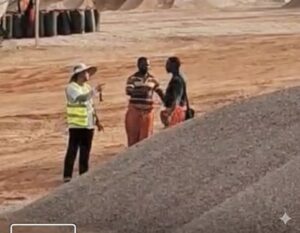
Minister of State for Equipment and Public Works Gisèle MOLOMA reported delays regarding the Corridor 13 infrastructure project during the Council of Ministers meeting held on 20 August 2026. This formal presentation occurred during the executive session, where the Minister of State for Equipment and Public Works provided a status update on the ongoing infrastructure initiatives currently underway. The project, which involves work across the Central African Republic, has faced setbacks impacting the planned construction timeline. Officials identified the status of the project during the executive session, though specific reasons for the slower progress were not disclosed in the official summary. The Corridor 13 development remains a key focus for the Ministry of State for Equipment and Public Works as it coordinates with contractors involved in the regional transit route. Authorities expect further updates on the project status following additional evaluations of the work completed near Mbaïki and other designated sectors.
Causes of Project Delays
Government officials identified the complexity of managing 17 distinct projects as a primary cause for the delays affecting Corridor 13. The administrative burden of overseeing this large number of simultaneous operations has placed significant pressure on the Ministry of State for Equipment and Public Works. Administrative bottlenecks, specifically the slow pace of obtaining 'no-objection' notices from the African Development Bank (BAD), have further hindered the construction timeline. These notices are a necessary component of the financial and operational oversight required for the project’s progression.
Corbeau News Centrafrique investigated the procurement process for Corridor 13 in May 2023. The report focused on the selection of SINOHYDRO Corporation and China Harbour Engineering Company (CHEC) as the primary contractors for the development. This investigation examined the transparency and efficiency of the bidding phases that led to the appointment of these specific international firms. The findings from this investigation noted the procedural steps taken during the initial phase of the project’s lifecycle.
The Central African government is now requesting that the African Development Bank (BAD) implement measures to simplify and support the procurement process. Officials stated that these adjustments are intended to accelerate work across the project route. By streamlining the requirements for 'no-objection' notices, the government aims to reduce the time currently spent waiting for administrative clearance. The Ministry of State for Equipment and Public Works is seeking a more flexible framework to ensure that the construction of Corridor 13 can proceed in accordance with the updated schedules discussed during the Council of Ministers meeting. These efforts to engage with the African Development Bank (BAD) represent a strategic shift in how the government handles the logistical challenges associated with large-scale infrastructure development. The ultimate goal remains the timely completion of the transit route, which is essential for the planned connectivity across the designated sectors of the Central African Republic.