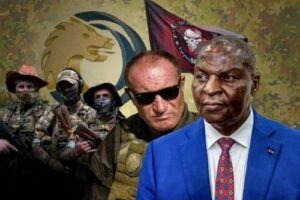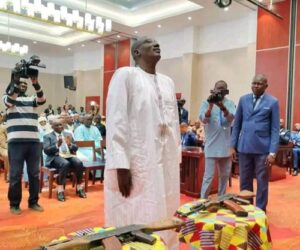
In the Central African Republic (CAR), President Faustin-Archange Touadéra has consistently asserted since 2016 that dialogue with citizens is central to his peace strategy for the nation. This claim, however, has been challenged by observers who point to a growing disconnect between official rhetoric and on-the-ground realities. The presidential discourse delivered on May 8th prompted concerns that the official presidential statements conceal a disengagement from vital national forces. Critics suggest that the government's rhetoric regarding national dialogue does not align with its practical approach to engaging with various domestic groups, raising questions about the inclusivity of its peace efforts. President Touadéra's repeated claims since 2016, placing dialogue with his fellow citizens at the heart of his strategy for peace, appear to be increasingly contradicted by the government's actions.
Exclusion of Centrafrican Forces
Despite claims of national dialogue, several Central African groups and figures are reportedly excluded from the negotiation process, undermining the stated commitment to broad-based engagement. Azandé militiamen from Haut-Mbomou, identified as Centrafrican nationals, reportedly have no representation at the negotiation table with the current regime, despite their significant presence in the region. This exclusion notes a selective approach to dialogue. Similarly, the Antibalaka are also sidelined from these discussions, further narrowing the scope of national reconciliation efforts.
Leaders from various groups face detention or exclusion. Figures such as Ngaïssona have been imprisoned, a move that critics argue silences important voices within the country. Additionally, leaders like Nourd Gregaza of PRNC and Sayo or Florent Kema of CMSPR are either deliberately kept at a distance from negotiations or held in arbitrary detention. This pattern of marginalization extends to other national figures. The situation involving Révolution Justice (RJ) of Belanga or Sayo further illustrates this pattern of pursuing nationals, often leading to their incarceration or exclusion from critical peace processes. Such actions directly contradict the government's stated aim of fostering an inclusive national dialogue.
Privileges for Foreign Mercenaries
In stark contrast to the treatment of domestic groups, certain foreign elements reportedly receive preferential treatment. Ali Darassa, identified as the chief criminal leading the UPC of Nigerian-Chadian origin, and Bobbo of the ex-3R, reportedly receive attention and privileges that Centrafrican groups never obtain. This disparity in treatment has fueled resentment and raised concerns about the government's priorities. Abdoulaye Hissène, a prominent figure of the FPRC, disarmed more than 800 elements, demonstrating a commitment to peace. However, Hissène is currently detained at Camp de Roux, while his fighters are still awaiting integration into the national army. This integration, according to reports, never materializes for them, unlike the process observed for foreign mercenaries who are often quickly integrated or given other benefits. The disparity in treatment between foreign elements and domestic groups like those associated with Hissène notes concerns regarding the government's approach to peace and reconciliation, suggesting a double standard that favors external actors over national ones.
Refusal of National Dialogue
The government's reluctance to engage in full dialogue is further exemplified by its refusal of a significant request. A request for a public and transparent debate, made by former President François Bozizé, was categorically refused. Mr. Bozizé is widely considered to have played a significant role in President Touadéra's rise to power, making his call for dialogue particularly noteworthy. His appeal for an open discussion shows the ongoing challenges in fostering inclusive national dialogue within the Central African Republic. The refusal to engage in such a debate with a figure of Bozizé's stature further notes a perceived selectivity in the government's approach to national reconciliation efforts. This stance contrasts sharply with the stated commitment to broad-based dialogue, raising serious questions about the true extent of the government's willingness to include diverse voices in resolving the country's persistent conflicts and achieving lasting peace.