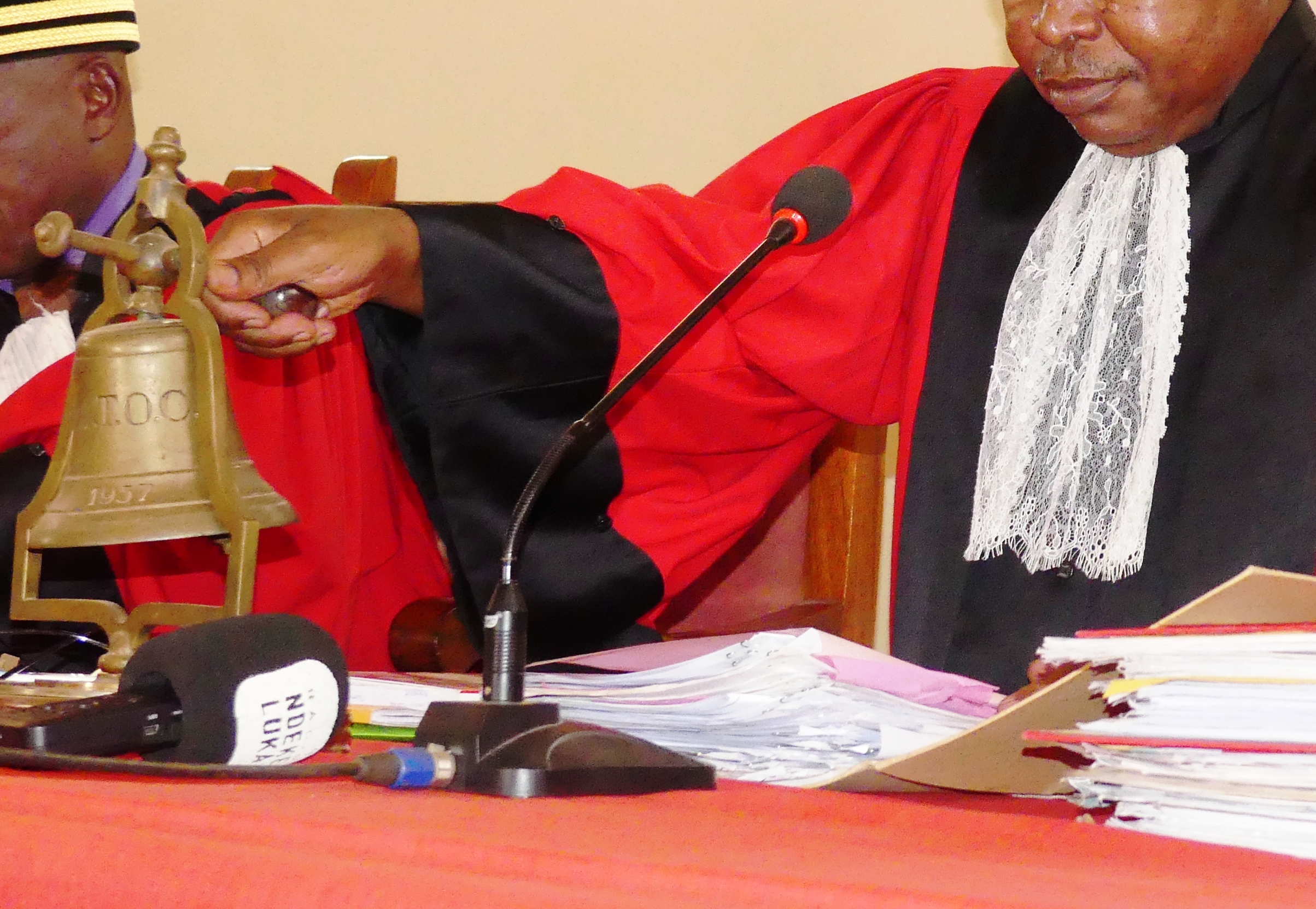
Faustin-Archange Touadéra, the President of the République centrafricaine (RCA), faces accusations of attempting to establish a personal empire that undermines the country's institutions, a situation noted fifty years after Jean-Bedel Bokassa's imperial ambitions were overthrown. These claims emerge as a new report details a "tentacular criminal ecosystem" within the RCA. The Global Initiative Against Transnational Organized Crime (GI-TOC) published its report, "Malicious Markets," on June 10, 2026. It describes the RCA as a sanctuary for this criminal network, which is structured around entities linked to Wagner. This full report sheds light on the complex interplay of political authoritarianism and foreign mercenary influence that is increasingly defining the nation's trajectory. The findings suggest a profound erosion of national sovereignty and institutional integrity, contributing to a growing sense of instability and economic hardship for the Central African populace.
President's Grip on Power
President Faustin-Archange Touadéra is described as the first head of state in the Central African Republic's modern history to alter the Constitution by force to remain in power, an action characterized as a violation of his oath. This claim suggests a foundational shift in the country's governance, moving away from democratic principles and towards a more centralized, autocratic rule. Since an electoral "coup de force" in 2020, the regime has reportedly adopted an autocratic, clientelist, and courtisan logic in its operations. This approach has been observed to concentrate power and influence within a select circle, effectively transforming the state apparatus into a tool for the preservation of the president's authority. Critics argue that this personalization of power has led to a neglect of the broader well-being of Central Africans, with decisions often serving the interests of a few rather than the many.
A recent incident further illustrates this dynamic. During the first Council of Ministers meeting with the newly reappointed government, the head of state publicly imposed silence on his ministers, using the instruction "kara godébé." He directed them to communicate solely through his son-in-law, Evariste Ngamana, who serves as the official government spokesperson. This directive centralized control over official communications and ministerial interactions, emphasizing a hierarchical structure with clear lines of authority extending from the president and his inner circle. Such actions are seen as indicative of a broader strategy to consolidate power and suppress dissent, reinforcing the perception of a regime operating with an autocratic hand. The control over information flow and the direct channel through a family member show the personalized nature of governance under President Touadéra.
Wagner's Unchecked Influence
The Central African Republic's sovereignty is progressively being subcontracted to foreign mercenaries, according to analyses of the country's current trajectory. This arrangement is described as a "pact of Faust," where an imposed silence, or omerta, allows for the open pillaging of national wealth. Under this pact, mercenaries are remunerated directly at the expense of the Central African people, diverting key resources that could otherwise support national development and public services. This outsourcing of security and, by extension, national control, raises serious questions about the country's independence and its ability to manage its own resources for the benefit of its citizens.
Wagner, a Russian private military company, has reportedly militarized the Ndassima industrial mining site. This militarization facilitates gold extraction outside of any legal control or oversight. The gold obtained from this site is then evacuated on Russian military cargo planes, which are said to evade customs procedures. This alleged activity bypasses formal economic channels and regulatory bodies within the Central African Republic, depriving the state of legitimate revenues and exacerbating economic vulnerabilities. The ongoing situation at Ndassima notes concerns regarding resource exploitation and the extent of foreign influence on the nation's economic assets. The lack of transparency and legal accountability surrounding these operations shows the challenges faced by the RCA in asserting control over its own territory and natural wealth.
Economic and Social Fallout
The current regime in the Central African Republic is described as a machine for creating poverty. The illicit monopoly on fuel importation generates over 30 million dollars in illicit profits for mercenaries each year. This significant sum represents a substantial drain on the national economy, directly impacting the cost of living and the availability of essential services for ordinary citizens. Beyond fuel, transnational trafficking of wood, minerals, and Tramadol, nicknamed "green beret," is also occurring, further enriching illicit networks at the expense of the state and its people. These illicit activities contribute to a shadow economy that undermines legitimate economic development and perpetuates a cycle of poverty. Economic conditions have worsened for many residents, with 52% of the population living below the poverty line in 2016. By 2026, this figure had increased dramatically to 67%, reflecting a deepening crisis in living standards and an urgent need for intervention. This stark increase in poverty rates illustrates the severe socio-economic consequences of the current governance model and the widespread influence of illicit financial flows.
Call for Mobilization
The influence of Wagner is described as "unveiled" and "uninhibited" across the Central African Republic's political, military, and media spheres. This widespread influence extends to constitutional, political, military, and security decisions, according to reports, indicating a deep penetration into the core functions of the state. The current regime is characterized by a personalized power structure where President Faustin-Archange Touadéra designates the bureau of the Assembly and appoints officials at will. Critics state that he acts solely for the preservation of his power and an envisioned empire, neglecting the well-being of Central Africans. The République centrafricaine (RCA) is reportedly transforming into a transnational criminal hub. Within this environment, Russian, Rwandan, Chinese, and Emirati predatory networks are said to coexist, contributing to the complex web of external influences and internal governance challenges. This confluence of external actors and internal political dynamics has led to calls for a "decolonization" of the Central African Republic, urging a reassertion of national sovereignty and a focus on the needs of its citizens over the interests of foreign powers and a centralized, autocratic leadership.