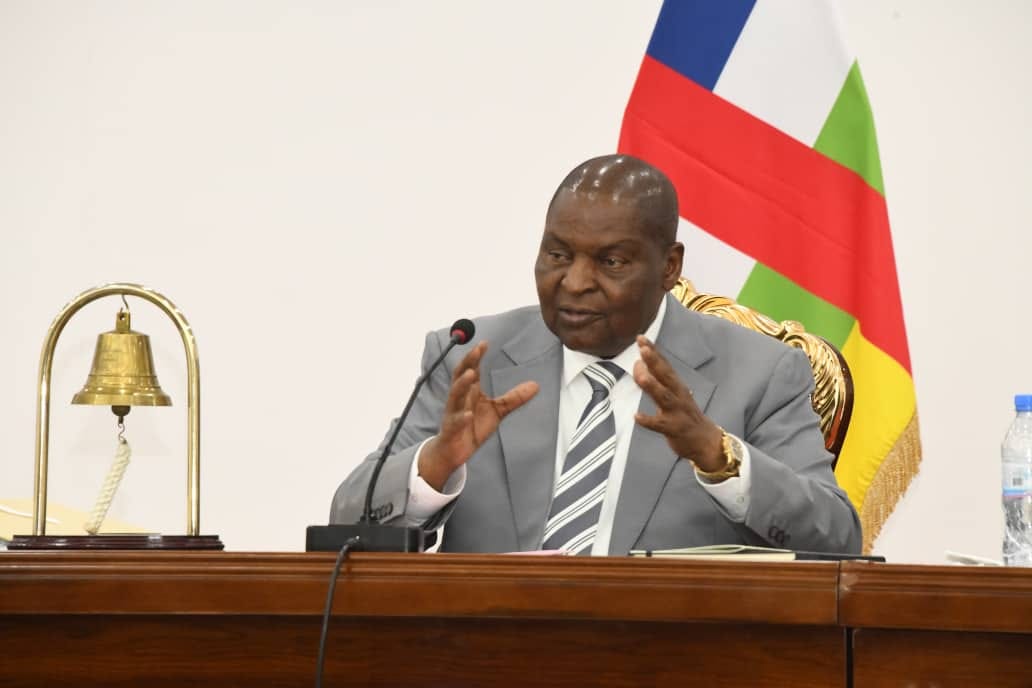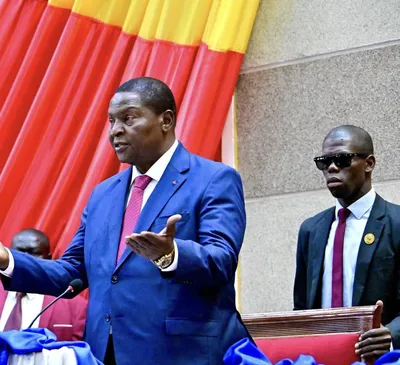
Central African Republic President Faustin-Archange Touadéra has declared "open war" against social media, accusing virtual platforms of being used for political sabotage. The President made the declaration, linking online activities to attempts at destabilizing national institutions. This move by President Touadéra represents a significant escalation in the government's approach to digital communication and public discourse within the nation. He explicitly stated that he views online spaces as tools for undermining the state, setting a confrontational tone for future interactions with digital platforms and their users.
President Touadéra stated, "L’espace numérique centrafricain est trop souvent transformé en un déversoir de haine, de manipulation, de désinformation organisée et voire même de diffamation gratuite. Des officines de l’ombre, tapis derrière des écrans, tentent quotidiennement de déstabiliser nos institutions…" The statement translates to the Central African digital space too often transforming into a cesspool of hatred, manipulation, organized disinformation, and even gratuitous defamation, with shadowy offices behind screens daily attempting to destabilize institutions. This strong language from President Touadéra shows the government's perception of a direct threat emanating from online activities. He further elaborated on his concerns, indicating that these digital spaces are being exploited for political sabotage, directly challenging the stability and authority of national institutions. The President's declaration signals a heightened focus on controlling the narrative within the country's digital sphere, emphasizing the perceived dangers of uncontrolled information flow.
Stifling Dissent and Independent Voices
The offensive by President Faustin-Archange Touadéra is aimed at legitimizing the judicial harassment of connected citizens, according to an analysis of the situation. This strategy marks the opening of a new police front designed to stifle independent voices within the Central African Republic. The government utilizes the demonization of citizen criticism and blogger revelations as a tactic, framing these activities in a negative light and presenting them as threats to national security or social cohesion. This approach is intended to create a chilling effect among those who might otherwise use digital platforms to express dissenting views. The article claims that the government's strategy involves actively discrediting any form of online opposition or critical reporting.
Social media platforms are described as the last refuge for citizens to denounce corruption, the plundering of resources, and the presence of foreign paramilitary forces in the country. These platforms provide an avenue for public discourse where traditional media might be constrained. Within this context, sharing information or commenting on ministerial financial abuses or opaque concession grants can be qualified by authorities as defamation or a threat to social cohesion. Such classifications allow the government to legally pursue individuals based on their online activities. The article further claims that President Touadéra's insistence on dramatizing the impacts of digital activities hides a broader intent to control and lock down public opinion. This dramatization serves to justify stringent measures against online expression, portraying it as a necessary step to maintain order rather than a suppression of free speech. The president's administration is reportedly keen on ensuring that all public narratives align with its agenda, effectively seeking to eliminate any contradictory viewpoints from the digital landscape.
Judicial and Technological Repression
Instead of addressing social misery, the collapse of public services, or insecurity within the Central African Republic, the presidency has chosen to mobilize the judiciary to track dissenting opinions, according to the article. This shift in focus indicates a prioritization of online control over fundamental societal issues. The article claims prosecutors and judicial police are tasked with technological censorship, a mandate that extends their traditional roles into the digital realm. This involves monitoring online content and identifying individuals deemed to be spreading "disinformation" or "defamation."
The article claims techniques for information control and the harassment of whistleblowers are reportedly inspired by Russian advisors. This suggests an external influence on the development of the Central African Republic's digital repression capabilities, potentially drawing on established methods of state-sponsored internet control. The article states that training programs are being developed for magistrates and judicial police officers. These programs aim to create investigators specialized in virtual political repression, equipping them with the skills to identify, track, and prosecute individuals based on their online activities. This specialized training shows the government's commitment to building a strong infrastructure for digital surveillance and enforcement. The executive arm of the government is also preparing the public to accept exceptional measures, such as restrictions on communication platforms or the seizure of computer equipment without a warrant, the article claims. These proposed measures would significantly curtail digital freedoms and provide the state with broad powers to intervene in citizens' private digital lives, further tightening its grip on information flow and public expression.
Undermining Institutions and Autocratic Drift
The executive branch in the Central African Republic is working to impose absolute silence and prohibit contradiction as the regime reportedly drifts towards autocracy under a new constitution, according to the article. This pursuit of unquestioning compliance is a hallmark of authoritarian governance, where alternative viewpoints are systematically stifled. The report claims that the government's use of terms like "officines de l'ombre" (shadowy offices) and "manipulation organisée" (organized manipulation) masks its inability to meet the population's fundamental needs. This rhetoric serves to deflect from internal challenges rather than address them, by creating an external scapegoat for national problems. By framing critics as agents of shadowy, manipulative forces, the government attempts to discredit legitimate concerns and avoid accountability.
Conversely, the ruling party's propaganda outlets are not subject to the same digital impunity that the government seeks to enforce on other online activities, the article claims. This discrepancy notes a selective application of digital control measures, where pro-government narratives are amplified while critical voices are suppressed. This creates an uneven playing field in the digital public sphere, severely limiting genuine debate and information exchange. The Bangui Palace of Justice is reportedly becoming an instrument of collective intimidation, with judicial independence sacrificed to protect the current regime, the article states. This transformation of the judiciary is presented as a key component of the government's broader strategy to suppress dissent and consolidate power. The article claims that the Bangui Palace of Justice is being weaponized, losing its impartiality to serve as a tool for the regime's political objectives. This erosion of judicial independence undermines the rule of law and further entrenches the autocratic tendencies observed within the Central African Republic.