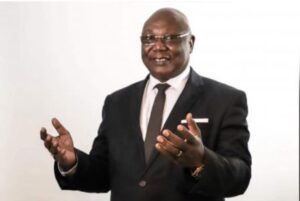
Martin Ziguélé, president of the MLPC and former Prime Minister, addressed the party's political bureau during its weekly meeting, asserting that the current crisis began after the MLPC refused to participate in the Republican Dialogue following the 2021 elections. He stated, "The real problem is elsewhere," dismissing claims that the lack of a congress since 2020 was the reason for the internal turmoil. Ziguélé alleged, "As soon as the republican dialogue was over, the government decided to destabilise the leadership of the MLPC." He further described those collaborating with the ruling power as "political mercenaries," comparing them to "Wagner on the political level." Despite this, Ziguélé affirmed, "The party is standing."
Accusations Against Dissidents
Martin Ziguélé identified specific individuals he described as "political mercenaries," naming Jackson Mazette, Chantal Jean-Édouard Koyambonou, and Étienne Malekoudou. He stated these individuals were collaborating with the ruling power, explicitly linking their actions to external influence. Ziguélé’s strong words showed his belief that the party's internal challenges stem from deliberate attempts to undermine its established leadership and principles.
The dissidents within the MLPC have reportedly divided into distinct factions, operating under names such as "MLPC" and "MLPC CO." This fragmentation suggests a deeper division within the party's ranks beyond individual disagreements. Stanislas Zoumbeti is also noted to be operating independently of these groups, further noting the fractured nature of the opposition to Ziguélé's leadership.
Ziguélé further stated that a legal complaint filed against the dissidents more than two years ago has not progressed. He alleged that this blockage is due to interference from the government and the Minister of State for Justice. This claim suggests a deliberate attempt to obstruct legal processes that could potentially resolve the internal dispute or hold the dissidents accountable for their actions, according to Ziguélé. The prolonged inaction on the complaint adds another layer of complexity to the ongoing internal conflict, with implications for the rule of law and political fairness.
Party Statutes and Congress Rules
The MLPC operates under a clearly defined legal framework, governed by statutes and internal regulations, which have been officially deposited with the Ministry of Territorial Administration and the party's designated notary. These documents serve as the foundational legal texts for the party's operations and governance. Article 24 of the MLPC statutes outlines the procedures for leadership selection, stating that the party's Congress is responsible for electing the president, the political bureau, and the national political council. These elected bodies are mandated to remain in office for a term of three years, ensuring regular leadership transitions and accountability. The statutes specify that the incumbent bureau is automatically dissolved once the new bureau resulting from an ordinary congress is officially established, providing a clear mechanism for the transfer of power and preventing prolonged disputes over leadership legitimacy.
Historically, the party has experienced varying intervals between its congresses, indicating past flexibility or challenges in adhering to strict timelines. Nine years elapsed between the first and second MLPC congresses, a significant period that suggests potential internal or external factors influencing the party's organisational rhythm. A longer period of thirteen years passed between the third and fourth congresses, with the latter taking place in 2020. This extended gap shows the historical challenges in convening regular congresses. Regarding the convening of a congress, Article 12 of the statutes stipulates that only the party president or a supermajority of two-thirds of the National Political Council members possess the authority to call for a congress. This provision centralises the power to initiate a congress, making it a critical point of control within the party's structure. The party's fifth ordinary congress was held recently, specifically on September 9 and 10, marking a significant event in the party's internal calendar and a potential turning point in its leadership dynamics.
Political Context and Party Unity
Martin Ziguélé has accused President Faustin-Archange Touadéra of providing financial resources to dissidents, alleging the funds are intended to destabilize the MLPC's leadership. This serious accusation frames the internal party conflict within a broader national political context, suggesting external manipulation by the highest office. The MLPC president stated that these actions are part of an effort to undermine the party, portraying the current strife not merely as an internal disagreement but as a targeted political attack. Ziguélé's claims suggest a concerted effort from the ruling power to weaken opposition parties, thereby consolidating its own political standing.
Despite these challenges and the alleged external interference, Ziguélé maintains that the MLPC remains unified and committed to its objectives. He asserted the party's determination to resist any attempts at destabilization and political corruption, projecting an image of resilience and steadfastness in the face of adversity. This stance shows the leadership's resolve to maintain the party's integrity and independent political voice, even as it navigates complex internal divisions and external pressures. The MLPC's ability to maintain unity and resist these alleged destabilizing efforts will be key for its future political relevance and its role in the country's political landscape.