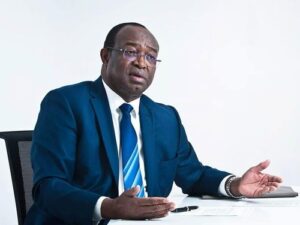
Anicet-Georges Dologuelé held a press conference in Bangui on Wednesday, May 6, 2026, where he denounced the Seventh Republic following the recent ‘sacre’ of Faustin-Archange Touadera. Touadera's coronation ceremony took place on March 30, 2026, at the 20,000-seat stadium in the Central African Republic. Dologuelé’s remarks signal escalating political tension in the capital just over a month after the formal inauguration of the new government structure. His criticisms target the legitimacy and nature of the current administration, painting a picture of a system he describes as a "dictatorship."
Accusations of Clan Control
Anicet-Georges Dologuelé alleged that the country's justice system and administration have fallen under the control of a single clan, the Ngbakamandja. Dologuelé's statement claimed this consolidation of power undermines established governance and democratic principles. The opposition figure further asserted that legal procedures are being abandoned in favor of arbitrary verbal orders. This shift, according to Dologuelé, represents a dangerous departure from formal legal frameworks, replacing them with directives issued without due process or adherence to the rule of law. He emphasized that this alleged abandonment of legal procedures for arbitrary verbal orders has broad implications for the country's institutions. These claims were made during a press conference in Bangui, where Dologuelé outlined his concerns regarding the current state of governance in the Central African Republic, noting what he perceives as a systemic erosion of judicial independence and administrative integrity.
Personal Repression Tactics
Anicet-Georges Dologuelé, a former Prime Minister, has reported being subjected to personal repression tactics by the current administration. Dologuelé stated that he has been prevented from traveling outside the Central African Republic. He claims his passport has been confiscated, effectively restricting his movement and ability to engage internationally. These actions have reportedly occurred despite a decision issued by the Constitutional Council, which, according to Dologuelé, should have protected his right to travel and possession of his travel documents. The former Prime Minister noted this specific instance as a clear example of the regime's disregard for legal decisions and individual freedoms. The opposition figure’s allegations suggest a broader pattern of suppressing political dissent through administrative means, targeting prominent voices that challenge the government. His claims were made during a press conference in Bangui, where he detailed various grievances against the Seventh Republic, providing specific examples of how he believes the administration is curtailing the rights of its political opponents.
Broader Political Context
Anicet-Georges Dologuelé's criticisms of the Seventh Republic stem from his position as a prominent opposition figure in the Central African Republic. Dologuelé serves as the president of the Union for Central African Renewal (URCA), a political party that has consistently challenged the current government's policies and legitimacy. His recent denouncements at a press conference in Bangui show the ongoing political divisions within the country, particularly following the inauguration of the Seventh Republic. As leader of URCA, Dologuelé frequently articulates concerns regarding governance, human rights, and democratic processes, often contrasting his party's vision with the actions of the ruling administration. His statements reflect a broader political contestation in the wake of the recent governmental changes, signaling a deepening rift between the government and its critics.
Dologuelé's Core Grievance
Anicet-Georges Dologuelé has accused the current administration of deploying public resources to suppress political opponents within their constituencies. The opposition figure stated that the regime is utilizing state assets and mechanisms to target and undermine individuals who challenge its authority in their respective areas. These allegations suggest a systematic effort by the government to leverage its control over public resources for political ends, according to Dologuelé. He made these claims during a press conference in Bangui, noting what he described as an abuse of power aimed at neutralizing dissenting voices across the Central African Republic and ensuring political dominance through unfair means.