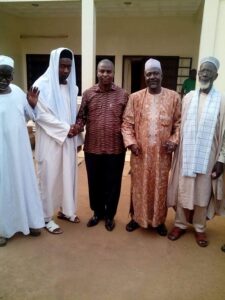
An "assembly general fictive" was held on Sunday, July 12, 2026, at the Ali Babolo mosque in KM5, located in the 3rd arrondissement of Bangui. This gathering, described by critics as a sham, was reportedly financed and commanded by President Faustin-Archange Touadéra. During this event, Imam Karim was "elected" to lead the new structure, which is being called the "executive bureau of the Islamic Council version MCU." President Faustin-Archange Touadéra is accused of validating this "puppet bureau," allegedly to grant it a false sense of official recognition and legitimacy. This move has drawn significant criticism, with detractors asserting it is a deliberate attempt to interfere with the established religious leadership in the Central African Republic.
Details of the "Elected" Bureau
The formation of the "executive bureau of the Islamic Council version MCU" reportedly followed the assembly at the Ali Babolo mosque. The election process, which has been questioned by many, saw Imam Karim secure over 80 votes. His primary challenger in the election received a significantly lower count of 4 votes, while the final candidate drew only 3 votes. The overwhelming margin of victory for Imam Karim, coupled with the allegations surrounding the assembly's orchestration, has fueled skepticism regarding the legitimacy of the entire process and the newly formed bureau.
Presidential Validation and Undermining Legitimate Body
The assembly held at the Ali Babolo mosque was reportedly orchestrated and funded by President Faustin-Archange Touadéra, with the alleged intention of undermining the legitimate Council Supérieur Islamique de Centrafrique (CSISCA). Presidential engagement followed the gathering, with President Faustin-Archange Touadéra visiting the Ali Babolo mosque on Monday, July 13, 2026. This visit, occurring just one day after the controversial "election," is seen by critics as a direct endorsement of the new structure. These actions, according to critics, directly trample on the authority of the legally established bureau led by Imam Ouassélégué. Imam Ouassélégué's leadership of the legitimate Islamic Council was formally recognized through an investment ceremony held earlier in the year at the National Assembly, showing its official and recognized status. This perceived interference by the presidency is seen by some as a blatant attempt to bypass existing religious leadership structures in the country and replace them with a more compliant body. The alleged sabotage of the legitimate Council Supérieur Islamique de Centrafrique (CSISCA) through these means has raised concerns about the independence of religious institutions.
Alleged Financial Motives
The article alleges that the primary motivation behind these actions is to capture billions of CFA francs originating from Abu Dhabi financing, which is reportedly held at the Central Bank. Critics suggest that establishing a new, compliant Islamic council would allow access and control over these substantial funds. This financial incentive is presented as a key driver for undermining the legitimate Central African Islamic Council (CSISCA) and installing a leadership seen as more amenable to presidential influence. The funds are said to be a significant sum, making their control a highly desirable outcome for the alleged orchestrators of the new council. The pursuit of these billions of CFA francs is cited as the underlying reason for the controversial establishment of the "puppet bureau."
Background of Imam Karim
Imam Karim is identified as a Chadian national, not a citizen of the Central African Republic, a detail that has further fueled questions about his suitability to lead a national Islamic council. He previously led a delegation that was received at the presidency following the attack on Amdafock. Critics claim this delegation was false, suggesting it lacked genuine representation or a legitimate mandate. Imam Karim reportedly read a communiqué on public television that was dictated by the Renaissance Palace. This broadcast was allegedly intended to serve as a communication shield for the current regime, indicating a pattern of his involvement in activities perceived as politically motivated and favorable to the presidency. His non-native nationality and alleged history of acting on behalf of the administration have intensified scrutiny of his "election" and the new council he leads.