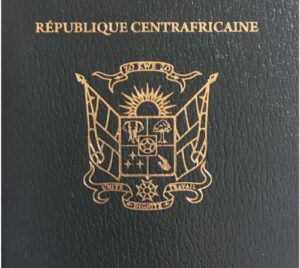
The Henley Passport Index, a widely recognized global ranking of countries according to the travel freedom their citizens enjoy, updated its rankings in May 2026. This latest assessment continues to show Singapore dominating global mobility, maintaining its top position as the passport offering the most extensive visa-free access worldwide. For the Republic of Central Africa (RCA), the May 2026 update confirmed that the nation maintained its position on the index. The Central African passport currently holds the 87th rank globally, a standing that reflects its current level of international travel access.
This ranking signifies that the Central African passport currently grants its holders visa-free access to 55 destinations worldwide. This allows for travel without the need for a traditional visa to a diverse range of countries across multiple continents. The Henley Passport Index evaluates passports based on the number of destinations holders can access without a prior visa, including visa-free entry, visa on arrival, and electronic travel authorization (eTA) where applicable. The stability of the RCA's position shows a consistent level of diplomatic relations and international agreements that facilitate travel for its citizens.
African Destinations Accessible
Africa stands as the most accessible region for holders of the Central African passport, offering a significant number of visa-free and visa-on-arrival options. This regional accessibility notes the importance of continental cooperation and agreements that ease travel within Africa. Central Africans can travel without a visa to several countries within the continent, fostering regional integration and facilitating both business and leisure travel.
These visa-free destinations include Benin, Burkina Faso, Cameroon, Côte d’Ivoire, Gabon, Equatorial Guinea, Niger, the Republic of Congo (Brazzaville), the Democratic Republic of Congo (DRC), Rwanda, Senegal, Chad, and Togo. This extensive list represents a significant portion of the visa-free access available to Central African citizens, enabling them to explore neighboring countries and conduct cross-border activities with relative ease. The ability to enter these nations without a pre-arranged visa streamlines travel logistics and reduces planning complexities for Central African travelers.
Beyond visa-free entry, Central African passport holders also have the option to obtain a visa upon arrival in a number of other African nations. These countries further extend the range of travel opportunities across the continent, providing additional flexibility for those planning international trips within Africa. Destinations where a visa on arrival is available include Cabo Verde, Ethiopia, Ghana, Madagascar, Mauritania, Mauritius, Mozambique, Uganda, Seychelles, Sierra Leone, Somalia, and Zambia. These provisions collectively enhance the mobility of Central African citizens within Africa, offering various entry methods for continental travel and contributing to broader economic and cultural exchange. The visa on arrival process typically involves presenting necessary documents at the port of entry and paying a fee, simplifying the pre-travel application process.
Global Travel Opportunities
Beyond the African continent, Central African passport holders have access to various international destinations, though with fewer visa-free options than within Africa. These opportunities extend to Asia, Oceania, the Caribbean, and South America, reflecting the global reach of the Central African passport, albeit with varying entry requirements.
In Asia, Central Africans can travel visa-free to the Philippines, Singapore, and Hong Kong. These destinations represent key economic and cultural hubs, offering diverse experiences for travelers. Further Asian travel is possible with a visa on arrival in Cambodia, Laos, Maldives, and Nepal. These countries, known for their rich history and natural beauty, provide additional avenues for Central African citizens to explore the Asian continent. The visa on arrival option in these nations offers a convenient alternative to applying for a visa in advance, allowing for more spontaneous travel plans.
Travel to Oceania also presents opportunities for Central African citizens, who can obtain a visa on arrival in Micronesia, Palau, Samoa, and Tuvalu. These island nations offer unique travel experiences in the Pacific, accessible through a streamlined entry process at the border. In the Caribbean, visa-free access is available for Haiti and Dominica, two nations known for their vibrant cultures and picturesque landscapes. For South American countries, Central Africans can obtain either a visa on arrival or an e-Visa for entry into Bolivia and Suriname. This dual option provides flexibility, allowing travelers to choose the most convenient method of securing their entry authorization.
Changes to international travel regulations also impact Central African citizens, as is the case with many other nationalities globally. Israel generalized its eTA-IL (Electronic Travel Authorization) system in 2026, a significant development that affects entry requirements for many nationalities. This system requires pre-authorization for travel, including for those who previously did not need a traditional visa. This shift means that even travelers from countries that once enjoyed visa-free entry to Israel must now apply for and receive an eTA-IL before their journey, adding an extra step to the travel planning process. Such changes show the dynamic nature of international travel policies and the need for travelers to stay informed about evolving requirements.
Traveler Requirements and Considerations
For Central African passport holders planning international travel, several key requirements and considerations are critical to ensure a smooth journey. Travelers should be aware that visa on arrival fees typically range between 50 and 100 US dollars in cash, with the exact amount dependent on the specific country of entry. It is key for travelers to carry sufficient local currency or US dollars to cover these fees, as card payments may not always be an option at all entry points.
Prospective travelers are also advised to confirm that their passport remains valid for a minimum of six months beyond their intended return date. This requirement is a standard practice across many international destinations to ensure sufficient validity for the duration of the trip and any unforeseen extensions or delays. Entry may be denied if a passport does not meet this validity criterion, leading to significant inconvenience and potential financial loss.
Additionally, individuals planning international journeys are generally required to present proof of accommodation, such as a confirmed hotel reservation, upon arrival. This serves as an assurance to immigration officials that the traveler has a place to stay during their visit and is not likely to become an undue burden on the host country. A confirmed return ticket is another common requirement for Central African passport holders, demonstrating an intention to depart the destination country within the permitted timeframe. This helps ensure that visitors adhere to the terms of their entry and do not overstay their welcome. These measures are in place to facilitate smooth entry and exit processes while adhering to international travel regulations and maintaining border security. Adhering to these guidelines is essential for a hassle-free travel experience.